Stay updated with the latest in cryptocurrency and blockchain news, delivered fast and reliably. Bookmark this page and check back often for valuable insights and timely information!
Strategic gold reserves provide a foundational pillar for Tether in evolving global markets. Tether's Golden Gambit: Is the RWA Rush a Trojan Horse for Centralized Control? Well, isn't this convenient? Just as the whispers of "Real World Assets" (RWAs) grow to a roar, Tether, the undisputed stablecoin behemoth, drops a cool $150 million on Gold.com. Don't be fooled by the shiny facade; this isn't just about digitizing gold. This is a calculated power play, a strategic land grab in the evolving crypto landscape. In my two decades navigating global markets, I've seen this script before. The big players don't innovate; they observe. They wait for a bottleneck to become critical, then swoop in with a "solution" that inevitably consolidates their influence. Tether's move isn't an anomaly; it's a blueprint ...
Get link
Facebook
X
Pinterest
Email
Other Apps
BBVA backs Euro stablecoin coalition: The slow bleed of sovereign money.
Get link
Facebook
X
Pinterest
Email
Other Apps
-
European financial institutions coalesce, forming a powerful consortium to redefine the continent's digital currency landscape.
🚩 The Banks Are Here BBVA Joins Euro Stablecoin Push Too Little Too Late or a Calculated Power Play
🚀 Well, look who finally decided to join the party. Spanish banking giant BBVA is the latest heavyweight to link arms with a burgeoning European consortium, all geared up to launch a euro-pegged stablecoin. The stated goal? To carve out a European alternative in a market still overwhelmingly dominated by USD-denominated stablecoins.
As a seasoned observer of these markets, I see this not just as news, but as a strategic maneuver. Banks, once dismissive, are now actively muscling into the digital asset space, driven by both fear and opportunity. The question for us, the investors, is what this truly means for our portfolios and the future of decentralized finance.
The burgeoning Euro digital currency ecosystem reflects a fundamental reordering of power dynamics within global finance.
Event Background: The Slow Awakening of Traditional Finance
The story of bank-backed stablecoins is a testament to the glacial pace of traditional finance meeting the lightning speed of crypto innovation. For years, the crypto market surged, stablecoins like Tether (USDT) and USD Coin (USDC) became the lifeblood of trading, facilitating billions in daily volume without traditional banking rails.
Meanwhile, European regulators wrestled with how to categorize and control these digital assets. The result was the Markets in Crypto-Assets Regulation (MiCAR), a landmark legislative framework that finally provided some clarity – and crucially, a pathway for regulated entities to issue stablecoins.
This consortium, now bolstered by BBVA, first took shape in September 2025. Nine banks initially came together, recognizing the immense flow of capital within the USD stablecoin ecosystem and the strategic imperative for a European equivalent. The vision was clear: create a robust, regulated, euro-backed stablecoin to serve the region's financial institutions and, eventually, its retail users.
This isn’t just about offering a new payment rail. It’s about financial sovereignty, about reducing reliance on a dollar-centric digital economy, and about traditional banks reasserting control over the future of money. They’re not building; they’re adapting to survive, and perhaps, to conquer.
The planned Euro stablecoin initiative by BBVA and partners strategically aims to compete with USD-dominated digital assets.
Market Impact Analysis: A Euro Stablecoin's Uphill Battle
The introduction of a new, institutionally-backed euro stablecoin, particularly one with such broad banking support, will undoubtedly ripple through the market. In the short term, expect increased discussion around regulatory arbitrage and competition in the stablecoin sector. This could lend a bullish sentiment to EURC and other existing euro-pegged tokens, even as they face a formidable new competitor.
🏦 However, the long-term impact is far more complex. The immediate challenge for Qivalis, the joint venture behind this stablecoin, is adoption. Circle's EURC, despite being the largest non-USD stablecoin, currently commands a modest market cap of just $432 million. Compare that to USDC's staggering $70 billion+. The preference for USD-based tokens is deeply entrenched, driven by global trade, liquidity, and integration across major exchanges and DeFi protocols.
Can a bank-led consortium truly displace this? Price volatility for existing euro stablecoins might see a temporary spike, but the overarching trend suggests that institutional adoption will be key. If these banks actively integrate Qivalis into their own client offerings and internal systems, we could see a slow but steady shift. However, for retail crypto investors deeply embedded in the DeFi ecosystem, a bank-issued stablecoin often means less transparency, more friction, and a potential "walled garden" approach. This could limit its organic growth outside traditional finance.
The Bitcoin price, currently hovering around the $69,400 mark, might not react directly to this stablecoin news in the immediate term. However, the broader trend of institutionalization and regulatory clarity, which BBVA's move underscores, is generally seen as a long-term positive for crypto's maturation, albeit one that comes with increased scrutiny and control.
Stakeholder Analysis & Historical Parallel: The Echoes of Diem
The current push by a European banking consortium to launch a regulated euro stablecoin has a striking parallel to the attempted launch of Diem (formerly Libra) in 2019. Facebook, a tech giant with billions of users, attempted to launch a global stablecoin, initially pegged to a basket of fiat currencies. The ambition was enormous, aiming to create a new, borderless financial system outside traditional banking.
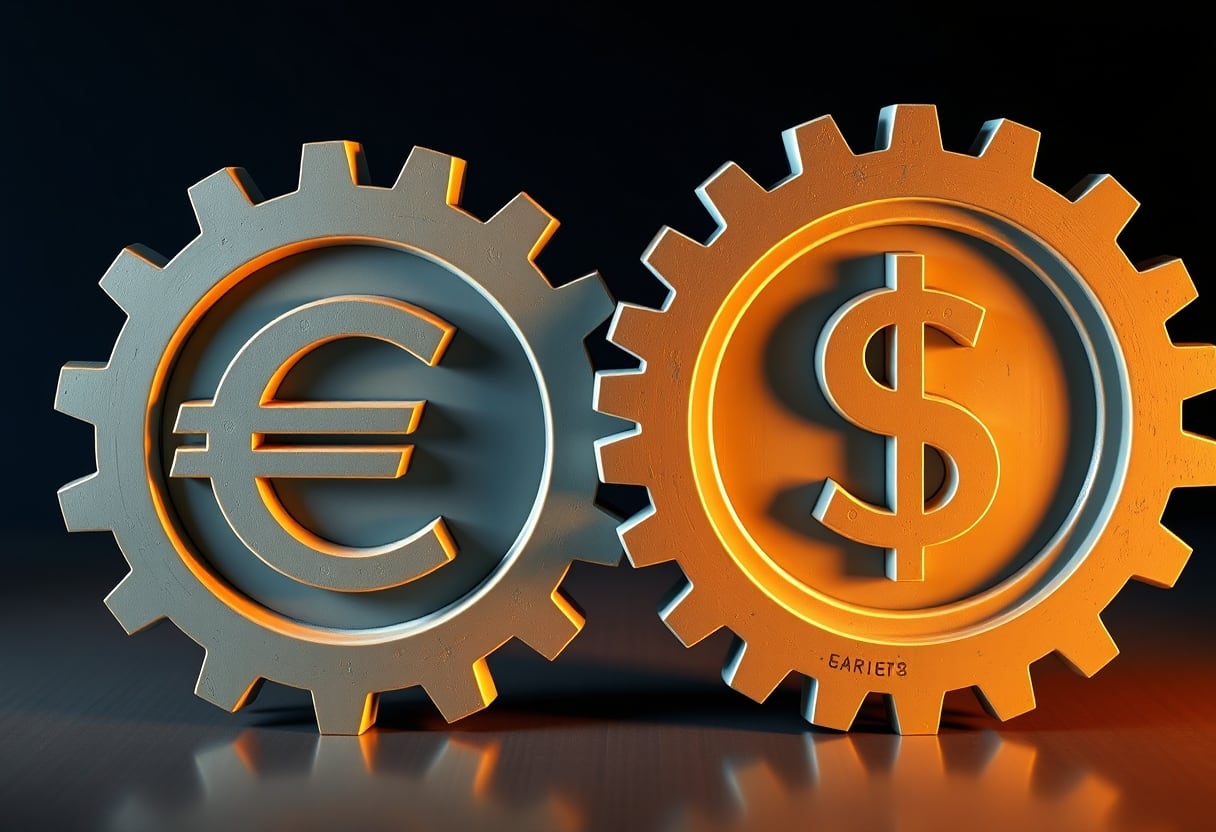
This collective banking effort introduces a new contender, poised to challenge the established dominance of USD-pegged stablecoins.
The outcome of Diem was a spectacular failure. It faced unprecedented, ferocious regulatory backlash from governments and central banks globally. Policymakers feared its potential to destabilize monetary sovereignty, facilitate illicit finance, and create a powerful, unregulated shadow banking system. The project was eventually scaled back, rebranded, and finally sold off in 2022, having never launched commercially.
📉 In my view, this Qivalis initiative by European banks appears to be a calculated, defensive move. Unlike Diem, which sought to disrupt traditional finance from the outside, Qivalis is an attempt by incumbents to co-opt and control the stablecoin narrative from within the regulated system. The banks watched Diem crash and burn, and they learned that attempting to build something truly outside the regulatory perimeter is a non-starter for players of their size. This is not innovation for innovation's sake; it's a strategic move to prevent further erosion of their power base.
🛑 The key difference today is the regulatory landscape, particularly with MiCAR. Qivalis isn't trying to skirt regulation; it's explicitly aiming to be "MiCAR-compliant" and seeking approval from the Dutch Central Bank as an electronic money institution. This is a deliberate strategy to leverage existing regulatory frameworks rather than fight them. The lesson from Diem was clear: regulatory compliance is not an optional extra, it is the fundamental prerequisite for large-scale adoption by established entities.
Stakeholder
Position/Key Detail
BBVA
Latest bank to join consortium, backs euro stablecoin to innovate client services.
Qivalis
Joint venture created by consortium to issue the euro-pegged stablecoin.
European Banking Consortium (12 Banks)
Aims to create a European, MiCAR-compliant alternative to USD-dominated stablecoins.
Dutch Central Bank
✅ Regulatory authority whose approval Qivalis awaits to operate as an electronic money institution.
Circle (EURC)
🌍 Current largest non-USD stablecoin, with a significantly smaller market cap than USD counterparts.
📌 Key Takeaways
BBVA's entry signals traditional finance's determined push into regulated stablecoins, aiming to retain control over digital money flows.
The initiative is strategically timed with MiCAR, emphasizing compliance as a key differentiator from prior attempts like Diem.
Existing USD-denominated stablecoins still dominate, posing a significant adoption challenge for a new EUR-pegged rival.
Investors should monitor Qivalis's actual launch and integration into traditional banking systems for signs of broader impact beyond crypto-native users.
This move reflects a broader trend of financial institutions reacting to, rather than leading, the core innovations of the crypto space.
🔮 Thoughts & Predictions
The Qivalis initiative, much like the post-Diem regulatory scramble, highlights a critical reality: established financial players will always prioritize control and compliance over true decentralization. While the consortium aims for a MiCAR-compliant euro stablecoin, its success hinges not just on regulatory approval but on its ability to compete with crypto-native options that offer lower friction and greater interoperability within DeFi. I predict a slow, incremental growth for Qivalis within the traditional banking ecosystem rather than a disruptive takeover of the broader stablecoin market.
The lessons from Diem are stark: regulators will not tolerate an uncontrolled, global private currency. By building within the regulated confines, these banks are playing it safe, securing their position in a future where digital currencies are inevitable. However, this approach inherently limits their appeal to the very demographic that made stablecoins indispensable in the first place—the agile, globally-minded crypto user. Expect Qivalis to gain traction in cross-border corporate payments and institutional settlements, but struggle to unseat USDC or USDT for everyday crypto trading.BBVA's participation underscores the banking sector's strategic commitment to collaborative financial innovation and evolving models.
Ultimately, this is a race against central bank digital currencies (CBDCs) as much as it is against existing stablecoins. Banks are trying to offer a 'private sector' digital euro to retain transaction fees and data control. The long-term play here is not innovation for retail, but rather a defensive strategy against sovereign digital money, ensuring their continued relevance in a rapidly evolving financial landscape.
Future Outlook: Navigating the Regulated Digital Frontier
🆕 The regulatory environment for crypto is rapidly maturing, and MiCAR is a significant catalyst. The Qivalis launch, slated for the second half of 2025, will test the waters for how smoothly bank-backed stablecoins can integrate into Europe's financial infrastructure. This move is a bellwether for other regions, signaling a global shift towards regulated digital assets.
For investors, this creates both opportunities and risks. Opportunities lie in identifying projects that can bridge the gap between traditional finance and decentralized ecosystems, particularly those focused on interoperability. We might see an increased demand for regulated "on-ramps" and "off-ramps" that can handle both institutional and crypto-native stablecoins.
🌠 However, the risks are equally pronounced. The regulatory embrace could lead to a two-tiered system: compliant, centrally-controlled stablecoins within traditional finance, and more decentralized, permissionless stablecoins operating in the broader crypto space. Investors must be vigilant about potential regulatory fragmentation and how it impacts liquidity and access across different stablecoin types. The slow bleed of "sovereign money" isn't stopping; it's simply changing form, and traditional institutions are scrambling to catch what they can.
🎯 Investor Action Tips
Monitor Qivalis's adoption rates post-launch, especially within traditional banking and corporate use cases, as this will dictate its actual market relevance.
Keep an eye on the liquidity and trading pairs for existing EUR-pegged stablecoins; increased competition could lead to short-term volatility or new opportunities.
Evaluate your stablecoin holdings: while USD stablecoins remain dominant, consider strategic diversification into regulated EUR stablecoins if your investment thesis aligns with traditional finance integration.
Deepen research into payment and settlement layer protocols that facilitate seamless transfers between institutional and crypto-native digital assets.
📘 Glossary for Serious Investors
⚖️ MiCAR (Markets in Crypto-Assets Regulation): A comprehensive regulatory framework in the European Union designed to govern crypto-assets, including stablecoins, providing legal clarity and consumer protection.
🏛️ Electronic Money Institution (EMI): A financial institution, regulated by national authorities (e.g., Dutch Central Bank), authorized to issue electronic money, like bank-backed stablecoins, and provide payment services.
🧭 Context of the Day
The banking sector's calculated embrace of regulated Euro stablecoins underscores their strategic intent to control digital money flows within new legislative boundaries.
💬 Investment Wisdom
"The greatest danger in times of turbulence is not the turbulence; it is to act with yesterday's logic." — Peter Drucker
Digital asset forecast analyzing upcoming volatility: crypto market, next bull run, BTC price. Bitcoin's "Moonvember" Hopes Tempered by Market Realities: A Deep Dive for Investors 📌 Navigating Bitcoin's November Crossroads: Will History Repeat? The cryptocurrency market is at a fascinating juncture as we enter November 2025. Bitcoin, fresh off a somewhat disappointing "Uptober" where it retraced over 10% after briefly touching $126,000 , faces a pivotal month. Historically, November, often referred to as "Moonvember," has been a strong period for Bitcoin. But can historical trends overcome current market headwinds? To understand the present, it's essential to acknowledge the past. Bitcoin's price action has often followed predictable seasonal patterns. October and November, in particular, have been associated with bullish...
Introducing Solana's pivotal network upgrade, symbolizing growth and advancement. Solana's Alpenglow Upgrade: A Game-Changer for On-Chain Trading and Network Stability 🔗 Solana, a network long celebrated for its blistering speed and low transaction fees, has also navigated its share of stability challenges. As we move into 2025, a critical evolution is on the horizon: the Alpenglow consensus overhaul . This isn't just another incremental update; it's a fundamental reimagining of Solana's core architecture, poised to address longstanding concerns regarding validator performance, network stability, and long-term scalability. For investors, understanding this seismic shift is paramount, as it could significantly redefine SOL's competitive edge and its role within the broader blockchain ecosystem . 📌 🚀 The Alpenglow Evolution: Diving ...
Solana market cap sees massive growth, institutional buying accelerates. SOL investment, crypto portfolio. Solana ETFs Surge: SOL Emerges as Crypto's Third Major Player 📌 Event Background and Significance 🎨 Solana (SOL) has long been touted as a potential "Ethereum killer," offering faster transaction speeds and lower costs. While it has enjoyed periods of popularity, particularly during the NFT boom, it has also faced challenges, including network outages and questions about its decentralization. The approval and subsequent success of Solana Spot Exchange-Traded Funds (ETFs) mark a significant milestone for the cryptocurrency, potentially solidifying its position among institutional investors . Previously, only Bitcoin and Ethereum had achieved this level of mainstream financial product integration. The arrival of Solana ETFs represents a broadening ac...