Stay updated with the latest in cryptocurrency and blockchain news, delivered fast and reliably. Bookmark this page and check back often for valuable insights and timely information!
Bitcoin's perceived strength faces a critical stress test from veteran market predictions. Bitcoin's Illusion of Invincibility Shatters: Brace for $42K and a Cynical Rotation 🤑 Here we go again. Just when the market started puffing out its chest, believing Bitcoin was immune to gravity, the veteran bear Peter Brandt drops another truth bomb. His latest pronouncement isn't just a warning; it’s a harsh reality check for anyone who thought this time was different. Brandt, a seasoned chartist whose predictions often cut through the hype like a hot knife through butter, isn't mincing words. He sees Bitcoin ($BTC) "a hop, skip, and jump" away from the $42,000 mark. Let's be clear: this isn't a minor dip. We're talking about a brutal 50% drawdown from recent highs, effectively erasing months of institutional accumulation. ...
Get link
Facebook
X
Pinterest
Email
Other Apps
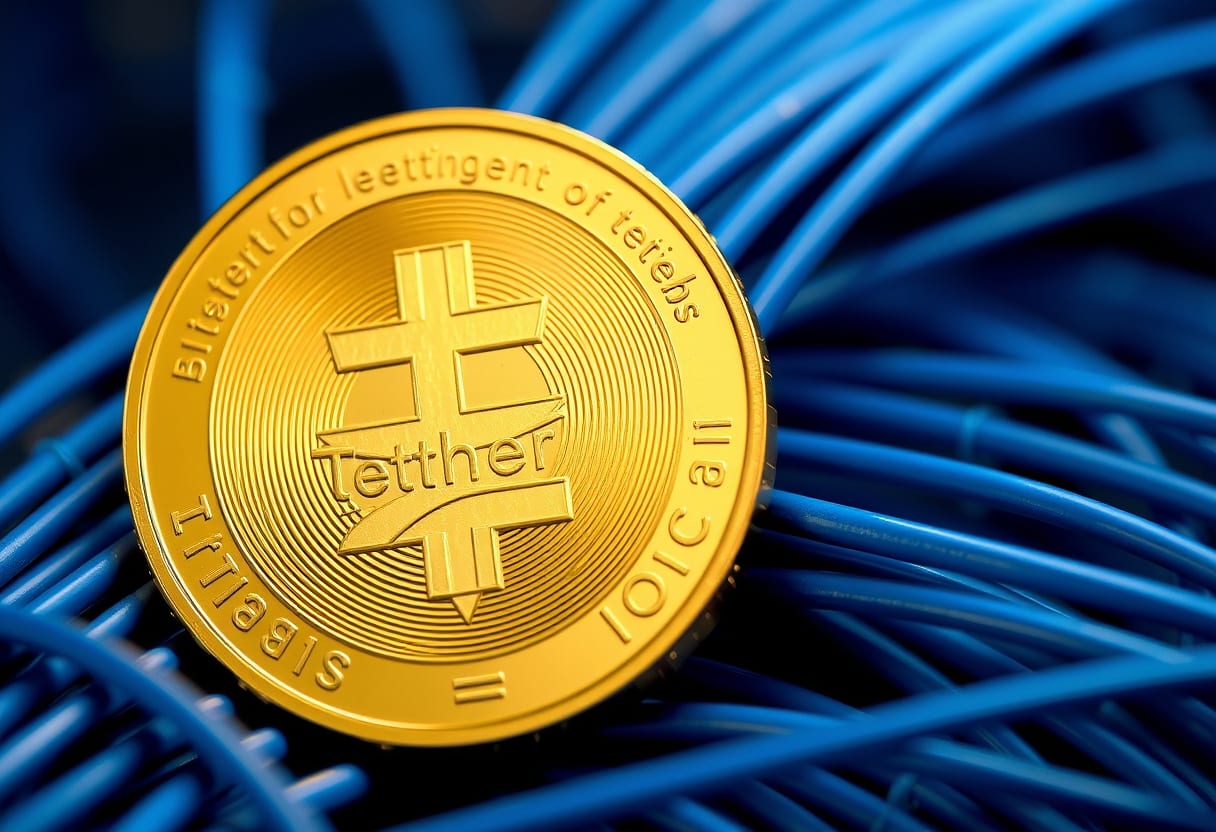
Tether buys Gold to bolster Bitcoin: The $150M pivot to hard assets
Get link
Facebook
X
Pinterest
Email
Other Apps
-
Strategic gold reserves provide a foundational pillar for Tether in evolving global markets.
Tether's Golden Gambit: Is the RWA Rush a Trojan Horse for Centralized Control?
Well, isn't this convenient? Just as the whispers of "Real World Assets" (RWAs) grow to a roar, Tether, the undisputed stablecoin behemoth, drops a cool $150 million on Gold.com. Don't be fooled by the shiny facade; this isn't just about digitizing gold. This is a calculated power play, a strategic land grab in the evolving crypto landscape.
In my two decades navigating global markets, I've seen this script before. The big players don't innovate; they observe. They wait for a bottleneck to become critical, then swoop in with a "solution" that inevitably consolidates their influence. Tether's move isn't an anomaly; it's a blueprint for institutional capture of the next major crypto narrative.
The digitization of physical commodities represents a permanent structural shift for Tether.
🚩 The Gold Rush Fragmented Reality
Tether's reported $150 million strategic investment in Gold.com is more than just an acquisition. It's a loud, unambiguous signal that tokenized physical gold is now firmly on the institutional radar, validating the RWA narrative that has been simmering for years.
When the issuer of USDT, an entity that holds a staggering amount of US Treasuries, decides to pour nine figures into gold digitization, you pay attention. This isn't just a vote of confidence; it's a strategic positioning.
💧 Here's the catch: the crypto market, for all its revolutionary talk, remains an archipelago of isolated liquidity. You might have a gold token (XAUT) on Ethereum or TON, but try moving that value seamlessly to Solana or a Bitcoin Layer 2, and you hit a wall.
🚰 This liquidity fragmentation isn't just an inconvenience; it's a systemic vulnerability that stifles institutional adoption. It forces reliance on risky, often centralized "bridges" – the very infrastructure Tether and other giants are now looking to streamline, or perhaps, control.
📍 Historical Shadows Bridge Exploits & Institutional Fear
🔓 For seasoned investors, the mention of cross-chain bridges immediately conjures images of catastrophe. This isn't abstract fear; it's a harsh lesson learned from events like the 2021 Wormhole Bridge Exploit, where $325 million was siphoned from the Solana-Ethereum bridge. That wasn't an isolated incident; it was one of many, including the infamous 2022 Ronin Bridge Hack, which saw over $600 million vanish.
Unified execution environments solve liquidity fragmentation issues currently plaguing the Ethereum ecosystem.
⚖️ The outcome of these past events was clear: centralized bridges are single points of failure, exposing users and, crucially, institutional capital to unacceptable levels of risk. The lessons learned were painful: security and decentralization must be paramount for any viable cross-chain solution.
In my view, Tether's move appears to be a calculated maneuver. They've watched, patiently, as retail investors and smaller projects bore the brunt of these bridge failures. Now, as the RWA narrative gains undeniable traction, they are stepping in, not just to participate, but to shape the infrastructure that will facilitate this next wave of capital flow.
Unlike 2021, when bridge exploits were a rude awakening, today's landscape sees institutional players proactively seeking to mitigate these risks—or, more accurately, to own the solutions that do. This isn't about fixing a broken system for the common good; it's about ensuring the future rails for tokenized gold and other RWAs are built to their specifications.
🚩 Market Impact A New Interoperability Race
🌊 Tether's substantial investment signals a massive shift. In the short term, expect increased volatility around assets related to RWAs and cross-chain interoperability. Investor sentiment is rapidly pivoting towards infrastructure plays that can credibly solve the "liquidity archipelago" problem.
👮 Longer term, this move paves the way for a genuine explosion in RWA tokenization. We're talking everything from real estate to private equity, all eventually moving on-chain. This demands robust, secure, and truly unified execution environments.
📜 It will also intensify the battle for cross-chain dominance, impacting sectors like stablecoins, DeFi, and even NFTs as their underlying value might become increasingly tied to real-world assets. Projects offering novel Layer 3 solutions, like LiquidChain, are now in the spotlight.
Global institutions are increasingly prioritizing tokenized assets to capture long-term value in Bitcoin.
Unifying the Archipelago: The LiquidChain Play
💧 Enter LiquidChain ($LIQUID), a Layer 3 infrastructure protocol positioning itself to address this very fragmentation. Their pitch is simple: unify the liquidity of crypto's three titans—Bitcoin, Ethereum, and Solana—into a single, deployable environment.
💧 This isn't just another bridge. LiquidChain promises a "Deploy-Once" philosophy, leveraging a Cross-Chain Virtual Machine (VM) that abstracts away the complexities of underlying chains. For developers, this means writing code once and accessing the combined user base and liquidity of multiple networks.
For end-users, it theoretically means seamless, single-step execution, like swapping a $BTC-backed asset for an SPL token on Solana, without ever leaving a unified interface. The market is clearly hungry for such solutions.
🌐 The capital flowing into LiquidChain’s presale—over $529,000 raised with the native token $LIQUID priced at $0.01355—suggests that smart money is indeed positioning for this infrastructure shift. They're looking beyond fleeting meme coin pumps and into foundational tech that facilitates the next phase of DeFi scalability and RWA integration.
⛓️ If Tether, or any other institutional player, truly wants its tokenized gold to flow freely between different blockchain ecosystems, then infrastructure like LiquidChain transitions from a speculative bet to a fundamental technical necessity.
📍 Stakeholder Summary
Stakeholder
Position/Key Detail
Tether
$150M investment in Gold.com; strategic pivot to tokenized gold (RWA).
Gold.com
Recipient of Tether's investment; platform for digitizing physical gold.
LiquidChain ($LIQUID)
Layer 3 protocol addressing liquidity fragmentation across Bitcoin, Ethereum, Solana.
📝 Key Takeaways
Tether's $150M Gold.com investment validates the RWA narrative and signals a new institutional front in crypto.
The move highlights critical liquidity fragmentation across blockchains, a major bottleneck for institutional capital.
Historical bridge exploits (e.g., 2021 Wormhole) underscore the high risks of existing cross-chain solutions, driving demand for robust alternatives.
Projects like LiquidChain, offering Layer 3 unified execution environments, are attracting significant early capital as "smart money" positions for true interoperability.
Expect increased market focus and investment in secure, scalable cross-chain infrastructure capable of handling massive RWA flows.
🔮 Thoughts & Predictions
The pattern is clear: institutional money follows where the infrastructure is ready, or where it can make the infrastructure ready for its own purposes. Tether's gold move isn't just about gold; it's about setting the stage for a new era of tokenized assets, but one where the underlying rails are increasingly controlled or influenced by the very entities with the deepest pockets. Remember the 2021 Wormhole exploit? Those billions lost taught the big players that trusting decentralized, community-built bridges was too risky for their scale. Now, they're backing solutions that promise "unified environments" – a subtle way of saying the new infrastructure for RWAs will be designed for institutional comfort, potentially at the expense of true decentralization.Secure cross-chain interoperability protocols bridge the gap between isolated Solana and Bitcoin networks.
Looking ahead, I predict a significant medium-term shift in capital allocation towards Layer 3 protocols and dedicated RWA infrastructure projects. While this brings opportunities, investors must understand the inherent trade-offs. The promise of "seamless interoperability" and "unified liquidity" will attract massive inflows, likely driving up valuations for early movers like LiquidChain. However, the true decentralized ethos of crypto faces a crucial test as corporate giants vie for control over these new financial highways.
The bottom line is this: the RWA narrative is now institutionalized. Expect increased regulatory clarity – largely shaped by the very entities now dominating the space – and a surge in tokenized assets. But don't mistake this for a purely organic evolution. This is a strategic chess match, and investors must distinguish between genuine innovation and projects simply serving as conduits for established financial power. The next bull run won't just be about speculative assets; it'll be about who owns the plumbing.
🎯 Investor Action Tips
Deepen your research into Layer 3 protocols and dedicated RWA infrastructure projects that directly address cross-chain liquidity.
Monitor the regulatory environment for tokenized assets; expect clarity that favors institutional participation over pure decentralization.
Evaluate the underlying architecture of "interoperability" solutions: are they truly decentralized, or do they introduce new points of centralization?
Consider diversifying a portion of your portfolio into projects that build the foundational rails for RWAs, not just the RWAs themselves, focusing on security and verifiable decentralization.
📘 Glossary for Serious Investors
Real World Assets (RWAs): Physical or intangible assets (like gold, real estate, or private equity) that are tokenized and represented on a blockchain, bringing traditional finance into the digital asset space.
Liquidity Fragmentation: The challenge in crypto where capital and assets are siloed on different blockchains (e.g., Ethereum, Solana), making it difficult to move or utilize them across networks efficiently.
Layer 3 (L3): A proposed architectural layer built atop Layer 2 solutions, designed to provide specialized functionality like cross-chain interoperability or application-specific environments, aiming for broader scalability and unification.
🧭 Context of the Day
Tether's gold pivot signals that the RWA narrative is now firmly an institutional play, setting the stage for a critical battle over future cross-chain infrastructure control.
💬 Investment Wisdom
"Gold is the only money that has never failed, and tokenizing it is the ultimate endgame for liquidity." — Ferdinand Lips
Digital asset forecast analyzing upcoming volatility: crypto market, next bull run, BTC price. Bitcoin's "Moonvember" Hopes Tempered by Market Realities: A Deep Dive for Investors 📌 Navigating Bitcoin's November Crossroads: Will History Repeat? The cryptocurrency market is at a fascinating juncture as we enter November 2025. Bitcoin, fresh off a somewhat disappointing "Uptober" where it retraced over 10% after briefly touching $126,000 , faces a pivotal month. Historically, November, often referred to as "Moonvember," has been a strong period for Bitcoin. But can historical trends overcome current market headwinds? To understand the present, it's essential to acknowledge the past. Bitcoin's price action has often followed predictable seasonal patterns. October and November, in particular, have been associated with bullish...
Introducing Solana's pivotal network upgrade, symbolizing growth and advancement. Solana's Alpenglow Upgrade: A Game-Changer for On-Chain Trading and Network Stability 🔗 Solana, a network long celebrated for its blistering speed and low transaction fees, has also navigated its share of stability challenges. As we move into 2025, a critical evolution is on the horizon: the Alpenglow consensus overhaul . This isn't just another incremental update; it's a fundamental reimagining of Solana's core architecture, poised to address longstanding concerns regarding validator performance, network stability, and long-term scalability. For investors, understanding this seismic shift is paramount, as it could significantly redefine SOL's competitive edge and its role within the broader blockchain ecosystem . 📌 🚀 The Alpenglow Evolution: Diving ...
Solana market cap sees massive growth, institutional buying accelerates. SOL investment, crypto portfolio. Solana ETFs Surge: SOL Emerges as Crypto's Third Major Player 📌 Event Background and Significance 🎨 Solana (SOL) has long been touted as a potential "Ethereum killer," offering faster transaction speeds and lower costs. While it has enjoyed periods of popularity, particularly during the NFT boom, it has also faced challenges, including network outages and questions about its decentralization. The approval and subsequent success of Solana Spot Exchange-Traded Funds (ETFs) mark a significant milestone for the cryptocurrency, potentially solidifying its position among institutional investors . Previously, only Bitcoin and Ethereum had achieved this level of mainstream financial product integration. The arrival of Solana ETFs represents a broadening ac...