Stay updated with the latest in cryptocurrency and blockchain news, delivered fast and reliably. Bookmark this page and check back often for valuable insights and timely information!
SEC leadership signals a departure from hostile enforcement toward a structured Bitcoin regulatory environment. The CLARITY Act Endgame: Unpacking the SEC's Institutional Playbook 💸 The financial world just witnessed another masterclass in institutional maneuvering. Speaking before the House Financial Services Committee, US Securities and Exchange Commission (SEC) Chair Paul Atkins dropped a bombshell, signaling the agency’s full backing for the proposed CLARITY Act. This isn't just about "guidance"; it's about drawing lines in the sand, redefining the crypto playing field, and setting the stage for who gets to play. For two decades, I’ve watched these power plays unfold. Make no mistake, when regulators suddenly clamor for "clarity," it often means they've finally figured out how to integrate a new asset class into thei...
Get link
Facebook
X
Pinterest
Email
Other Apps
US Banks Fight 5 New Ripple Charters: A Calculated Hegemony Stall
Get link
Facebook
X
Pinterest
Email
Other Apps
-
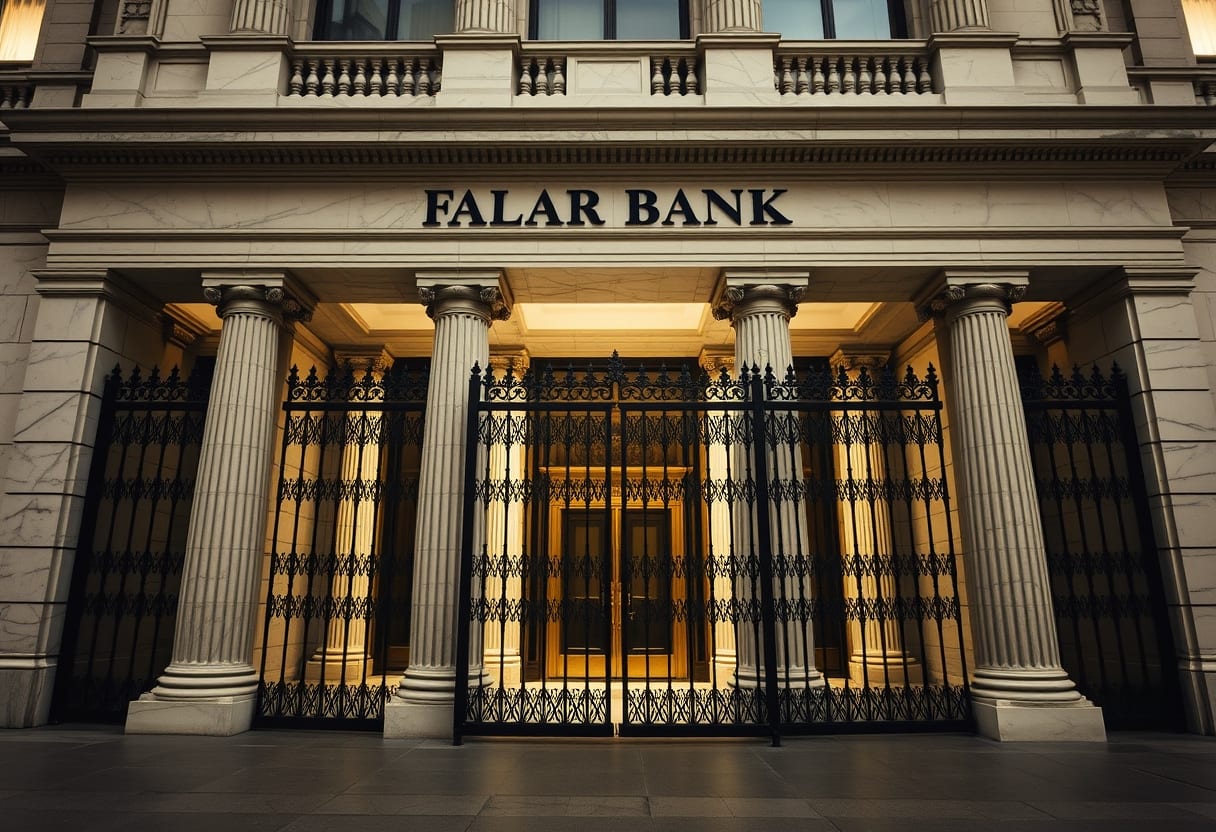
Institutional incumbents attempt to barricade the gates against a surge in Ripple adoption.
US Banking Lobby's Desperate Stand: A Cynical Play to Cripple Crypto's Ascent
The gloves are off. The powerful American Bankers Association (ABA) has formally requested the Office of the Comptroller of the Currency (OCC) to hit the brakes on approving new crypto bank charter applications.
This isn't just bureaucratic red tape; it's a calculated maneuver by the financial establishment to stall crypto's inevitable integration into the mainstream. They cite "regulatory uncertainty," but seasoned observers know better.
The battle for national bank charters represents the final frontier for Ripple integration.
📌 The Banking Cartel Draws its Lines in the Sand
On Wednesday, the ABA made its move, urging the OCC to pause the review of national bank charter applications from crypto firms. Their stated reasons? The usual suspects: "uncertainty surrounding emerging business models," a need for "greater transparency," and a "lack of finalized federal oversight."
In a letter reeking of thinly veiled protectionism, the banking lobby insisted the OCC "ensure that robust, broadly applicable safety and soundness standards are well understood." They want this before any more charters move forward, effectively demanding a complete standstill.
This comes after the OCC already approved conditional bank charters for major players like Ripple, Circle, BitGo, Paxos, and Fidelity back in December. These approvals, the banks now argue, could "blur the lines of banking activities" and lead to risky "regulatory arbitrage."
The ABA’s call for "patience" until Congress finalizes crypto rules is a classic delay tactic. They want the legislative process to drag out, ensuring new entrants face maximum friction and their own market dominance remains unchallenged.
Their concerns about "appropriate safety and soundness protections" and "conflicts of interest" ring hollow. It's a convenient shield behind which to protect their existing profit margins from disruptive innovation.
Adding another layer to this regulatory quagmire, the association also recommended prohibiting crypto entities from using "bank" in their names if they only perform fiduciary or trust activities. This highlights their fear of perceived legitimacy for crypto firms.
The OCC faces mounting pressure to reconsider the speed of crypto integration.
🚩 Old Guard vs New Money The Battle for Core Infrastructure
➕ The charter fight isn't an isolated incident. Traditional US banks are also vehemently opposing crypto and fintech companies gaining direct access to the Federal Reserve's payment systems.
Earlier this week, a joint letter from the Bank Policy Institute, Clearing House Association, and Financial Services Forum demanded a 12-month waiting period for firms applying for payment accounts. This would effectively block access until "newly licensed stablecoin issuers prove they can operate safely."
The Fed’s "skinny" master accounts proposal, first floated last October, would allow crypto companies to bypass partner banks. This direct access would remove a significant choke point and unlock unprecedented efficiency for digital assets.
🏛️ Naturally, the banking sector is in an uproar. Their arguments hinge on crypto’s "less robust regulatory status," a narrative pushed by figures like Better Markets CEO Dennis Kelleher, who calls the Fed's proposal "a reckless giveaway." This opposition isn't about safety; it's about control over the flow of money and the fees associated with it.
📌 The Illusion of Safety A Historical Playbook Rehashed
Echoes of 2018's FinTech Charter Wars
What we're witnessing today is far from new. This entire charade has a striking historical parallel in the 2018 debate around the OCC's FinTech charter initiative. Back then, the OCC attempted to create a special purpose national bank charter for FinTech companies, aiming to bring innovation under a federal umbrella.
👨⚖️ The outcome was predictable: Traditional banks and state regulators launched a fierce campaign, citing identical concerns about "safety and soundness," regulatory gaps, and consumer protection. Lawsuits and intense lobbying efforts ultimately stifled the initiative, leading to a fragmented, state-by-state approach that severely slowed down FinTech integration.
The lesson learned from that era is stark: When incumbents perceive a threat to their moat, "safety and soundness" becomes their rallying cry to delay, obstruct, and ultimately maintain their hegemony. This isn't about protecting retail investors; it's about protecting their balance sheets and market share.
Traditional financial structures act as an anchor slowing the evolution of Ripple.
Today, the tactics are identical, only the technology has evolved. The banking lobby is using the same playbook, hoping to slow crypto's advance and preserve their lucrative gatekeeper role. The stakes, however, are far higher given crypto's potential to fundamentally reshape finance.
The Trump Card: Political Interference or Legitimate Ethics?
Adding a layer of political intrigue, Senator Elizabeth Warren recently questioned the Trump Family’s main crypto venture, World Liberty Financial, which applied for a national trust charter in January. She urged a pause, citing potential government ethics issues.
While valid ethical concerns exist, such high-profile political interventions often become another convenient tool in the arsenal of those who wish to slow crypto adoption. It adds noise, creates public doubt, and further justifies regulatory delays, regardless of the merit of the underlying innovation.
📌 Market Impact Volatility Opportunity and the Slow Grind of Regulation
For investors, this banking pushback translates directly into increased regulatory uncertainty. In the short term, this can lead to price volatility for assets connected to the firms seeking charters, such as Ripple's XRP or stablecoins like USDC (from Circle) and BUSD (from Paxos).
Longer term, if the banking lobby succeeds in delaying or blocking these charters, it could slow down institutional adoption of crypto services within the US. This might push innovative crypto companies offshore or into less regulated environments, ironically creating the very risks the banks claim to be worried about.
However, this regulatory friction also presents opportunities for resilient, globally-focused crypto projects and decentralized finance (DeFi) protocols. If traditional pathways are blocked, capital and talent might flow towards truly permissionless and censorship-resistant innovations. Investors should scrutinize projects with strong international footprints or robust decentralized governance.
The stablecoin market, in particular, faces a critical juncture. Delays for regulated issuers could open the door for more decentralized stablecoins or those operating in friendlier jurisdictions to gain market share. This isn't just about price; it's about fundamental shifts in how these critical assets function.
Legacy institutions prioritize structural preservation over the inherent efficiencies of decentralized Bitcoin technology.
🔑 Key Takeaways
The US banking lobby is aggressively moving to delay crypto bank charter approvals and block direct access to Fed payment systems, citing "regulatory uncertainty" and "safety and soundness."
This appears to be a strategic move by traditional finance to stifle competition and maintain its incumbent position against disruptive crypto innovation.
The market can expect continued regulatory friction, potentially increasing short-term volatility for assets tied to affected firms and stablecoin issuers.
Savvy investors should monitor global regulatory developments and consider opportunities in robust, decentralized projects or those operating in more crypto-friendly jurisdictions.
This mirrors past struggles where new financial technologies faced intense pushback from established players, often using similar arguments to delay progress.
🔮 Thoughts & Predictions
Connecting this to the 2018 FinTech charter debacle, it's clear the banking sector will not yield ground easily. Expect a protracted regulatory tug-of-war that will keep a lid on explosive growth for US-based, regulated crypto entities in the medium term. This friction, however, could ironically accelerate the adoption of truly decentralized alternatives outside traditional finance, or force a 'flight to quality' towards more established, globally-compliant crypto institutions.
🏛️
My take is that this opposition, while slowing things down, won't stop crypto entirely. Instead, it will solidify a two-tiered system: a slow-moving, heavily regulated "crypto-lite" sector within the US, and a more dynamic, innovative, and potentially riskier global crypto ecosystem. The market cap of fully decentralized protocols could see accelerated growth as a direct consequence, attracting capital frustrated by the US regulatory quagmire.
Ultimately, this power play reinforces the need for investors to distinguish between crypto projects seeking to integrate with traditional finance and those building entirely new paradigms. The long-term winners will be those who can either navigate this complex regulatory landscape with surgical precision or operate entirely independent of it.
🎯 Investor Action Tips
Monitor Regulatory Filings: Keep a close eye on OCC and Federal Reserve announcements regarding charters and payment access. Delays or approvals will directly impact sentiment.
Diversify Geographically: Consider diversifying your portfolio with projects that have strong footholds in more crypto-friendly jurisdictions, mitigating US regulatory risk.
Evaluate Decentralization: Prioritize projects with clear decentralization roadmaps and strong governance, as these may prove more resilient to centralized regulatory pressures.
Track Stablecoin Innovation: Research newer, decentralized stablecoin protocols that could gain traction if regulated, centralized stablecoin issuers face prolonged hurdles.
📘 Glossary for Serious Investors
⚖️ OCC (Office of the Comptroller of the Currency): An independent bureau within the U.S. Department of the Treasury that charters, regulates, and supervises all national banks and federal savings associations.
🤝 ABA (American Bankers Association): The largest banking trade group in the U.S., representing banks of all sizes and working to influence policy and legislation.
💨 Skinny Master Accounts: A proposed framework by the Federal Reserve to grant non-bank financial institutions, including some crypto firms, direct access to the Fed's payment systems, bypassing traditional bank intermediaries.
🎲 Regulatory Arbitrage: The practice of exploiting differences in regulatory frameworks between jurisdictions or sectors to gain a competitive advantage or reduce compliance costs.
🧭 Context of the Day
Today's brazen banking lobby push confirms that institutional finance views crypto's regulated integration as an existential threat, forcing investors to weigh US-centric delays against global innovation.
Stakeholder
Position/Key Detail
American Bankers Association (ABA)
🆗 Requests OCC to delay crypto bank charter approvals and block direct Fed access, citing regulatory uncertainty.
Digital asset forecast analyzing upcoming volatility: crypto market, next bull run, BTC price. Bitcoin's "Moonvember" Hopes Tempered by Market Realities: A Deep Dive for Investors 📌 Navigating Bitcoin's November Crossroads: Will History Repeat? The cryptocurrency market is at a fascinating juncture as we enter November 2025. Bitcoin, fresh off a somewhat disappointing "Uptober" where it retraced over 10% after briefly touching $126,000 , faces a pivotal month. Historically, November, often referred to as "Moonvember," has been a strong period for Bitcoin. But can historical trends overcome current market headwinds? To understand the present, it's essential to acknowledge the past. Bitcoin's price action has often followed predictable seasonal patterns. October and November, in particular, have been associated with bullish...
Introducing Solana's pivotal network upgrade, symbolizing growth and advancement. Solana's Alpenglow Upgrade: A Game-Changer for On-Chain Trading and Network Stability 🔗 Solana, a network long celebrated for its blistering speed and low transaction fees, has also navigated its share of stability challenges. As we move into 2025, a critical evolution is on the horizon: the Alpenglow consensus overhaul . This isn't just another incremental update; it's a fundamental reimagining of Solana's core architecture, poised to address longstanding concerns regarding validator performance, network stability, and long-term scalability. For investors, understanding this seismic shift is paramount, as it could significantly redefine SOL's competitive edge and its role within the broader blockchain ecosystem . 📌 🚀 The Alpenglow Evolution: Diving ...
Solana market cap sees massive growth, institutional buying accelerates. SOL investment, crypto portfolio. Solana ETFs Surge: SOL Emerges as Crypto's Third Major Player 📌 Event Background and Significance 🎨 Solana (SOL) has long been touted as a potential "Ethereum killer," offering faster transaction speeds and lower costs. While it has enjoyed periods of popularity, particularly during the NFT boom, it has also faced challenges, including network outages and questions about its decentralization. The approval and subsequent success of Solana Spot Exchange-Traded Funds (ETFs) mark a significant milestone for the cryptocurrency, potentially solidifying its position among institutional investors . Previously, only Bitcoin and Ethereum had achieved this level of mainstream financial product integration. The arrival of Solana ETFs represents a broadening ac...