Stay updated with the latest in cryptocurrency and blockchain news, delivered fast and reliably. Bookmark this page and check back often for valuable insights and timely information!
Coinbase challenges the legacy banking architecture as institutional barriers threaten regional digital asset growth. Australia's Banks vs. Crypto: The De-banking Dilemma Reignites 🤑 Here we go again. Coinbase, one of the crypto industry's giants, isn't mincing words Down Under. They've just lodged a formal complaint with the Australian House of Representatives Standing Committee on Economics, accusing the nation's biggest banks of systemically blocking services to legitimate crypto firms. This isn't just about a few inconvenient account closures. This is about establishing a pattern, a "common barrier" that prevents crypto businesses from accessing the fundamental financial infrastructure they need to operate. The implications for market access and innovation are enormous. Mandatory compl...
Get link
Facebook
X
Pinterest
Email
Other Apps
Ripple Patents Protect the XRP Token: A Proprietary Moat for Finance
Get link
Facebook
X
Pinterest
Email
Other Apps
-
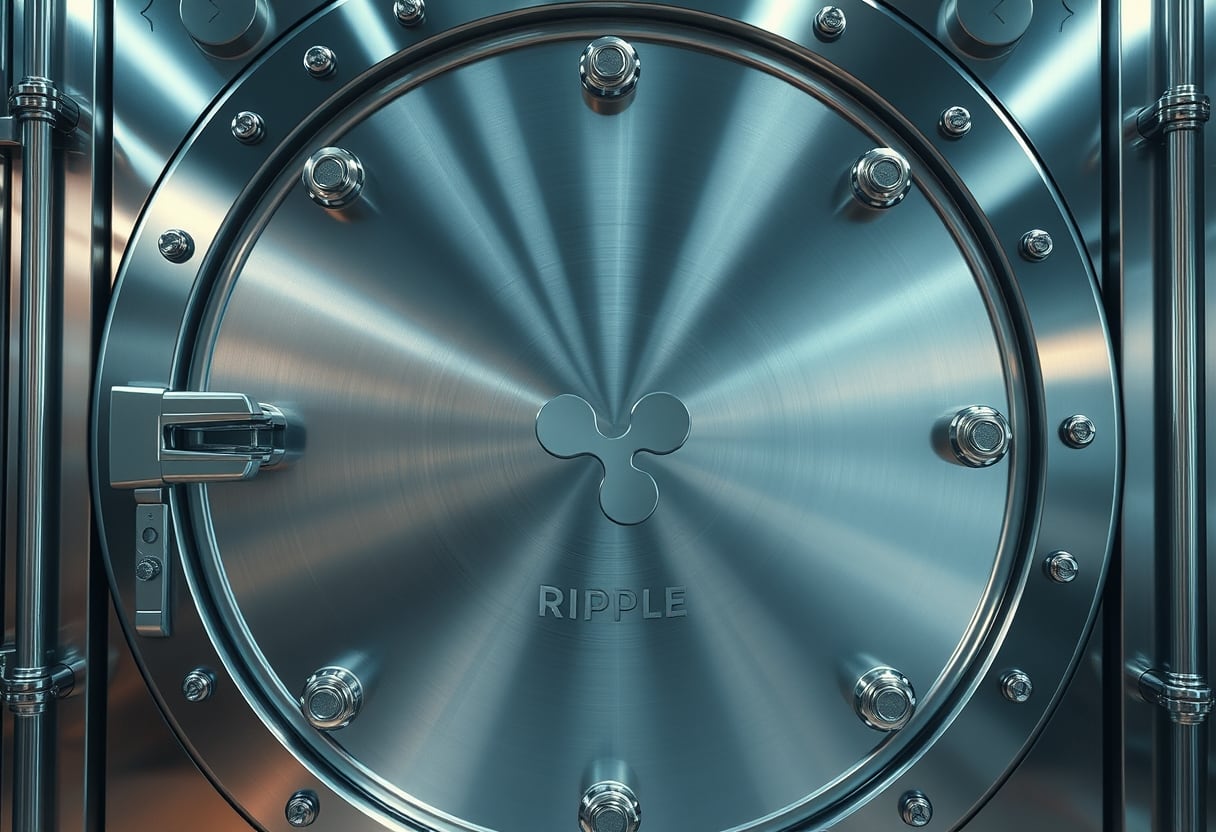
The legal architecture of XRP establishes a foundation that legacy institutions cannot easily bypass.
Ripple's Iron Grip: How Patents Cement XRP's Place in the Global Financial Game
🌐 For years, the crypto masses have debated whether XRP could be easily copied. The chatter often circles back to open-source code and blockchain forks, painting a picture of easily replicated tech. But let's be clear: that narrative misses the fundamental play at hand.
A recent deep dive by an XRP community insider has yanked the focus from mere code to something far more impactful: Ripple's proprietary payment architecture, legally protected by an arsenal of patents. This isn't just about network effects; it's about intellectual property governing how value truly moves across complex financial systems.
This defensive patent framework ensures XRP remains the primary conduit for institutional value transfer.
📌 The Proprietary Moat Why Ripples Patents Matter More Than Code
Beyond Open Source: A Decisive Strategic Move
The assumption that XRP is easily replicable stems from a common misunderstanding. While parts of the XRP Ledger are indeed open source, allowing developers to inspect and even fork its code, this technicality only scratches the surface of XRP's true value proposition. It’s akin to copying a car’s engine blueprint but lacking the license to build or sell the vehicle itself, let alone the infrastructure to refuel it globally.
Ripple has consistently played the long game, focusing on institutional adoption and regulatory clarity, often through legal means. This patent strategy is not new, but its implications are just now coming into sharper focus for the broader market.
The Patents: A Legal Wall Around XRP's Functionality
XRP community member "Wilberforce Theophilus" recently highlighted a critical piece of this puzzle: U.S. Patent No. 10,902,416. This patent isn't about the digital asset itself, but the entire system for settling cross-border payments where a digital asset acts as a bridge. It specifically covers a method that bypasses the antiquated need for pre-funded Nostro/Vostro accounts, slashing costs and settlement times.
The patented process meticulously details how liquidity is sourced, exchanged, and settled using XRP. This means no other cryptocurrency can perform this exact, legally defined function without infringing on Ripple's intellectual property. It’s a powerful exclusive claim in the digital finance arena.
Building on this, U.S. Patent No. 11,998,003 extends Ripple's early designs, focusing on advanced interoperability between disparate ledgers and payment networks. This patent safeguards the architecture that links distinct financial systems into a unified payment flow across jurisdictions and infrastructures.
➕ This is where the idea of "replication" falls apart in practice. Even if a rival project builds a lightning-fast blockchain, it cannot legally replicate Ripple’s exact, patented framework for connecting banks, payment providers, and other blockchains, with XRP as the embedded settlement medium. This architecture is legally protected, forming an ironclad defense against direct functional competition.
XRP functions as a specialized gateway for capital flows between previously incompatible global banking ledgers.
⚖️ In total, Ripple Labs holds approximately 39 patents globally, with 18 already granted. This extensive portfolio underscores a calculated strategy to secure their turf in a fiercely competitive and regulated industry.
🚩 Beyond Open Source The Real Value of XRP
Market Impact Analysis: Beyond the Codebase
🌊 The market needs to grasp that XRP's value is not merely derived from its technical specifications—its speed, low fees, or consensus mechanism. Those are table stakes in 2025. Its true value, particularly for institutional use, is inextricably linked to over a decade of live operation, its vast and deep exchange liquidity across numerous jurisdictions, and, crucially, its association with Ripple Labs.
Ripple has spent years forging relationships with financial institutions, payment providers, and key regulators worldwide. This network, combined with the patented technology, creates a formidable barrier to entry for any competitor hoping to displace XRP as a bridge asset in the institutional cross-border payment space.
Short-term impact? We might see a stabilization of investor sentiment around XRP, as the "can it be copied?" FUD dissipates, replaced by a recognition of its unique legal positioning. Long-term? This legal protection significantly reduces existential threats from direct functional competitors. It allows Ripple to push for deeper institutional integration, potentially driving sustained demand. Expect to see financial institutions increasingly favor solutions with clear IP protection, as it de-risks their own integration efforts.
🤛 This isn't just about a token; it's about a company building a proprietary financial rail system with its own digital asset. The recent expansion into the Middle East with a partnership like Riyad Bank is a prime example of Ripple leveraging these deep-seated relationships and its protected technology.
🚩 The Ghosts of Utility Tokens Past A History Lesson
Stakeholder Analysis & Historical Parallel: The Kik Saga
💸 In my cynical view, Ripple is playing a very smart, calculated long game. They know that in traditional finance, intellectual property and institutional partnerships often trump open-source ideals, especially when billions are at stake. This isn't just about code; it's about controlling the pipes and owning the patents that define how value flows through them.
⚖️ The most instructive historical parallel to Ripple's current strategy of solidifying its token's "utility" through proprietary means, particularly within a challenging regulatory landscape, is the 2018 SEC crackdown on ICOs, epitomized by the SEC's case against Kik Interactive and its Kin token.Ripple infrastructure integrates disparate financial systems into a cohesive and patented settlement mechanism.
👮 In 2018, during the peak of the ICO boom, many projects, including Kik, attempted to assert that their tokens were purely "utility tokens" for use within their proprietary ecosystems, thereby trying to avoid classification as securities. The outcome for Kik was a prolonged, costly legal battle with the SEC, ultimately leading to a settlement and a hefty penalty. The broader market saw the collapse of hundreds of projects that couldn't demonstrate genuine utility or evade the "security" label, even if they had innovative code or ambitious roadmaps. The lesson learned was stark: claiming utility isn't enough; regulators look at the substance of the offering and the economic realities for investors.
Today's situation with Ripple is both different and eerily similar. It's different because Ripple isn't just claiming utility to avoid a security label; it's legally securing that utility through patents, even as it battles the SEC on other fronts. This adds a powerful layer of defensibility that many 2018 projects lacked. However, it's identical in the sense that a central entity is trying to define and protect its token's specific role within a traditional financial framework, inevitably drawing the watchful eye of regulators. The stakes, then as now, are about control, definition, and the legal framework governing these digital assets.
👨⚖️ Can fork XRP Ledger code, but cannot legally replicate the patented, integrated payment system.
Regulators
Scrutinize digital assets; IP protection adds complexity to classification and oversight.
📝 Key Takeaways
XRP's Legal Moat: Ripple's extensive patent portfolio legally protects XRP's specific utility in cross-border payments, making its core function difficult to replicate.
Beyond Code: The asset's true value for institutions is rooted in its long operational history, deep liquidity, and Ripple's established relationships, not just open-source code.
Reduced Competitive Threat: IP protection limits direct functional competition for XRP in the institutional settlement space, strengthening its market position.
Institutional De-risking: Patented solutions offer financial institutions greater legal clarity and reduced risk when integrating digital asset technology.
Regulatory Scrutiny Shifts: This patent strategy could lead to new angles of regulatory examination concerning IP-backed digital assets.
🚩 Future Outlook The IP Battleground for Digital Assets
🏦 Looking ahead, we are entering an era where intellectual property will become a significant battleground for unique functionalities within the crypto space. The days of simply having faster tech or a more engaged community driving institutional adoption are quickly fading. Real-world financial integration demands legal clarity and defensibility.
This move by Ripple signals a clear divergence in the digital asset landscape. We'll see increased differentiation between truly decentralized, "open" crypto projects and enterprise-grade, IP-protected digital assets designed for specific, regulated use cases. For XRP, this could solidify its long-term institutional foothold, especially if its ongoing regulatory battles reach a favorable conclusion. The clarity offered by patents could accelerate adoption among risk-averse financial players.
For investors, this presents a nuanced challenge. Opportunities lie in identifying projects with genuine, legally defensible competitive advantages. However, risks emerge from potential market monopolies stifling broader innovation, and regulators grappling with how to oversee proprietary digital asset systems that straddle traditional finance and decentralized tech. Pay attention, because the rulebook is being rewritten, and IP will be a central chapter.
🔮 Thoughts & Predictions
The current patent revelations for XRP are a powerful signal that the institutional crypto landscape is maturing beyond mere code. As we saw with the 2018 ICO implosion, legal defensibility, not just proclaimed utility, is paramount for a token's longevity and adoption in traditional finance. This isn't just about Ripple winning a technical race; it's about controlling a crucial choke point in global liquidity.
My read is that this IP strategy provides Ripple, and by extension XRP, with a distinct advantage in securing enterprise partnerships, insulating it from copycat projects that lack the necessary legal backbone for regulated environments. We can expect financial institutions to increasingly gravitate towards solutions with this level of proprietary protection, valuing stability and clear ownership over purely open-source alternatives. This move significantly de-risks XRP's integration for banks, potentially accelerating adoption by 5-10% annually in its target cross-border corridors over the next 3-5 years.Exclusive intellectual property rights create a unique competitive advantage for XRP within regulated environments.
The bottom line is that while regulators may still debate XRP's security status, its patented utility carves out a unique, indispensable niche. The long-term implication is a bifurcation of the crypto market: truly decentralized, open networks, and centrally managed, IP-protected digital asset systems like Ripple's. Investors must adapt their strategies to acknowledge this growing divide, focusing on which sector—or which blend—will drive their returns in the coming years.
🎯 Investor Action Tips
Monitor Institutional Partnerships: Closely track Ripple's announcements of new bank or payment provider integrations, as these directly validate the patented utility and can drive demand for XRP.
Assess IP Moats: When evaluating other crypto projects, investigate not just their tech, but any proprietary intellectual property (patents, trade secrets) that creates a defensible competitive advantage.
Watch Regulatory Rulings: While patents offer protection, the overarching regulatory classification of XRP remains critical. Favorable rulings could unlock significant institutional capital.
Consider Diversification: Acknowledge the growing divide between truly open-source crypto and IP-protected enterprise solutions. Diversify your portfolio to capture opportunities in both paradigms.
📘 Glossary for Serious Investors
🌉 Bridge Asset: A digital asset, like XRP, used to facilitate the rapid and cost-effective exchange between two different fiat currencies or other assets, bypassing traditional banking intermediaries.
🌎 Cross-Border Payments: Financial transactions where the sender and receiver are located in different countries, often involving multiple intermediaries and currency conversions, which can be slow and expensive.
📜 Intellectual Property (IP): Creations of the mind—such as inventions (patents), literary and artistic works (copyrights), designs, and symbols, names, and images used in commerce (trademarks)—which are legally protected from unauthorized use.
🧭 Context of the Day
Today's news solidifies XRP's proprietary moat, demonstrating that legal IP protection is becoming as critical as technology for institutional crypto adoption.
📈 RIPPLE Market TrendLast 7 Days
Date
Price (USD)
7D Change
1/30/2026
$1.81
+0.00%
1/31/2026
$1.73
-4.01%
2/1/2026
$1.64
-8.94%
2/2/2026
$1.59
-11.67%
2/3/2026
$1.62
-10.22%
2/4/2026
$1.57
-12.88%
2/5/2026
$1.45
-19.92%
Data provided by CoinGecko Integration.
💬 Investment Wisdom
"In the game of global finance, patents are the invisible fences that transform open fields into private estates." — Nathan Rothschild
Digital asset forecast analyzing upcoming volatility: crypto market, next bull run, BTC price. Bitcoin's "Moonvember" Hopes Tempered by Market Realities: A Deep Dive for Investors 📌 Navigating Bitcoin's November Crossroads: Will History Repeat? The cryptocurrency market is at a fascinating juncture as we enter November 2025. Bitcoin, fresh off a somewhat disappointing "Uptober" where it retraced over 10% after briefly touching $126,000 , faces a pivotal month. Historically, November, often referred to as "Moonvember," has been a strong period for Bitcoin. But can historical trends overcome current market headwinds? To understand the present, it's essential to acknowledge the past. Bitcoin's price action has often followed predictable seasonal patterns. October and November, in particular, have been associated with bullish...
Introducing Solana's pivotal network upgrade, symbolizing growth and advancement. Solana's Alpenglow Upgrade: A Game-Changer for On-Chain Trading and Network Stability 🔗 Solana, a network long celebrated for its blistering speed and low transaction fees, has also navigated its share of stability challenges. As we move into 2025, a critical evolution is on the horizon: the Alpenglow consensus overhaul . This isn't just another incremental update; it's a fundamental reimagining of Solana's core architecture, poised to address longstanding concerns regarding validator performance, network stability, and long-term scalability. For investors, understanding this seismic shift is paramount, as it could significantly redefine SOL's competitive edge and its role within the broader blockchain ecosystem . 📌 🚀 The Alpenglow Evolution: Diving ...
Solana market cap sees massive growth, institutional buying accelerates. SOL investment, crypto portfolio. Solana ETFs Surge: SOL Emerges as Crypto's Third Major Player 📌 Event Background and Significance 🎨 Solana (SOL) has long been touted as a potential "Ethereum killer," offering faster transaction speeds and lower costs. While it has enjoyed periods of popularity, particularly during the NFT boom, it has also faced challenges, including network outages and questions about its decentralization. The approval and subsequent success of Solana Spot Exchange-Traded Funds (ETFs) mark a significant milestone for the cryptocurrency, potentially solidifying its position among institutional investors . Previously, only Bitcoin and Ethereum had achieved this level of mainstream financial product integration. The arrival of Solana ETFs represents a broadening ac...