Stay updated with the latest in cryptocurrency and blockchain news, delivered fast and reliably. Bookmark this page and check back often for valuable insights and timely information!
Political rhetoric against BTC often masks the underlying anxiety of state-controlled financial systems. Russia's Bitcoin Collapse Prophecy Falls Flat as Smart Money Pivots Hard to Layer 2 Utility – The Real Game Unfolds 📍 The Same Old Song from Moscow Central Bank Rhetoric vs Market Reality ➕ Anatoly Aksakov, Chairman of the Russian State Duma Committee on Financial Market, is back on his soapbox. He's once again declared Bitcoin "destined to collapse," citing its lack of state backing as the fatal flaw. Frankly, this is tired rhetoric. We've heard this tune from central bankers for years. It's a classic defense mechanism, particularly from regimes that preach state control while simultaneously legalizing industrial crypto mining for tax revenue, yet strictly banning its use for everyday transactions. ...
Get link
Facebook
X
Pinterest
Email
Other Apps
Cardano Leios Targets 500 TPS Boost 2026: Why Transaction Fees Are The Bottleneck
Get link
Facebook
X
Pinterest
Email
Other Apps
-
Cardano's bold upgrade promises a significant throughput increase, signaling a pivotal moment for network adoption.
📌 Cardanos Leios Another Trilemma Solved Narrative or a Genuine Breakthrough
💰 In the high-stakes game of Layer-1 supremacy, Cardano is once again making bold claims. The project's latest play, the Ouroboros Leios upgrade, is touted to boost mainnet throughput by a staggering 50x, targeting 500 transactions per second (TPS) initially, with ambitions for 10,000 TPS.
🧱 This isn't just a technical tweak; it's presented as a decade-long culmination of research, promising to finally "solve" the infamous blockchain trilemma of decentralization, security, and scalability. But in a market scarred by grand promises and underdelivery, experienced investors know to look beyond the headlines. Is Leios truly a game-changer, or just another chapter in the endless saga of L1 scaling narratives?
Cardano's Ouroboros Leios represents a fundamental architectural shift in its layer-1 consensus mechanism.
The Promise of 500 TPS and Beyond
At a recent Tokyo community event, Input Output's Michael Smolenski and Cardano founder Charles Hoskinson pulled back the curtain on Leios. Smolenski, Cardano Core product manager, described it as "an upgrade to Layer 1 to make Cardano faster," with active development aiming for a mainnet release in late 2025 or early 2026, following a public testnet in Q2 2025.
🏛️ Currently, Cardano's mainnet chugs along at a modest 10-15 TPS. Leios promises an initial leap to roughly 500 TPS – a 50-fold improvement. Smolenski wisely shifted the focus from raw TPS to "transaction kilobytes per second," targeting 300 transaction kilobytes per second with a confirmation window of 20 to 80 seconds, acknowledging the varied size of crypto transactions.
The core mechanic involves a "next-generation consensus protocol" with new "endorser blocks" designed to pack significantly more transactions alongside existing "ranking blocks." This incremental approach, starting at 500 TPS and scaling up to 1,000 TPS, and eventually 10,000 TPS, is crucial. It aims to avoid overburdening stake pool operators (SPOs), who are central to Cardano's decentralization and need sustainable transaction fees to support their operations.
Hoskinson's Grand Vision and the Trilemma
🌐 Charles Hoskinson painted Leios as more than just a speed bump. He declared it the culmination of a decade of research, involving "more than two dozen papers," "dozens of protocols," and contributions from "more than 15 engineering firms" and "168 scientists." This isn't just about TPS; it's about addressing the fundamental "blockchain trilemma."
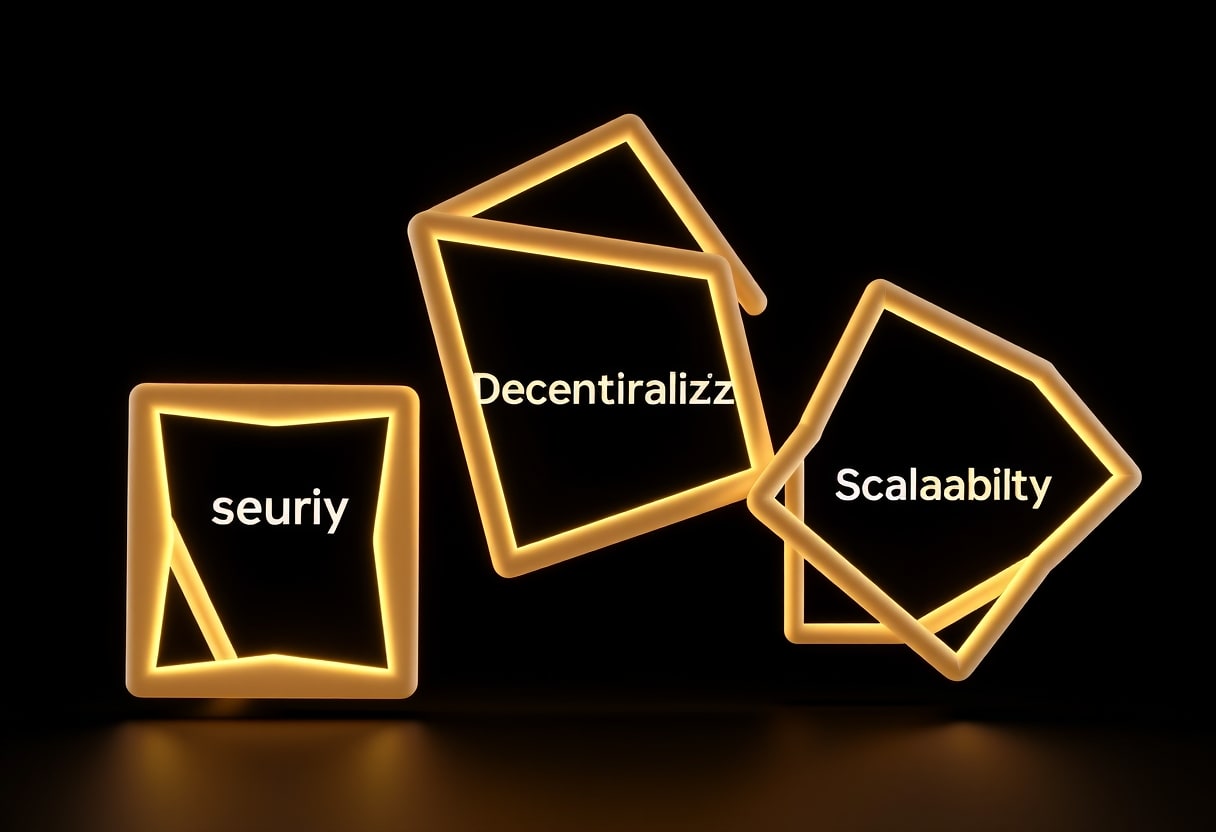
Balancing the blockchain trilemma remains Cardano's fundamental challenge in its scaling efforts.
⛓️ Hoskinson's bold claim: "This protocol is decentralized, secure, and fast." This narrative is strikingly similar to comments made recently by Ethereum co-founder Vitalik Buterin, who also suggested the trilemma has been effectively solved. Such synchronized messaging from competing L1 giants isn't a coincidence; it reflects a broader industry push to validate the next generation of blockchain infrastructure.
A key safety feature highlighted is Leios's ability to "degrade safely." Should the protocol fail, it will supposedly revert to the prior Ouroboros Praos, as seen in a past "soft fork" incident where Cardano self-corrected. Ultimately, Hoskinson believes Cardano's long-term advantage lies in its robust on-chain governance and a $1 billion treasury controlled by ADA holders, providing a sustainable mechanism for continuous upgrades and adaptation.
📍 Historical Echoes The Ethereum Killers of 20182019
As a market strategist with a couple of decades under my belt, I've heard this song before. The "blockchain trilemma solved" anthem, the promises of exponential TPS, the visionary founders – it all carries a distinct echo from the past. Specifically, I'm reminded of the 2018-2019 "Ethereum Killers" era.
🤑 Back then, projects like EOS, Tron, and even early Solana (though it would take longer to gain traction) burst onto the scene promising thousands of TPS and scaling solutions that would leave Ethereum in the dust. They often boasted about low transaction fees and "solving" scalability, often at the expense of true decentralization or long-term security. The outcome? While some delivered on raw speed, the majority failed to build robust, decentralized ecosystems capable of challenging Ethereum's network effects.
Many of these "Ethereum Killers" generated massive retail investor hype, only to see their tokens suffer significant corrections as technical promises met market reality and adoption lagged. Lessons learned? Raw TPS numbers are often misleading without context, and true decentralization is a far harder problem to crack than simply speeding up a network.Leios aims to propel Cardano to 500 transactions per second, targeting new levels of performance.
Market Impact & What's at Stake for ADA Holders
🐂 The announcement of Leios has undeniably injected a fresh dose of optimism into the Cardano ecosystem. In the short term, this translates to increased price volatility for ADA as traders react to development milestones like the Q2 2025 testnet launch. Speculation will likely drive spikes, but don't expect a sustained bull run solely on promises.
🌐 For the long term, Leios is absolutely critical for Cardano's survival and relevance in 2025 and beyond. Its current throughput is a choke point, limiting meaningful DeFi and dApp adoption. A successful Leios implementation could finally unlock Cardano's potential for lower fees, faster transactions, and a more competitive ecosystem against established players like Ethereum and newer, high-throughput L1s.
However, the market is no longer naive. Investors will demand concrete results: a stable testnet, a smooth mainnet hard fork, and then, crucially, a measurable increase in network usage and developer activity. Failure to deliver, or significant delays, could lead to severe investor fatigue and a re-evaluation of ADA's long-term prospects. This is where the rubber meets the road for Charles Hoskinson's decade-long vision.
🚩 Summary of Key Stakeholder Positions
Stakeholder
Position/Key Detail
Input Output (Michael Smolenski)
🏛️ Leios targets 50x speed boost to 500 TPS initially, focusing on transaction kilobytes per second; testnet Q2 2025, mainnet by 2026.
Charles Hoskinson
⚖️ Leios is the culmination of a decade of research, resolves the blockchain trilemma (decentralization, security, scalability), safely degrades to Ouroboros Praos, emphasizes on-chain governance and $1B treasury.
Cardano Stake Pool Operators (SPOs)
Require higher network usage and transaction fees for long-term operational sustainability; careful, incremental scaling is needed to bring them along.
ADA Holders
🌍 Control a $1 billion on-chain treasury for future upgrades, but current ADA price ($0.2638) reflects cautious market sentiment; significant upside if Leios delivers, substantial risk if it underperforms.
📝 Key Takeaways
Cardano's Leios upgrade promises a significant 50x increase in throughput, targeting 500 TPS initially, vital for network adoption and SPO economics.
The "blockchain trilemma solved" narrative is a bold claim, echoing past L1 scaling promises; investors should weigh this against historical precedent and competing L1s.
A successful Leios implementation is crucial for Cardano to attract more DeFi and dApp activity, potentially transforming its competitive position in the L1 landscape.
Short-term ADA price action will likely be driven by testnet and mainnet release milestones, but sustained gains depend on actual network utility and adoption.
🔮 Thoughts & Predictions
The current market is ripe for narratives, and Cardano's Leios upgrade perfectly fits the bill. However, given the historical performance of "trilemma-solving" L1s from the 2018-2019 "Ethereum Killers" era, the initial market enthusiasm for Leios might be tempered by cautious skepticism as we approach the Q2 2025 testnet. It’s not enough to simply claim technical superiority; genuine adoption requires seamless developer experience, substantial dApp growth, and a sticky user base, areas where Cardano has historically struggled to gain significant traction.
From my perspective, the key factor will be whether this technical upgrade translates into a tangible economic uplift for Stake Pool Operators and, more importantly, a flourishing ecosystem that can compete with the likes of Solana and an ever-evolving Ethereum. Expect short-term ADA volatility around milestones, but a sustained rally hinges on demonstrable on-chain activity and a significant uptick in Total Value Locked (TVL) post-mainnet. If Leios truly delivers 500 TPS without compromising decentralization, Cardano could carve out a more competitive niche, especially with its robust governance and treasury mechanism.
The path to sustainable staking operations for Cardano faces the critical hurdle of transaction fee economics.
However, the biggest hurdle isn't just the code; it's market perception and the ability to attract developers away from more established or trendier ecosystems. The long-term success of Leios, and by extension ADA, will depend less on theoretical TPS and more on how effectively Cardano can convert its technical prowess into a vibrant, economically self-sustaining network that truly offers a superior alternative to its rivals.
🎯 Investor Action Tips
Monitor Testnet Progress Closely: Track the Leios testnet launch in Q2 2025 for stability, performance, and developer feedback, as this will be the first real indicator of potential.
Evaluate Ecosystem Growth, Not Just TPS: Look beyond raw transaction speeds; analyze metrics like Total Value Locked (TVL) in DeFi, number of active dApps, and daily active users on Cardano to gauge true adoption post-Leios.
Diversify Your L1 Exposure: Given the historical track record of "Ethereum Killers," avoid over-allocating to any single L1. Diversify your portfolio across different blockchain architectures to mitigate risk.
Consider DCA on Pullbacks: If you believe in Cardano's long-term vision, use a Dollar-Cost Averaging strategy during potential post-hype pullbacks rather than chasing immediate price spikes.
📘 Glossary for Serious Investors
⚖️ Ouroboros Leios: Cardano's upcoming Layer-1 consensus protocol upgrade, designed to significantly increase transaction throughput and scalability while maintaining decentralization and security.
⚖️ Blockchain Trilemma: The fundamental challenge in blockchain design positing that a blockchain can only achieve two of three properties (decentralization, security, scalability) at any given time.
⚖️ SPOs (Stake Pool Operators): Entities or individuals responsible for running nodes and validating transactions on the Cardano network, earning rewards from transaction fees and block rewards.
⚖️ Transaction Kilobytes Per Second (TKPS): A metric for network throughput that accounts for the size of transactions, offering a more nuanced measure of capacity than simple Transactions Per Second (TPS).
🧭 Context of the Day
Today, Cardano's Leios upgrade is a high-stakes bet, demanding concrete delivery to convert historical promises into genuine, competitive ecosystem growth.
📈 CARDANO Market TrendLast 7 Days
Date
Price (USD)
7D Change
2/4/2026
$0.2906
+0.00%
2/5/2026
$0.2870
-1.24%
2/6/2026
$0.2457
-15.45%
2/7/2026
$0.2762
-4.94%
2/8/2026
$0.2722
-6.32%
2/9/2026
$0.2706
-6.87%
2/10/2026
$0.2639
-9.20%
Data provided by CoinGecko Integration.
💬 Investment Wisdom
"The market is a device for transferring money from the impatient to the patient." — Warren Buffett
Digital asset forecast analyzing upcoming volatility: crypto market, next bull run, BTC price. Bitcoin's "Moonvember" Hopes Tempered by Market Realities: A Deep Dive for Investors 📌 Navigating Bitcoin's November Crossroads: Will History Repeat? The cryptocurrency market is at a fascinating juncture as we enter November 2025. Bitcoin, fresh off a somewhat disappointing "Uptober" where it retraced over 10% after briefly touching $126,000 , faces a pivotal month. Historically, November, often referred to as "Moonvember," has been a strong period for Bitcoin. But can historical trends overcome current market headwinds? To understand the present, it's essential to acknowledge the past. Bitcoin's price action has often followed predictable seasonal patterns. October and November, in particular, have been associated with bullish...
Introducing Solana's pivotal network upgrade, symbolizing growth and advancement. Solana's Alpenglow Upgrade: A Game-Changer for On-Chain Trading and Network Stability 🔗 Solana, a network long celebrated for its blistering speed and low transaction fees, has also navigated its share of stability challenges. As we move into 2025, a critical evolution is on the horizon: the Alpenglow consensus overhaul . This isn't just another incremental update; it's a fundamental reimagining of Solana's core architecture, poised to address longstanding concerns regarding validator performance, network stability, and long-term scalability. For investors, understanding this seismic shift is paramount, as it could significantly redefine SOL's competitive edge and its role within the broader blockchain ecosystem . 📌 🚀 The Alpenglow Evolution: Diving ...
Solana market cap sees massive growth, institutional buying accelerates. SOL investment, crypto portfolio. Solana ETFs Surge: SOL Emerges as Crypto's Third Major Player 📌 Event Background and Significance 🎨 Solana (SOL) has long been touted as a potential "Ethereum killer," offering faster transaction speeds and lower costs. While it has enjoyed periods of popularity, particularly during the NFT boom, it has also faced challenges, including network outages and questions about its decentralization. The approval and subsequent success of Solana Spot Exchange-Traded Funds (ETFs) mark a significant milestone for the cryptocurrency, potentially solidifying its position among institutional investors . Previously, only Bitcoin and Ethereum had achieved this level of mainstream financial product integration. The arrival of Solana ETFs represents a broadening ac...