Stay updated with the latest in cryptocurrency and blockchain news, delivered fast and reliably. Bookmark this page and check back often for valuable insights and timely information!
The cooling enthusiasm for BTC investment vehicles suggests a temporary ceiling for current retail participation. The honeymoon period for Bitcoin and Ethereum spot ETFs is officially over. For months, these regulated investment vehicles were hailed as the golden ticket, the ultimate bridge between traditional finance and the digital asset world. But as we sit here in early February 2026 , the data paints a starkly different picture. The initial euphoria, the endless headlines of record inflows—that's a distant memory. The reality? Institutional appetite is waning, and it's leaving a clear mark on the crypto market. A cooling trend in monthly data highlights the fragility of institutional support for digital assets. BTC Price Trend Last 7 Days ...
Get link
Facebook
X
Pinterest
Email
Other Apps
Brazil House Proposes Bitcoin Reserve: The 1 Million BTC Sovereign Pivot
Get link
Facebook
X
Pinterest
Email
Other Apps
-
Strategic integration of BTC into sovereign assets signals a fundamental shift in national reserves.
Brazil Eyes 1 Million BTC: A Sovereign Pivot or a Risky Bet for Your Portfolio?
Even as Bitcoin (BTC) navigates choppy waters, Brazil's House of Representatives is making waves with a proposal that could fundamentally shift its national financial strategy. They're exploring the creation of a national Bitcoin reserve, potentially holding up to 1 million BTC.
This isn't just about diversification; it's a bold play, and any seasoned investor knows that sovereign adoption can either create monumental opportunities or lead to significant market turbulence. It's time to cut through the hype and analyze the real implications.
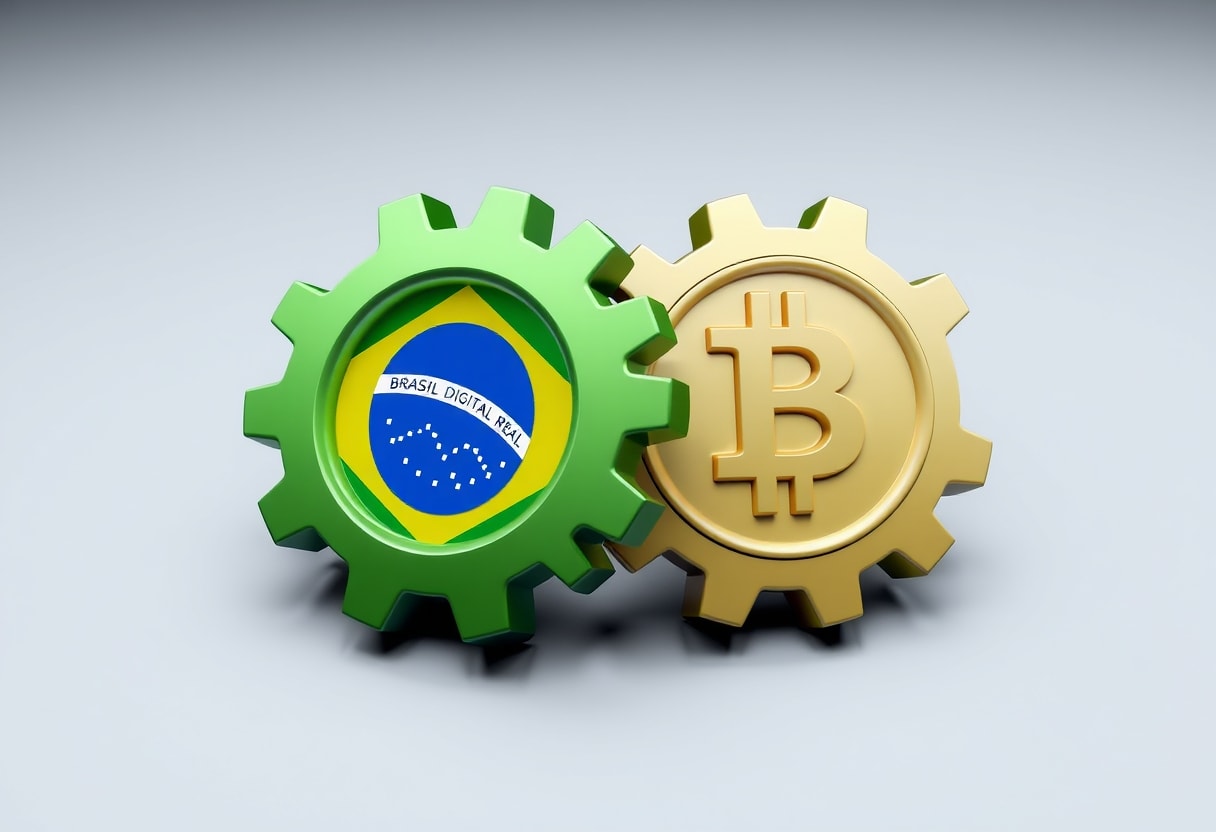
Backing the Digital Real with BTC establishes a dual-layer security model for future Brazilian currency.
📍 The Grand Plan RESBit Takes Center Stage
The renewed push comes via Bill No. 4,501 of 2024, designed to establish the Sovereign Strategic Reserve of Bitcoins, or RESBit. This isn't a minor tweak; it's an ambitious framework aiming to formally integrate Bitcoin into Brazil’s broader financial architecture.
Federal Deputy Luiz Gastão is associated with the initiative, while Federal Deputy Eros Biondini authored the bill. Their argument? Holding BTC could serve as a hedge, shielding Brazil’s international reserves from gnarly currency volatility and escalating geopolitical risks.
Beyond that, the reserve is also framed as support for Brazil's central bank digital currency (CBDC), the Digital Real (Drex), offering an additional layer of perceived backing. It’s a multi-pronged strategy, typical of nations trying to appear forward-thinking while simultaneously mitigating their own economic exposures.
The Devil in the Details: Acquisition Strategy
The proposal isn't a free-for-all. RESBit would be capped at a maximum of 5% of Brazil’s international reserves. Any Bitcoin purchases would be executed gradually, following a structured acquisition plan.
The bill explicitly states adherence to the country’s Fiscal Responsibility Law, ensuring Bitcoin acquisitions don't destabilize public accounts. This implies a cautious, calculated approach—or at least, the appearance of one.
🧱 This bill isn't solely about accumulating Bitcoin. It's part of a larger, more comprehensive digital asset strategy. The proposal includes forming a specialized advisory committee, comprised of experts in digital economy, blockchain, and cybersecurity.
Legislative frameworks for BTC acquisition demonstrate the increasing institutionalization of decentralized finance in South America.
Inter-institutional working groups are also on the agenda to coordinate implementation and oversight. This signals a serious institutional effort to understand and integrate this tech, not just speculate on price.
Building the Ecosystem
The bill extends to broader measures aimed at bolstering Brazil’s digital asset ecosystem. It envisions educational initiatives and workforce training focused on blockchain and digital security, even for public servants.
🌐 Furthermore, it encourages the development of crypto and blockchain startups and calls for significant investment in robust technological infrastructure. This is a clear play for regional leadership, positioning Brazil as a hub for digital finance in Latin America.
🚩 Market Impact Analysis What This Means for Investors
💪 This news is a game-changer. A sovereign nation actively pursuing a Bitcoin reserve of this magnitude is a strong long-term bullish signal for institutional adoption. We are currently seeing BTC surge to the upper limit of its consolidation range, hitting $69,000 with a 5% gain in the last 24 hours.
Short-term, this could fuel further speculative buying, pushing Bitcoin past its recent resistance levels. The market craves institutional validation, and a nation-state reserve provides exactly that.
Long-term, a structured, gradual acquisition plan by a major economy like Brazil could establish a consistent demand floor for BTC. This reduces overall volatility by soaking up supply over time, making Bitcoin more palatable to traditional institutional investors.
It also sets a powerful precedent. If Brazil succeeds, other nations struggling with currency stability or seeking technological leadership might follow, creating a "domino effect" of sovereign Bitcoin adoption. This would solidify Bitcoin's role as a legitimate reserve asset, transforming global financial dynamics.
Accumulating 1 million BTC would position Brazil as a dominant force in the global digital economy.
📌 Stakeholder Analysis & Historical Parallel El Salvadors Costly Experiment
Supporters of Brazil's bill proudly cite "international precedents" like El Salvador. Let's be clear: this isn't a direct copy, but the echoes are undeniable. The most similar event in recent memory, for better or worse, is El Salvador's bold move in 2021 to make Bitcoin legal tender and accumulate it on its balance sheet.
💔 The outcome for El Salvador was a mixed bag. While it garnered immense media attention and brought some tourism and financial inclusion, the price volatility of BTC also led to significant paper losses on their national holdings. It was a high-stakes gamble with considerable public education challenges and infrastructure hurdles.
In my view, Brazil's current proposal appears to be a far more calculated, strategic maneuver. Unlike El Salvador's "all-in" approach, Brazil's 5% cap on international reserves, combined with a gradual acquisition plan and a focus on broader ecosystem development, suggests a measured de-risking strategy. They want the upside of Bitcoin without the immediate, unhedged exposure to extreme volatility.
This isn't about legal tender; it's about reserve diversification and tech leadership. The lesson from El Salvador was that enthusiasm without robust infrastructure and a clear, gradual integration plan can backfire. Brazil seems to be learning from those early mistakes, attempting to bake in stability and long-term vision from the outset.
Stakeholder
Position/Key Detail
Brazil's House of Representatives
Proposing Bill No. 4,501/2024 for a Sovereign Strategic Reserve of Bitcoins (RESBit).
Federal Deputy Luiz Gastão
Associated with the initiative to integrate Bitcoin into national reserves.
Federal Deputy Eros Biondini
Author of the bill, championing Bitcoin as a national reserve component.
Brazil's Government/Central Bank
🆕 Aims to integrate Bitcoin; Drex CBDC to be supported by the new reserve.
Blockchain & Digital Economy Experts
To form an advisory committee for implementation and oversight of the program.
Crypto & Blockchain Startups
Encouraged for development through ecosystem strengthening and infrastructure investment.
📌 Future Outlook A New Paradigm Dawns
🌐 If Bill No. 4,501 passes, we are looking at a potential sea change in how nation-states view and interact with digital assets. The crypto market could see increased stability as sovereign funds become a new class of "whale" accumulators, providing consistent buying pressure over years.
The regulatory environment, particularly around Bitcoin as a reserve asset, could become clearer and more standardized globally. This would be a welcome development, reducing the current patchwork of rules that often stifle innovation and institutional participation.
📜 Opportunities will emerge in areas like infrastructure provision for sovereign asset management, secure custody solutions, and compliance technology. Risks remain, however, particularly for countries with weaker fiscal discipline. Any nation that treats Bitcoin as a quick fix for deeper economic issues, rather than a strategic long-term asset, could face significant headwinds.
Professional analysis of BTC volatility remains central to the implementation of long-term sovereign fiscal policy.
Ultimately, this proposal from Brazil isn't just a political talking point; it's a blueprint for a future where Bitcoin is a core component of national balance sheets. It's a harsh reality check for those who still dismiss crypto as a niche speculation.
📌 Key Takeaways
Brazil's proposed RESBit signals a significant step towards Bitcoin's integration into national financial reserves, capping at 5% of international reserves.
The initiative aims to hedge against currency volatility and geopolitical risks, while also bolstering Brazil's CBDC, the Digital Real (Drex).
A gradual acquisition plan, along with ecosystem development and regulatory frameworks, suggests a more cautious approach compared to prior sovereign BTC adoptions.
Short-term, this could fuel Bitcoin's price momentum; long-term, it establishes a new demand floor and sets a precedent for other nations.
Investors should monitor the bill's progress and potential follow-up actions from other emerging economies.
🔮 Thoughts & Predictions
Connecting this to El Salvador's 2021 experiment, Brazil appears to be playing a far more sophisticated game. Rather than diving headfirst, their measured 5% cap and emphasis on infrastructure suggests a strategic de-risking of sovereign crypto exposure, aiming to capture Bitcoin's upside as a reserve asset without inviting immediate, overwhelming volatility risks to their national accounts. This is not about making Bitcoin legal tender; it’s about a new form of digital asset diplomacy.
🚀
The immediate market reaction, with BTC rallying past $69,000, clearly shows that institutional and sovereign validation remain powerful catalysts for price action. My medium-term prediction is that if this bill progresses, we will see other emerging economies, particularly those susceptible to dollar strength or political instability, begin to draft similar exploratory frameworks within the next 12-18 months.
🟢
The long-term implication is a subtle but profound shift in global reserve asset strategies. It signals a move away from absolute reliance on fiat currencies, particularly the dollar, for nations seeking financial autonomy. Bitcoin is slowly, almost imperceptibly, being woven into the fabric of state-level finance. This isn't just a bull run; it's a foundational re-evaluation.
🎯 Investor Action Tips
Monitor Regulatory Progress: Track Bill No. 4,501's passage closely for indicators of timeline and implementation details, as these will directly influence market sentiment.
Diversify Beyond Spot BTC: Consider projects offering secure sovereign custody solutions or institutional-grade DeFi protocols that could benefit from nation-state adoption trends.
Watch Emerging Economies: Identify other nations with similar economic vulnerabilities or digital transformation ambitions that might follow Brazil's lead, signaling future market opportunities.
Assess CBDC Impact: Research how a Bitcoin reserve might affect the development and adoption of Brazil's Digital Real (Drex), potentially creating new investment avenues in the CBDC ecosystem.
📘 Glossary for Serious Investors
⚖️ RESBit (Sovereign Strategic Reserve of Bitcoins): The proposed national Bitcoin reserve in Brazil, designed to integrate BTC into the country's broader financial strategy.
⚖️ Drex (Digital Real): Brazil's central bank digital currency (CBDC), which the proposed Bitcoin reserve aims to support and provide an additional layer of backing for.
⚖️ Fiscal Responsibility Law: A Brazilian law governing public finance, mandating strict adherence to spending limits and financial stability, ensuring responsible Bitcoin acquisition.
🧭 Context of the Day
Brazil's calculated move toward a Bitcoin reserve signals a new, cautious era of sovereign digital asset integration, shifting global financial paradigms.
📈 BITCOIN Market TrendLast 7 Days
Date
Price (USD)
7D Change
2/8/2026
$69,296.81
+0.00%
2/9/2026
$70,542.37
+1.80%
2/10/2026
$70,096.41
+1.15%
2/11/2026
$68,779.91
-0.75%
2/12/2026
$66,937.58
-3.40%
2/13/2026
$66,184.58
-4.49%
2/14/2026
$68,846.91
-0.65%
Data provided by CoinGecko Integration.
💬 Investment Wisdom
"The transition from fiat to digital reserves is not a choice; it is a defensive necessity for emerging economies." — Luiz Gastão
Digital asset forecast analyzing upcoming volatility: crypto market, next bull run, BTC price. Bitcoin's "Moonvember" Hopes Tempered by Market Realities: A Deep Dive for Investors 📌 Navigating Bitcoin's November Crossroads: Will History Repeat? The cryptocurrency market is at a fascinating juncture as we enter November 2025. Bitcoin, fresh off a somewhat disappointing "Uptober" where it retraced over 10% after briefly touching $126,000 , faces a pivotal month. Historically, November, often referred to as "Moonvember," has been a strong period for Bitcoin. But can historical trends overcome current market headwinds? To understand the present, it's essential to acknowledge the past. Bitcoin's price action has often followed predictable seasonal patterns. October and November, in particular, have been associated with bullish...
Introducing Solana's pivotal network upgrade, symbolizing growth and advancement. Solana's Alpenglow Upgrade: A Game-Changer for On-Chain Trading and Network Stability 🔗 Solana, a network long celebrated for its blistering speed and low transaction fees, has also navigated its share of stability challenges. As we move into 2025, a critical evolution is on the horizon: the Alpenglow consensus overhaul . This isn't just another incremental update; it's a fundamental reimagining of Solana's core architecture, poised to address longstanding concerns regarding validator performance, network stability, and long-term scalability. For investors, understanding this seismic shift is paramount, as it could significantly redefine SOL's competitive edge and its role within the broader blockchain ecosystem . 📌 🚀 The Alpenglow Evolution: Diving ...
Solana market cap sees massive growth, institutional buying accelerates. SOL investment, crypto portfolio. Solana ETFs Surge: SOL Emerges as Crypto's Third Major Player 📌 Event Background and Significance 🎨 Solana (SOL) has long been touted as a potential "Ethereum killer," offering faster transaction speeds and lower costs. While it has enjoyed periods of popularity, particularly during the NFT boom, it has also faced challenges, including network outages and questions about its decentralization. The approval and subsequent success of Solana Spot Exchange-Traded Funds (ETFs) mark a significant milestone for the cryptocurrency, potentially solidifying its position among institutional investors . Previously, only Bitcoin and Ethereum had achieved this level of mainstream financial product integration. The arrival of Solana ETFs represents a broadening ac...