Stay updated with the latest in cryptocurrency and blockchain news, delivered fast and reliably. Bookmark this page and check back often for valuable insights and timely information!
The dissolution of major ETH positions signals a fundamental cleansing of excessive market leverage. The $1.3 Billion Ethereum Reckoning: Unpacking a Whale's Brutal Exit and What It Means for Your Portfolio 💰 The cryptocurrency market is once again showcasing its brutal nature, with a massive Ethereum sell-off dominating headlines. After months of grinding volatility, a significant institutional player has completed an unprecedented unwinding of its ETH holdings, sending ripples across the market. ETH Price Trend Last 7 Days Powered by CryptoCompare 🐳 This isn't just another data point; it's a stark reminder of the immense leverage that underpins much of the crypto ecosystem. For inves...
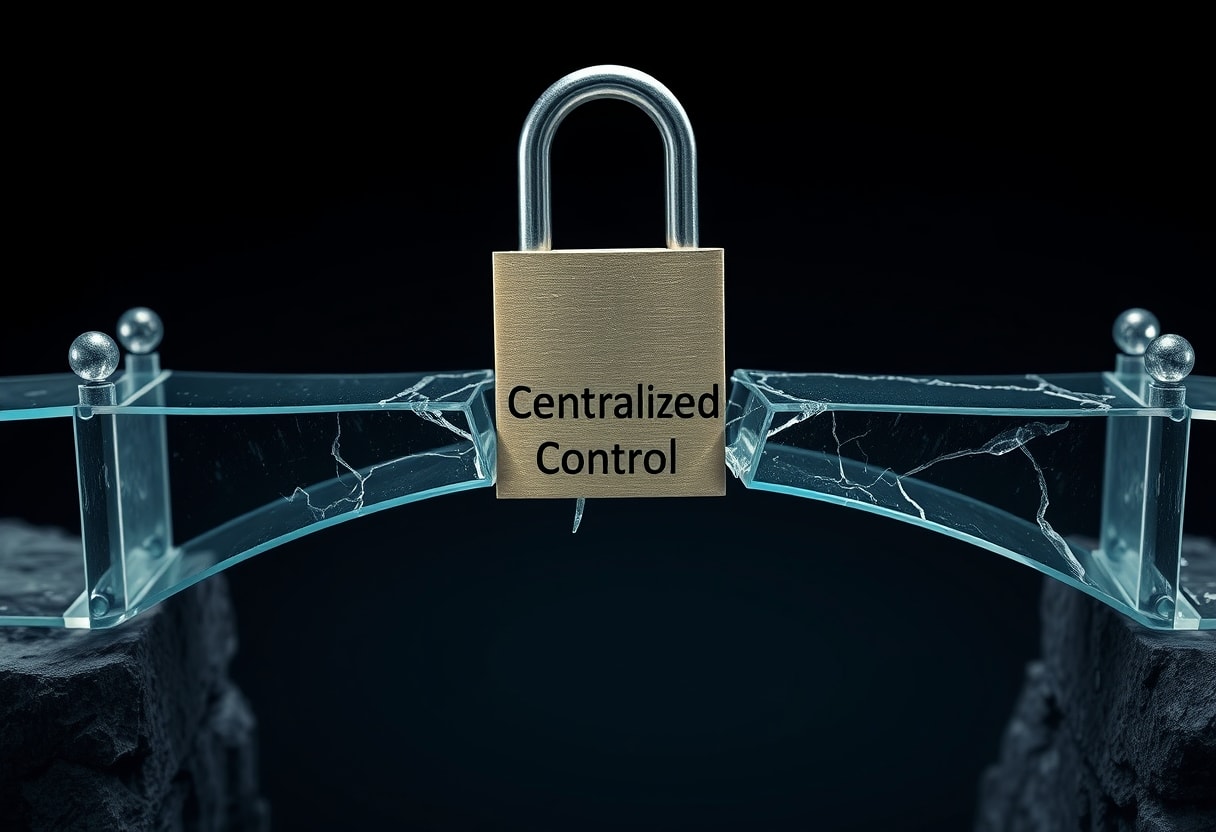
Centralized exchanges offer Bitcoin recovery, yet this control mechanism masks profound operational vulnerabilities.
The Bithumb Bailout: A Centralized Mirage in a Quantum-Threatened World
Another day, another reminder of crypto's enduring paradox. South Korean exchange giant Bithumb just wrapped up a frantic recovery operation, clawing back 99.7% of Bitcoin from an erroneous airdrop event. Impressive on paper, perhaps. But let's be clear: this isn't a testament to robust systems; it's a stark, flashing red light on the operational fragility of centralized crypto infrastructure.
The incident, reportedly triggered by an internal system calibration error, underscores a fundamental truth: while centralized entities can correct their blunders, they often do so by exercising control that flies in the face of crypto's core decentralization ethos. The remaining 0.3%, for the record, was discreetly repaid using company assets.
The market shifts from legacy crypto infrastructure towards resilient, future-proof security protocols.
🔗 This near-miss should rattle anyone comfortable leaving their assets in third-party custody. It wasn't a hack, but an internal operational slip-up, yet the potential for catastrophe was identical. Had this exact error occurred on a truly immutable, finalized blockchain, those funds would be gone forever.
🚩 Event Background The Endless Cycle of Centralized Risk
The Bithumb debacle is not an isolated incident; it's a chapter in a long, predictable saga. Since the early days of crypto, centralized exchanges have been a necessary evil, bridging the gap between traditional finance and digital assets. However, they've also been a consistent single point of failure.
💔 Think back to the colossal implosions like the Mt. Gox hack in 2014, or more recently, the FTX scandal. These events weren't just financial losses; they were devastating blows to investor trust, leading to widespread calls for self-custody and more stringent regulatory oversight.
What Bithumb demonstrates today is that even without malicious intent, the sheer complexity and human element in managing billions in digital assets within legacy systems present inherent, unfixable risks. This incident highlights the difference between fixing a bug and truly preventing a systemic failure.
🚩 Market Impact Analysis A Jolt Not a Shift Yet
The immediate market reaction to the Bithumb recovery has been muted, a testament to the fact that such "near-disasters" are increasingly priced into the broader crypto narrative. Bitcoin's price held steady, and altcoin markets largely shrugged.
However, beneath the surface, a subtle but significant shift in investor sentiment is accelerating. Sophisticated capital is increasingly demanding not just recovery mechanisms, but prevention at the protocol level. This incident further erodes confidence in the operational resilience of many large, centralized exchanges.
🏛️ In the long term, this pushes the narrative towards solutions that offer genuinely immutable security, moving beyond human fallibility or legacy system vulnerabilities. Expect continued pressure on stablecoin issuers and DeFi protocols to stress-test their own centralized points of control and a growing premium on truly decentralized, auditable systems.
Bithumb's error exposes the fragility and counterparty risk of centralized cryptocurrency custody.
🚩 Stakeholder Analysis & Historical Parallel Echoes of Mt Gox
Let's be blunt: The Bithumb incident, while thankfully resolved, carries chilling echoes of past centralized failures. In my view, this is less about Bithumb's recovery prowess and more about the persistent vulnerability of the entire custodial model. It’s a calculated reminder that the 'big players' still hold immense power over user funds, capable of both correcting mistakes and, more critically, making them.
👾 The most pertinent historical parallel here is the Mt. Gox collapse in 2014. Mt. Gox, then the world's largest Bitcoin exchange, was utterly annihilated by hacks and alleged fraud. The outcome was catastrophic: billions in Bitcoin lost, freezing accounts, and a multi-year recovery process that continues to haunt the industry.
The lesson learned from Mt. Gox was simple, yet profound: "not your keys, not your coins." While Bithumb's situation today differs in its positive outcome – funds were recovered – the mechanism of the error (internal system fault) and the reliance on centralized control to fix it are identical. Unlike Mt. Gox, where assets were lost forever, Bithumb was able to intervene, but this intervention itself highlights the centralized chokepoint. It illustrates that while the industry has matured in its response capabilities, the fundamental risks of custodial solutions persist, merely shifting from theft to operational incompetence.
Summary of Core Conflict
Stakeholder
Position/Key Detail
Bithumb
📉 Successfully recovered 99.7% of Bitcoin from erroneous airdrop using centralized control.
BMIC
⚖️ Offers quantum-secure finance stack, hedging against future cryptographic vulnerabilities.
👥 Retail Investors
⚖️ Reminded of inherent risks of centralized custody and the urgent need for robust security.
📌 The Real Threat Quantum Computing and the Harvest Now Decrypt Later Play
🤑 While the market fixates on operational slip-ups, the next existential threat to crypto is far more insidious: quantum computing. The Bithumb error was a failure of process; the next major crisis will be a failure of mathematics. Current blockchain security relies on elliptic curve cryptography, a standard projected to be broken by quantum computers within the decade.
This creates a terrifying "harvest now, decrypt later" threat vector. Malicious state actors and well-funded groups are already collecting vast amounts of encrypted data today, patiently waiting for quantum processing power to mature. Once it does, every public key, every transaction history, becomes an open book, and every private key derivable.
BMIC: A Firewall Against Mathematical Obsolescence
➕ This is where BMIC ($BMIC) enters the fray. While centralized exchanges play whack-a-mole with operational flaws, projects like BMIC are building the fundamental infrastructure to secure the entire transaction layer against this quantum tsunami. It's not about patching; it's about a complete architectural overhaul.
📜 BMIC deploys a Full Quantum-Secure Finance Stack. This goes far beyond basic wallet security, integrating post-quantum cryptography with AI-Enhanced Threat Detection. The goal is simple: ensure absolute wallet integrity, even in a post-quantum world where current cryptographic standards are obsolete.
What makes BMIC a game-changer is its implementation of Zero Public-Key Exposure. Traditional transactions reveal your public key, creating a target for quantum algorithms (like Shor’s algorithm) to derive the private key. BMIC eliminates this attack surface by keeping keys shrouded, making assets mathematically invisible to quantum surveillance. This isn't just better security; it's a fundamental paradigm shift.
BMIC's innovative quantum-secure finance stack redefines digital asset protection, anticipating future threats.
Furthermore, BMIC leverages ERC-4337 Smart Accounts, abstracting away the user experience nightmares of seed phrases while maintaining its ironclad quantum resistance. For institutions witnessing the Bithumb debacle, the promise of true finality without the specter of cryptographic obsolescence is immensely appealing.
📌 Smart Money Targets BMIC Presale as Institutional Hedge
While the masses react to daily price swings and exchange dramas, discerning investors are quietly rotating capital into infrastructure plays offering long-term durability. The BMIC presale has already signaled this trend, raising over $444K in its early stages.
🏛️ At the current price of $0.049474, the $BMIC token is positioning itself as a strategic call option on the security standards of the next decade. The logic is clear: as on-chain asset values grow into the trillions, the premium on genuinely quantum-proof security will become exponential. Current wallets are, in essence, vaults with rapidly ticking time locks; BMIC offers the necessary upgrade to keep them shut indefinitely.
BMIC's utility extends beyond mere security. Its 'Burn-to-Compute' mechanism and the Quantum Meta-Cloud point to a broader ecosystem play, where the token acts as a resource for accessing high-level security computation. This dual utility – security infrastructure and compute resources – significantly differentiates $BMIC from single-purpose security tokens, marking it as a protocol with substantial growth potential.
📝 Key Takeaways
Bithumb's recovery highlights the double-edged sword of centralized exchanges: ability to correct errors vs. inherent operational fragility and control.
The incident reinforces the "not your keys, not your coins" mantra, pushing smart money towards proactive, protocol-level security solutions.
The looming quantum threat and "harvest now, decrypt later" attack vector represent a far greater, long-term risk than operational errors.
Projects like BMIC, offering quantum-secure finance stacks and Zero Public-Key Exposure, are attracting significant early investor interest as a hedge against future cryptographic obsolescence.
Investors should shift focus from reactive fixes to foundational, future-proof security infrastructure.
📌 Future Outlook Security as the New Premium
This Bithumb incident will serve as another brick in the wall of regulatory pressure, forcing exchanges to enhance internal controls and transparency. But the real evolution will occur at the base layer.
The future of crypto hinges on foundational security. The operational risks highlighted by Bithumb, combined with the existential threat of quantum computing, will inevitably drive capital toward protocols that address these vulnerabilities at their core. We will see a growing bifurcation: highly regulated, albeit still centralized, exchanges managing fiat on-ramps, and a burgeoning ecosystem of truly decentralized, quantum-resistant infrastructure securing the vast majority of on-chain value.
Opportunities will emerge for early adopters of quantum-secure protocols and those who understand that in crypto, security isn't a feature; it's the product itself. The risks, conversely, lie in continued complacency with legacy systems and an underestimation of the quantum threat's timeline.
🔮 Thoughts & Predictions
The Bithumb incident, while averted, is a classic institutional power move. It shows that centralized entities can intervene, but this control is exactly what makes them a vector for both human error and potential regulatory overreach. This reinforces a growing narrative among savvy investors: true long-term value isn't in recovery mechanisms, but in foundational, immutable security that renders intervention unnecessary.Savvy investors are hedging against future cryptographic vulnerabilities, driving BMIC's rapid presale traction.
👮
Drawing parallels to Mt. Gox, where the fundamental flaw was centralization leading to irreversible loss, Bithumb merely highlights that even "successful" centralized recoveries come at the cost of decentralization. My prediction is a sharp increase in demand for protocols like BMIC that offer quantum-secure, self-custodial solutions, pushing the market toward a fundamental re-evaluation of what constitutes 'safe' crypto infrastructure. This isn't just about hedging; it's about anticipating the next decade's security paradigm.
🏛️
Ultimately, the market will increasingly price in a "security premium" for assets and protocols that have demonstrably future-proofed against both operational and cryptographic risks. Expect a significant capital rotation into projects solving the quantum dilemma, with BMIC potentially leading this charge as a critical infrastructure layer in the coming 3-5 years.
🎯 Investor Action Tips
Re-evaluate Custody: Seriously consider moving a significant portion of your long-term holdings off centralized exchanges to hardware wallets or self-custody solutions that are demonstrably secure.
Research Quantum-Secure Protocols: Deep dive into projects like BMIC that are building post-quantum cryptography infrastructure. Early entry into these foundational technologies could offer substantial upside.
Monitor Exchange Resilience: While reducing reliance, keep an eye on exchanges' incident response transparency and technological upgrades. Prioritize those actively investing in security and decentralization features.
Diversify Security Hedges: Beyond general asset diversification, consider diversifying your "security hedges" by allocating a portion of your portfolio to protocols addressing specific, long-term threats like quantum computing.
📘 Glossary for Serious Investors
⏳ Harvest Now, Decrypt Later: Refers to the strategy of collecting currently encrypted data, knowing it cannot be decrypted with today's technology, but anticipating that future quantum computers will be able to break its encryption.
🔐 Zero Public-Key Exposure: A cryptographic technique where a user's public key is never fully revealed in a transaction, significantly reducing the attack surface for quantum algorithms aiming to derive private keys.
🧭 Context of the Day
Today's Bithumb recovery reinforces that while centralized power can fix errors, true long-term crypto security demands foundational, quantum-resistant decentralization.
💔 The information provided in this article is for educational purposes only and does not constitute financial advice. Cryptocurrency investments carry high risks, including total loss of capital. Always conduct your own due diligence before investing.
📈 BITCOIN Market TrendLast 7 Days
Date
Price (USD)
7D Change
2/3/2026
$78,767.66
+0.00%
2/4/2026
$75,638.96
-3.97%
2/5/2026
$73,172.29
-7.10%
2/6/2026
$62,853.69
-20.20%
2/7/2026
$70,523.95
-10.47%
2/8/2026
$69,296.81
-12.02%
2/9/2026
$70,542.37
-10.44%
2/10/2026
$69,436.34
-11.85%
Data provided by CoinGecko Integration.
💬 Investment Wisdom
"It's not what you don't know that gets you into trouble. It's what you know for sure that just ain't so." — Mark Twain
Digital asset forecast analyzing upcoming volatility: crypto market, next bull run, BTC price. Bitcoin's "Moonvember" Hopes Tempered by Market Realities: A Deep Dive for Investors 📌 Navigating Bitcoin's November Crossroads: Will History Repeat? The cryptocurrency market is at a fascinating juncture as we enter November 2025. Bitcoin, fresh off a somewhat disappointing "Uptober" where it retraced over 10% after briefly touching $126,000 , faces a pivotal month. Historically, November, often referred to as "Moonvember," has been a strong period for Bitcoin. But can historical trends overcome current market headwinds? To understand the present, it's essential to acknowledge the past. Bitcoin's price action has often followed predictable seasonal patterns. October and November, in particular, have been associated with bullish...
Introducing Solana's pivotal network upgrade, symbolizing growth and advancement. Solana's Alpenglow Upgrade: A Game-Changer for On-Chain Trading and Network Stability 🔗 Solana, a network long celebrated for its blistering speed and low transaction fees, has also navigated its share of stability challenges. As we move into 2025, a critical evolution is on the horizon: the Alpenglow consensus overhaul . This isn't just another incremental update; it's a fundamental reimagining of Solana's core architecture, poised to address longstanding concerns regarding validator performance, network stability, and long-term scalability. For investors, understanding this seismic shift is paramount, as it could significantly redefine SOL's competitive edge and its role within the broader blockchain ecosystem . 📌 🚀 The Alpenglow Evolution: Diving ...
Solana market cap sees massive growth, institutional buying accelerates. SOL investment, crypto portfolio. Solana ETFs Surge: SOL Emerges as Crypto's Third Major Player 📌 Event Background and Significance 🎨 Solana (SOL) has long been touted as a potential "Ethereum killer," offering faster transaction speeds and lower costs. While it has enjoyed periods of popularity, particularly during the NFT boom, it has also faced challenges, including network outages and questions about its decentralization. The approval and subsequent success of Solana Spot Exchange-Traded Funds (ETFs) mark a significant milestone for the cryptocurrency, potentially solidifying its position among institutional investors . Previously, only Bitcoin and Ethereum had achieved this level of mainstream financial product integration. The arrival of Solana ETFs represents a broadening ac...