Stay updated with the latest in cryptocurrency and blockchain news, delivered fast and reliably. Bookmark this page and check back often for valuable insights and timely information!
The strategic withdrawal of Gemini from secondary markets marks a calculated shift toward high-value US jurisdictions The Great Crypto Divide: Gemini's Institutional Pivot & The Retail Alpha Hunt The rumblings have been growing louder, and today, they've erupted into a full-blown seismic shift. Gemini, the once-ubiquitous exchange helmed by the Winklevoss twins, is aggressively retreating from fragmented international markets. This isn't just a business decision; it's a declaration of war on the wild west, a calculated move to carve out their slice of the increasingly regulated American institutional pie. 💸 After shedding operations in the Netherlands and France, Gemini’s latest directive to Canadian users – close your accounts by year-end – isn't a retreat. It's a strategic consolidation. A ruthless focus on the prize: becoming...
Bhutan's sovereign wealth adjusts its BTC portfolio amidst market pressures and evolving digital asset strategies.
The crypto market is a relentless beast, always demanding attention. Just when you think you’ve seen it all, a sovereign wealth fund — yes, a nation-state — starts offloading its Bitcoin stash. This isn’t just another headline; it’s a seismic tremor indicating deeper shifts beneath the surface of the crypto economy.
🏢 Today, on-chain analytics confirm what the sharpest eyes already suspected: a wallet tied to Druk Holding & Investments, the commercial arm of the Royal Government of Bhutan, deposited a hefty 367 Bitcoin to Binance. That’s approximately $22 million vanishing from their reserves.
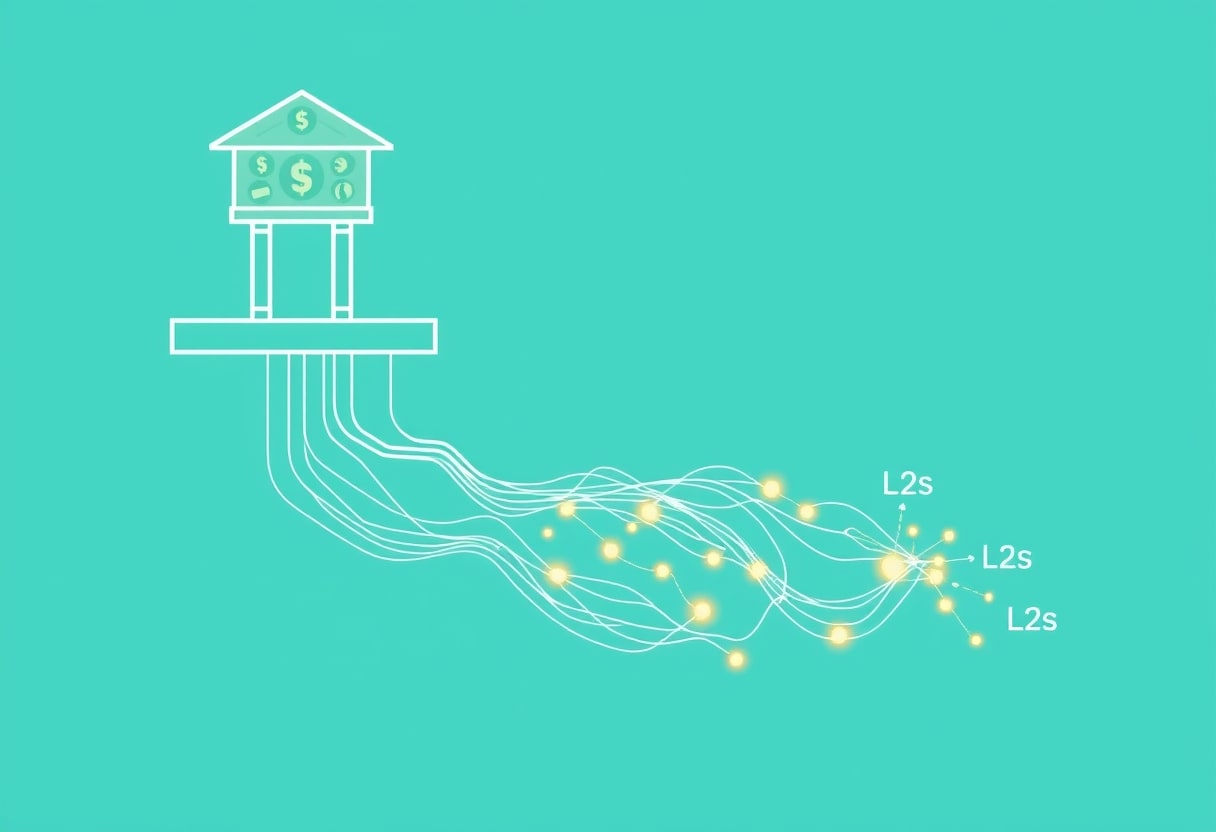
Bitcoin Hyper exemplifies the critical shift towards L2 solutions, addressing core network scalability limitations for future growth.
BTC Price TrendLast 7 Days
Powered by CryptoCompare
Let's be clear: this isn't a random act. This is a cold, calculated move, symptomatic of the crushing financial pressure currently squeezing industrial Bitcoin miners. And it tells us exactly where the smart money is headed next.
📌 Bitcoins Mining Squeeze A Sovereign Sale Signals Distress
The Background: Rising Costs, Falling Profits
For years, nation-states like Bhutan have quietly accumulated Bitcoin, often leveraging cheap hydroelectric power to become significant players in the mining game. But the good times don't last forever.
Today's market is characterized by fierce competition, soaring energy prices, and an ever-increasing network difficulty. This combination has led to a dramatic compression in Bitcoin’s hash price, which is the revenue miners earn per unit of hash power. Meanwhile, operational expenditures (OpEx) for these industrial-scale miners continue their relentless climb.
⚖️ The bottom line? Many miners, even state-backed behemoths, are finding their balance sheets stretched thin. Selling off their accumulated Bitcoin reserves becomes a necessary, albeit painful, strategy to maintain liquidity and stave off insolvency. Bhutan’s $22 million exit is not an isolated incident; it’s a loud signal of widespread distress in the mining sector.
Market Impact: L1 Sell Pressure, L2 Pivot
🐻 A $22 million sell-off, while absorbable in today’s high-volume market, still casts a shadow. For short-term Layer 1 (L1) Bitcoin price action, this move is undeniably bearish. It adds to the ongoing sell pressure and highlights the tension between the costs of securing the Bitcoin network and miner profitability. We're seeing a fundamental re-evaluation.
But here’s the catch: savvy investors don't panic. They pivot. As capital rotates out of stagnant spot positions on the main chain, sophisticated players are aggressively hunting for opportunities in the burgeoning Bitcoin Layer 2 (L2) ecosystem. This isn't just a trend; it's a strategic repositioning towards solutions that address Bitcoin’s notorious scalability and utility limitations.
The capital flight from L1 spot positions into Bitcoin L2 infrastructure is the clearest signal of where true value is being sought. This marks a significant shift in the crypto investment landscape, favoring utility and efficiency over pure store-of-value narratives.
📌 Bitcoin Hyper Grafting SVM Power onto the Original Chain
Solving Bitcoin's Utility Problem
👮 Bitcoin's status as "digital gold" is undisputed. Its security is legendary. Yet, its utility as a platform for decentralized applications is, frankly, archaic. Transactions are slow, fees can spike unpredictably, and programmable smart contracts are virtually non-existent on the main chain. This is Bitcoin's Achilles' heel in the era of Web3.
Escalating network difficulty places significant financial strain on BTC miners, forcing operational re-evaluations.
📜 Enter Bitcoin Hyper ($HYPER). This protocol isn’t just another sidechain; it’s a meticulously engineered Layer 2 solution that grafts the blazing-fast Solana Virtual Machine (SVM) directly onto the Bitcoin network. Think about that: Solana-grade speeds, Bitcoin-grade security. It’s an audacious and critical leap.
📜 This architecture allows Bitcoin Hyper to process transactions with the speed and efficiency traditionally associated with Solana, all while securely anchoring its data and settlement on Bitcoin’s foundational Layer 1. For developers, this is a game-changer, unlocking the potential to build high-performance DeFi applications, NFT marketplaces, and gaming dApps using Rust—all within the robust Bitcoin ecosystem.
Technical Deep Dive: Bridging and Modular Design
🏦 Bitcoin Hyper leverages a decentralized Canonical Bridge, ensuring trustless transfers of $BTC to and from the L2. This is crucial because it transforms static Bitcoin into a productive, yield-generating asset. Furthermore, by modifying SPL-compatible tokens for L2 execution, Bitcoin Hyper creates a high-speed payment and DeFi environment that Bitcoin has historically lacked.
The protocol operates on a modular framework: Bitcoin L1 handles the ultimate settlement, while the SVM L2 manages real-time transaction execution. This elegant separation of concerns allows a single, trusted sequencer to manage throughput efficiently without compromising the underlying security guarantees of the Bitcoin network. It’s the best of both worlds, strategically packaged.
🔄 Stakeholder Analysis & Historical Parallel
🏛️ When an entity like Bhutan liquidates significant Bitcoin holdings due to mining stress, it’s a stark reminder that even the most secure assets are subject to macro-economic and operational pressures. This isn’t new territory for Bitcoin, though the players might change.
The most striking historical parallel within the last decade is the 2021 China Mining Ban. In May-June 2021, the Chinese government, in a sweeping regulatory crackdown, forced the closure of virtually all Bitcoin mining operations within its borders. The outcome was an immediate, dramatic drop in Bitcoin's global hash rate, significant miner capitulation, and a sharp, albeit temporary, price correction for BTC.
The lessons learned were profound:
Decentralization's True Test: The network proved its resilience, decentralizing rapidly as miners relocated globally.
Forced Liquidation: Many miners were forced to sell off assets—both equipment and BTC—to cover costs and move operations, creating significant sell pressure.
Innovation Catalyst: The event underscored the need for more efficient mining solutions and diversified revenue streams, ultimately accelerating the development of new infrastructure.
In my view, Bhutan's current sell-off, while smaller in scale, is a calculated move driven by similar, albeit less existential, financial pressures. It signals a microcosm of the systemic issues that afflicted Chinese miners. However, today’s landscape is different. Unlike in 2021, the market is not dealing with a sudden, government-mandated shutdown of a major mining hub. Instead, it’s a slower, more insidious pressure from escalating operational costs and diminishing returns.
The key difference today is the maturity of the L2 ecosystem. In 2021, L2s were largely nascent. Now, they are becoming viable, offering a clear avenue for capital rotation and utility. This means that while L1 might suffer from miner-induced sell pressure, the capital isn't necessarily leaving the Bitcoin ecosystem entirely; it's simply shifting its focus and seeking new forms of yield and utility within it.
Strategic capital now flows from foundational BTC Layer 1 into burgeoning, scalable L2 solutions.
Stakeholder
Position/Key Detail
Royal Government of Bhutan (Druk Holding & Investments)
Liquidated 367 BTC (~$22M) on Binance due to financial pressure on mining operations.
Industrial Bitcoin Miners
Facing severe financial pressure from compressing hash price and rising operational costs (OpEx).
👥 "Smart Money" Investors
Rotating capital from L1 spot positions into emerging Bitcoin Layer 2 infrastructure projects.
Bitcoin Hyper ($HYPER)
Leveraging Solana Virtual Machine (SVM) for high-speed, low-cost smart contracts on Bitcoin L1.
Presale Whales
Aggressively accumulating $HYPER, with significant individual buys, anticipating future utility.
📌 Whales Accumulate The L2 Narrative Heats Up
🔶 While sovereign entities like Bhutan are forced sellers, a very different class of investor is making moves. This is where the narrative shifts from L1 stress to L2 opportunity. The data surrounding the Bitcoin Hyper presale is telling: it has already raised over $31 million. This isn't just retail enthusiasm; it's institutional confidence.
🐋 Etherscan records show clear evidence of large singular buys—whales accumulating positions. One wallet alone scooped up $500,000 worth of $HYPER. These aren’t micro-transactions; these are substantial plays from high-net-worth individuals and funds positioning themselves ahead of the token’s public exchange listing.
👮 With $HYPER's current presale price at $0.0136751 and staking rewards at a generous 68% APY, these early investors are securing a valuation that anticipates massive future utility. Our experts, having seen these patterns before, are projecting $HYPER could reach $0.32 by the end of 2026, representing an ROI of over 2240% from current levels. These aren't just numbers; these are targets for aggressive capital growth.
🆕 Crucially, the incentive structure of Bitcoin Hyper supports a long-term vision. It offers high APY staking immediately after the Token Generation Event (TGE) but enforces a 7-day vesting period for presale stakers. This mechanism, often overlooked by short-term "flippers," is a shrewd move to prevent immediate post-launch dumping. It stabilizes the price floor, rewards genuine participants, and signals confidence in the project's foundational value.
📉 For investors wary of L1 volatility driven by miner distress, rotating into a yield-bearing and utility-focused L2 like Bitcoin Hyper represents a powerful hedge and an aggressive play for future growth.
📍 Future Outlook Bitcoins Evolution and the L2 Renaissance
🩸 The current market dynamics paint a clear picture: Bitcoin is undergoing a quiet, yet profound, evolution. The mining sector will continue to face consolidation and efficiency pressures, meaning more instances of miner capitulation or strategic liquidations are likely. This will maintain a low-level bearish pressure on L1 spot prices, but only for those who aren’t looking beyond the surface.
🏦 The real story is the acceleration of the Bitcoin L2 narrative. We are entering an era where Bitcoin’s immense security and capital will be unlocked by innovative L2 solutions that bring programmable functionality and high throughput. This isn't just about scaling transactions; it's about transforming Bitcoin into a foundational settlement layer for a vibrant DeFi, NFT, and gaming ecosystem.
For investors, the opportunities are clear: identifying and positioning within the most robust, technically sound Bitcoin L2 projects will be paramount. Expect to see increased institutional focus on these protocols, leading to significant capital inflows. The regulatory environment will also adapt, likely embracing L2 solutions as a pragmatic way to scale while maintaining the perceived security of Bitcoin’s base layer. The game is changing, and the rules are being written by those building on Bitcoin's second layer.
📝 Key Takeaways
Bhutan's $22M Bitcoin sale highlights the severe financial strain on industrial miners, signaling potential further L1 sell-side pressure.
"Smart money" is actively rotating capital from traditional L1 spot positions into high-growth Bitcoin Layer 2 infrastructure projects.
Bitcoin Hyper ($HYPER) is a leading L2 solution, leveraging the Solana Virtual Machine (SVM) to deliver critical scalability and smart contract capabilities to Bitcoin.
Significant institutional and whale accumulation in the $HYPER presale suggests strong confidence in the L2 narrative and the project's long-term utility.
The enforcement of a 7-day vesting period for presale stakers on $HYPER is a strategic move to stabilize post-launch price and reward committed investors.
🔮 Thoughts & Predictions
The parallels to the 2021 China Mining Ban are striking: a period of intense L1 stress leading to forced liquidations, followed by an accelerated search for resilience and innovation. This current miner capitulation, exemplified by Bhutan's sale, is merely setting the stage for a dramatic reallocation of capital. Expect a sustained, strategic pivot from sidelined Bitcoin capital towards high-utility L2 solutions.Smart money investors strategically position in L2 infrastructure, anticipating significant value capture within the evolving crypto landscape.
I predict Bitcoin's L1, while remaining the ultimate settlement layer, will see its dominance in speculative trading diminish as yield and programmable utility shift to L2s. Projects like Bitcoin Hyper, with their robust technical architecture and clear path to adoption, are positioned to capture a significant portion of this migrating liquidity. We could easily see Bitcoin L2s collectively command a market capitalization exceeding $200 billion by late 2026, driven by developer adoption and institutional interest.
The cynical truth is, big players are not just watching Bitcoin's L1 struggle; they're actively using this weakness to accumulate positions in the next wave of infrastructure at a discount. The smart money understands that while L1 is the bedrock, L2s are the towering skyscrapers of Bitcoin’s future economy, offering exponential growth opportunities for those who get in early.
🎯 Investor Action Tips
Monitor Miner Flows: Keep an eye on on-chain data for large miner transfers to exchanges, as these can signal further L1 sell pressure and potential entry points.
Research Bitcoin L2s Deeply: Diversify your research beyond just L1 Bitcoin. Focus on Bitcoin L2 projects offering actual utility, robust tech (like SVM integrations), and strong community backing.
Evaluate Vesting Schedules: For early-stage L2 investments, always analyze tokenomics and vesting periods. Projects with well-structured vesting, like $HYPER's 7-day lock, tend to support long-term price stability.
Consider Strategic Allocation: Rebalance a portion of your portfolio towards high-potential Bitcoin L2s to hedge against L1 volatility while positioning for the next wave of growth.
📘 Glossary for Serious Investors
⚖️ Hash Price: A metric indicating the estimated daily revenue a miner can expect to earn per unit of hash rate (TH/s). It reflects both Bitcoin's price and network difficulty.
⚖️ Solana Virtual Machine (SVM): A high-performance runtime environment for smart contracts, known for its ability to process thousands of transactions per second with low latency and cost.
⚖️ Canonical Bridge: A trusted, secure mechanism that allows assets to be moved between two different blockchain networks, crucial for interoperability and L2 solutions.
⚖️ OpEx (Operational Expenditures): The ongoing costs associated with running a business, in this context, primarily the energy, cooling, and maintenance costs for Bitcoin mining operations.
🧭 Context of the Day
Bhutan's Bitcoin liquidation underscores deep mining stress, signaling a market shift where smart capital aggressively rotates into high-utility Bitcoin Layer 2 solutions for future growth.
📈 BITCOIN Market TrendLast 7 Days
Date
Price (USD)
7D Change
1/30/2026
$84,570.41
+0.00%
1/31/2026
$84,141.78
-0.51%
2/1/2026
$78,725.86
-6.91%
2/2/2026
$76,937.06
-9.03%
2/3/2026
$78,767.66
-6.86%
2/4/2026
$75,638.96
-10.56%
2/5/2026
$73,172.29
-13.48%
2/6/2026
$67,161.71
-20.58%
Data provided by CoinGecko Integration.
💬 Investment Wisdom
"The intelligent investor is a realist who sells to optimists and buys from pessimists." — Benjamin Graham
Digital asset forecast analyzing upcoming volatility: crypto market, next bull run, BTC price. Bitcoin's "Moonvember" Hopes Tempered by Market Realities: A Deep Dive for Investors 📌 Navigating Bitcoin's November Crossroads: Will History Repeat? The cryptocurrency market is at a fascinating juncture as we enter November 2025. Bitcoin, fresh off a somewhat disappointing "Uptober" where it retraced over 10% after briefly touching $126,000 , faces a pivotal month. Historically, November, often referred to as "Moonvember," has been a strong period for Bitcoin. But can historical trends overcome current market headwinds? To understand the present, it's essential to acknowledge the past. Bitcoin's price action has often followed predictable seasonal patterns. October and November, in particular, have been associated with bullish...
Introducing Solana's pivotal network upgrade, symbolizing growth and advancement. Solana's Alpenglow Upgrade: A Game-Changer for On-Chain Trading and Network Stability 🔗 Solana, a network long celebrated for its blistering speed and low transaction fees, has also navigated its share of stability challenges. As we move into 2025, a critical evolution is on the horizon: the Alpenglow consensus overhaul . This isn't just another incremental update; it's a fundamental reimagining of Solana's core architecture, poised to address longstanding concerns regarding validator performance, network stability, and long-term scalability. For investors, understanding this seismic shift is paramount, as it could significantly redefine SOL's competitive edge and its role within the broader blockchain ecosystem . 📌 🚀 The Alpenglow Evolution: Diving ...
Solana market cap sees massive growth, institutional buying accelerates. SOL investment, crypto portfolio. Solana ETFs Surge: SOL Emerges as Crypto's Third Major Player 📌 Event Background and Significance 🎨 Solana (SOL) has long been touted as a potential "Ethereum killer," offering faster transaction speeds and lower costs. While it has enjoyed periods of popularity, particularly during the NFT boom, it has also faced challenges, including network outages and questions about its decentralization. The approval and subsequent success of Solana Spot Exchange-Traded Funds (ETFs) mark a significant milestone for the cryptocurrency, potentially solidifying its position among institutional investors . Previously, only Bitcoin and Ethereum had achieved this level of mainstream financial product integration. The arrival of Solana ETFs represents a broadening ac...