Stay updated with the latest in cryptocurrency and blockchain news, delivered fast and reliably. Bookmark this page and check back often for valuable insights and timely information!
High institutional absorption of XRP suggests a strategic accumulation phase despite short-term price volatility. 📌 The Silent Siphon: Why XRP's Price Ignores Its $1.26 Billion ETF Inflows The cryptocurrency market, as I've observed for two decades, rarely plays by the retail rulebook. We're witnessing a prime example with XRP, an asset currently pulling significant attention—though not for the reasons many investors might naively expect. Despite its shiny new exchange-traded funds (ETFs) accumulating a staggering amount of capital, XRP's price has been moving in precisely the opposite direction. It’s a familiar dance, and one that seasoned players understand all too well. XRP Price Trend Last 7 Days P...
Get link
Facebook
X
Pinterest
Email
Other Apps
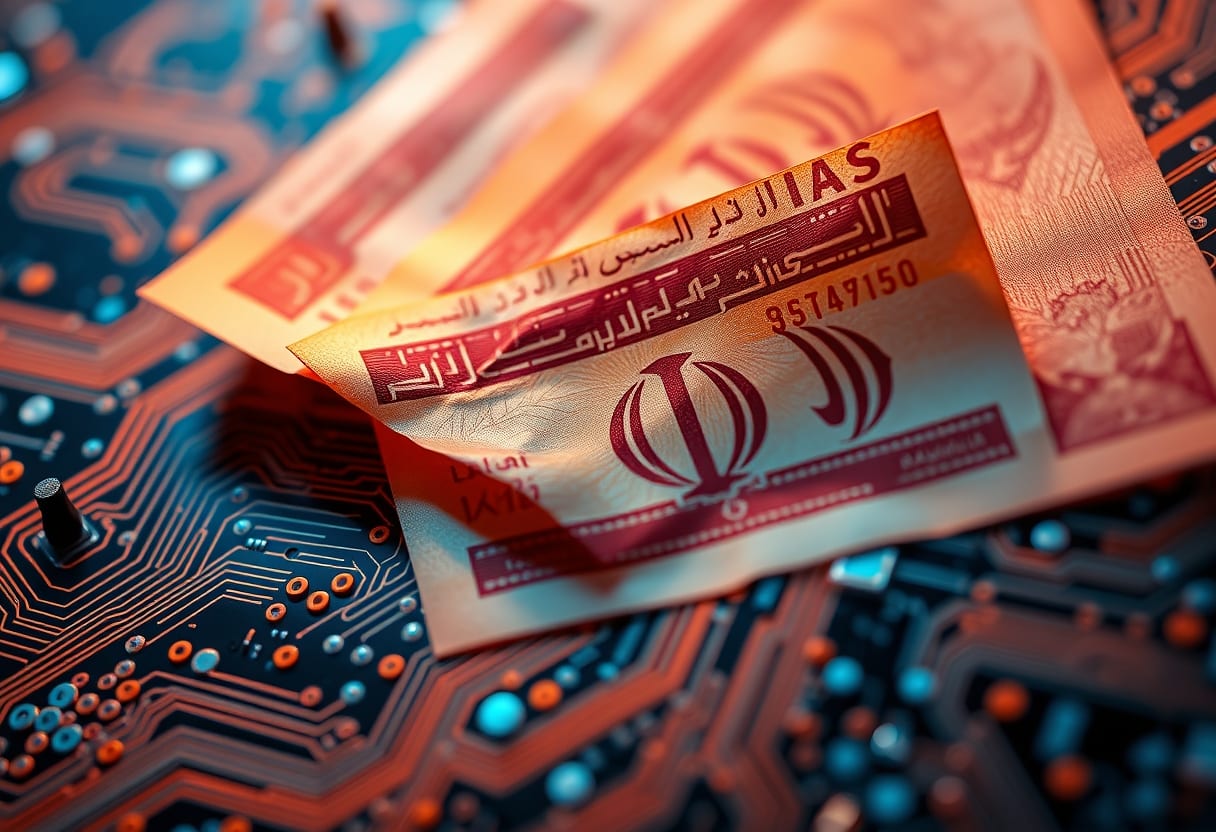
Iran protests trigger Bitcoin surge: Regime elites hijack the exit
Get link
Facebook
X
Pinterest
Email
Other Apps
-
Bitcoin emerges as the primary escape hatch for capital during sudden civil unrest
Iran's Crypto Conundrum: When Bitcoin Becomes Both Refuge and Regime Exit
The numbers from late 2025 are stark, but rarely surprising to those of us who've watched financial crises unfold globally for decades. Iran’s on-chain crypto activity shot up to roughly $7.80 billion that year. The catalyst? Mass protests erupting in late December, igniting a familiar flight to alternative assets. However, as ever, the story isn't as simple as 'people find freedom in crypto.' It’s a complex tapestry where the lines between ordinary citizens seeking a financial lifeline and state-linked actors attempting to circumvent sanctions become dangerously blurred.
🔗 According to data from Chainalysis, this surge reflects a dual dynamic: everyday Iranians pulling their rapidly depreciating assets out of failing banks, and simultaneously, state-linked entities—the very 'big players'—using blockchain networks to move funds. This isn't just about inflation; it's about control, evasion, and the inherent, often uncomfortable, neutrality of decentralized networks.
The divergence in Bitcoin flows illustrates a complex struggle between state and citizens
📌 The Anatomy of a Crypto Exodus: From Rial to Digital Gold
The shift within Iran was abrupt and visceral. As the nation plunged into unrest, marked by significant geopolitical crises and cyberattacks eroding trust in traditional infrastructure, many withdrawals moved rapidly from local crypto exchanges directly into personal, self-custodied wallets. This immediate pivot to self-custody is a textbook response when state control tightens and trust in traditional financial intermediaries evaporates.
The Iranian rial's accelerating collapse, with inflation reportedly hitting 40–50% in recent months, created an unbearable pressure cooker for households. Bitcoin, the original digital gold, became the natural recourse. Reports indicated a noticeable spike in Bitcoin withdrawals from Iranian exchanges during these periods of unrest. What's particularly telling is the timing: transfers happened in short, intense bursts, exploiting brief windows when internet access was still available – a grim testament to the adaptability of individuals under repressive conditions.
State Actors and Civilian Narratives: A Dangerous Overlap
While the narrative of ordinary Iranians using crypto to safeguard savings is compelling and true, Chainalysis data adds a cynical layer. Addresses directly linked to the Islamic Revolutionary Guard Corps (IRGC)—a powerful, often sanctioned, state entity—were reportedly tied to roughly half of the total crypto volume received in Iran during Q4 2025. This isn't mere coincidence; it's a strategic exploitation of the same channels that citizens rely on.
Rial hyperinflation forces a systemic pivot toward decentralized Bitcoin as a value store
This dual usage reveals a critical, often overlooked aspect of crypto adoption in geopolitically fraught regions: it simultaneously serves as a shelter for beleaguered households and a sophisticated conduit for state-linked actors to move funds, effectively using the very infrastructure meant to bypass centralized control for their own centralized aims. As a market analyst, I've seen this pattern before: powerful entities are always the quickest to identify and exploit new financial rails, often camouflaging their activities within broader 'organic' adoption statistics. This makes distinguishing genuine grassroots movements from state-sponsored maneuvers inherently challenging in on-chain tallies.
📌 Market Impact Analysis: Volatility and the Regulatory Echo
The Iranian case is a powerful reminder of how macro geopolitical events can fuel crypto adoption, driving both unprecedented volume and underlying volatility. For investors, it underscores the persistent demand for decentralized alternatives when traditional financial systems fail or are weaponized. The surge in self-custody also points to a growing sophistication among users in high-risk environments, prioritizing direct control over assets rather than relying on potentially compromised exchanges.
In the short term, such events can inject speculative interest into Bitcoin, positioning it as a safe-haven asset against currency devaluation and political instability. However, the long-term implications are complex. The overt involvement of sanctioned entities like the IRGC inevitably draws the ire of global regulators, particularly the U.S. Treasury. This could lead to intensified pressure on crypto exchanges and service providers to enhance their KYC/AML protocols, potentially segmenting the global crypto market further and increasing compliance burdens for legitimate businesses.
We may see a renewed focus on privacy-enhancing technologies within crypto, or a greater differentiation in the market between compliant, regulated stablecoins and those operating in more decentralized, permissionless ecosystems. The Iranian situation exemplifies crypto's inherent capacity to function as an 'escape hatch,' yet simultaneously exposing it to the very forces of control it seeks to circumvent. This creates a volatile environment where the market must constantly price in geopolitical risk, regulatory crackdowns, and humanitarian crises.
Iranian households transition to Bitcoin self custody to mitigate the risk of seizure
📌 ⚖️ Stakeholder Analysis & Historical Parallel
📊 In my view, this appears to be a calculated move by state actors, exploiting a legitimate citizen-driven need. It’s a cynical playbook we've witnessed before. The most striking historical parallel within the last 10 years is the Turkey Lira Crisis and Cryptocurrency Adoption in 2021. During that period, as Turkey grappled with soaring inflation and an unorthodox monetary policy that decimated the Lira's value, Turkish citizens flocked to cryptocurrencies, especially stablecoins and Bitcoin, to protect their savings. The outcome was a dramatic surge in crypto trading volume, reflecting a clear public demand for inflation hedges and capital flight options. The government, initially slow to react, eventually imposed some restrictions on crypto payments, highlighting the state's predictable impulse to control financial flows once they bypass traditional banking channels.
The lesson learned from Turkey was simple: economic instability is a powerful, undeniable driver of crypto adoption. When trust in national currency collapses, people will find alternatives. However, this also signals to governments that their financial sovereignty is being challenged, leading to crackdowns. Today's Iranian situation is identical in its citizen-driven genesis—the desire to protect wealth from hyperinflation and state control. However, it diverges significantly in the explicit and arguably more widespread involvement of state-linked entities like the IRGC. In Turkey, the state’s primary concern was capital flight by individuals; in Iran, we see evidence that the very apparatus of the state is leveraging these same channels for its own, likely illicit, financial maneuvers. This makes the current situation far more complex and dangerous, as it essentially weaponizes decentralization for centralized geopolitical aims.
Stakeholder
Position/Key Detail
Ordinary Iranian Citizens
Seeking refuge from rial devaluation and economic instability; high demand for self-custody.
State-linked Actors (IRGC)
📊 Leveraging crypto for fund movement, potentially to circumvent sanctions; tied to ~50% of Q4 2025 volume.
Iranian Government
Imposing internet blackouts to control dissent, inadvertently driving crypto adoption in 'windows of opportunity'.
Chainalysis
On-chain analytics provider highlighting dual usage of crypto by citizens and state actors; measuring $7.80B activity.
📌 🔑 Key Takeaways
The $7.80 billion crypto surge in Iran highlights Bitcoin's dual role as both a citizen's refuge against inflation and a tool for state-linked entities to bypass sanctions.
Mass protests and internet blackouts spurred a rapid shift towards self-custody, reinforcing crypto's value proposition during financial repression.
The involvement of state actors (e.g., IRGC) in significant on-chain volume complicates regulatory scrutiny and poses risks for global crypto service providers.
Geopolitical instability remains a powerful, albeit unpredictable, driver of crypto adoption, underscoring the asset class's role in the face of currency collapse and capital controls.
🔮 Thoughts & Predictions
Connecting this directly to the 2021 Turkey Lira crisis, we see an undeniable pattern: national currencies under severe duress invariably push citizens towards crypto. However, the Iranian situation adds a dangerous wrinkle, demonstrating how governments, or factions within them, can quickly co-opt these escape routes, legitimizing the technology while simultaneously leveraging it for illicit or sanction-evading activities. This duality creates a massive headache for global regulators, who are already struggling to categorize and control this asset class.
My medium-term prediction is that this will accelerate the push for clearer, perhaps even harsher, global regulations around know-your-customer (KYC) and anti-money laundering (AML) for all crypto transactions, especially those involving privacy-enhancing features. We can anticipate an increasing bifurcation of the crypto market: highly regulated, compliant chains and services for institutional money, and a robust, albeit riskier, parallel ecosystem for those seeking true financial sovereignty or sanction circumvention. Expect a heightened cat-and-mouse game between sovereign states attempting to enforce capital controls and the borderless nature of crypto.Sanctioned state entities leverage the Bitcoin network to maintain liquidity amid global isolation
For investors, this means that understanding the macroeconomic and geopolitical drivers behind crypto adoption will be even more critical than technical analysis alone. The fundamental demand for non-sovereign money isn't going away; it's intensifying. However, the regulatory response to state-level exploitation could introduce significant volatility and compliance costs. Strategic positioning will demand a sharp eye on both technological innovation in privacy and the shifting sands of international financial policy.
🎯 Investor Action Tips
Monitor Regulatory Headwinds: Keep a close watch on announcements from OFAC and other international bodies regarding crypto sanctions. Increased enforcement will impact market sentiment and could lead to delistings or restrictions on certain tokens/regions.
Assess Self-Custody Solutions: If the trend toward financial repression continues globally, familiarize yourself with secure hardware wallets and best practices for self-custody. This is a crucial skill for long-term crypto holders.
Evaluate Geopolitical Risks: Incorporate geopolitical analysis into your investment thesis. Assets that serve as genuine safe-havens or tools for financial freedom during crises may outperform, but also carry heightened regulatory risk.
Diversify Beyond "Narrative Plays": While compelling, 'freedom money' narratives are not enough. Prioritize projects with strong fundamentals, transparent governance, and a clear utility beyond just speculative gains, especially as regulatory scrutiny increases.
📘 Glossary for Serious Investors
⚖️ Self-Custody: Refers to holding your cryptocurrency private keys yourself, typically in a hardware wallet, rather than relying on a third-party exchange or custodian. It provides maximum control but also maximum responsibility.
⚖️ On-Chain Activity: All transactions and data recorded on a public blockchain ledger. Analyzing on-chain activity provides insights into market trends, investor behavior, and fund movements.
🧭 Context of the Day
The Iranian surge vividly illustrates crypto's double-edged sword: a vital escape hatch for citizens, yet increasingly a tool exploited by the very states they flee.
💬 Investment Wisdom
"The first panacea for a mismanaged nation is inflation of the currency; the second is war. Both bring a permanent ruin." — Ernest Hemingway
Digital asset forecast analyzing upcoming volatility: crypto market, next bull run, BTC price. Bitcoin's "Moonvember" Hopes Tempered by Market Realities: A Deep Dive for Investors 📌 Navigating Bitcoin's November Crossroads: Will History Repeat? The cryptocurrency market is at a fascinating juncture as we enter November 2025. Bitcoin, fresh off a somewhat disappointing "Uptober" where it retraced over 10% after briefly touching $126,000 , faces a pivotal month. Historically, November, often referred to as "Moonvember," has been a strong period for Bitcoin. But can historical trends overcome current market headwinds? To understand the present, it's essential to acknowledge the past. Bitcoin's price action has often followed predictable seasonal patterns. October and November, in particular, have been associated with bullish...
Tokenization boom accelerates: XRP ecosystem integrates $50T property. RWA crypto, digital assets, blockchain real estate. Epic Chain's XRP Integration: A Trillion-Dollar RWA Opportunity? 🔗 Epic Chain, a project supported by Ripple, is making significant strides in the tokenization of real-world assets (RWAs) by leveraging the XRP Ledger. This initiative aims to bring trillions of dollars worth of assets onto the blockchain, potentially revolutionizing how real estate, credit, commodities, and collectibles are managed and traded. But what does this mean for crypto investors? 📌 Ripple's Backing and Epic Chain's RWA Platform Epic Chain is positioning itself at the forefront of the RWA tokenization movement with its XRP-native platform. The platform is designed to facilitate the transfer of real estate, credit, commodities, and collectibles onto the XRP Ledg...
Introducing Solana's pivotal network upgrade, symbolizing growth and advancement. Solana's Alpenglow Upgrade: A Game-Changer for On-Chain Trading and Network Stability 🔗 Solana, a network long celebrated for its blistering speed and low transaction fees, has also navigated its share of stability challenges. As we move into 2025, a critical evolution is on the horizon: the Alpenglow consensus overhaul . This isn't just another incremental update; it's a fundamental reimagining of Solana's core architecture, poised to address longstanding concerns regarding validator performance, network stability, and long-term scalability. For investors, understanding this seismic shift is paramount, as it could significantly redefine SOL's competitive edge and its role within the broader blockchain ecosystem . 📌 🚀 The Alpenglow Evolution: Diving ...