Stay updated with the latest in cryptocurrency and blockchain news, delivered fast and reliably. Bookmark this page and check back often for valuable insights and timely information!
Massive leviathans navigate deep liquid currents as ETH whales stabilize the volatile market floor. 📌 Ethereum's $3,000 Tug-of-War: Whale Defenses or a Deeper Dive? 💱 Ethereum, the bedrock of much of the decentralized finance (DeFi) and NFT world, finds itself once again at a precarious crossroads. The majestic ascent witnessed earlier this year has given way to a grinding descent, with bulls desperately clinging to the psychological and technical floor around the $3,000 mark. This isn't just about ETH; it's a bellwether for the broader altcoin market, reflecting a pervasive fragility that has short-term traders sweating and long-term accumulators eyeing opportunities. ETH Price Trend Last 7 Days Powered...
Get link
Facebook
X
Pinterest
Email
Other Apps
Iran Central Bank acquires USDT coins: Why $507M Is A Trojan Horse
Get link
Facebook
X
Pinterest
Email
Other Apps
-
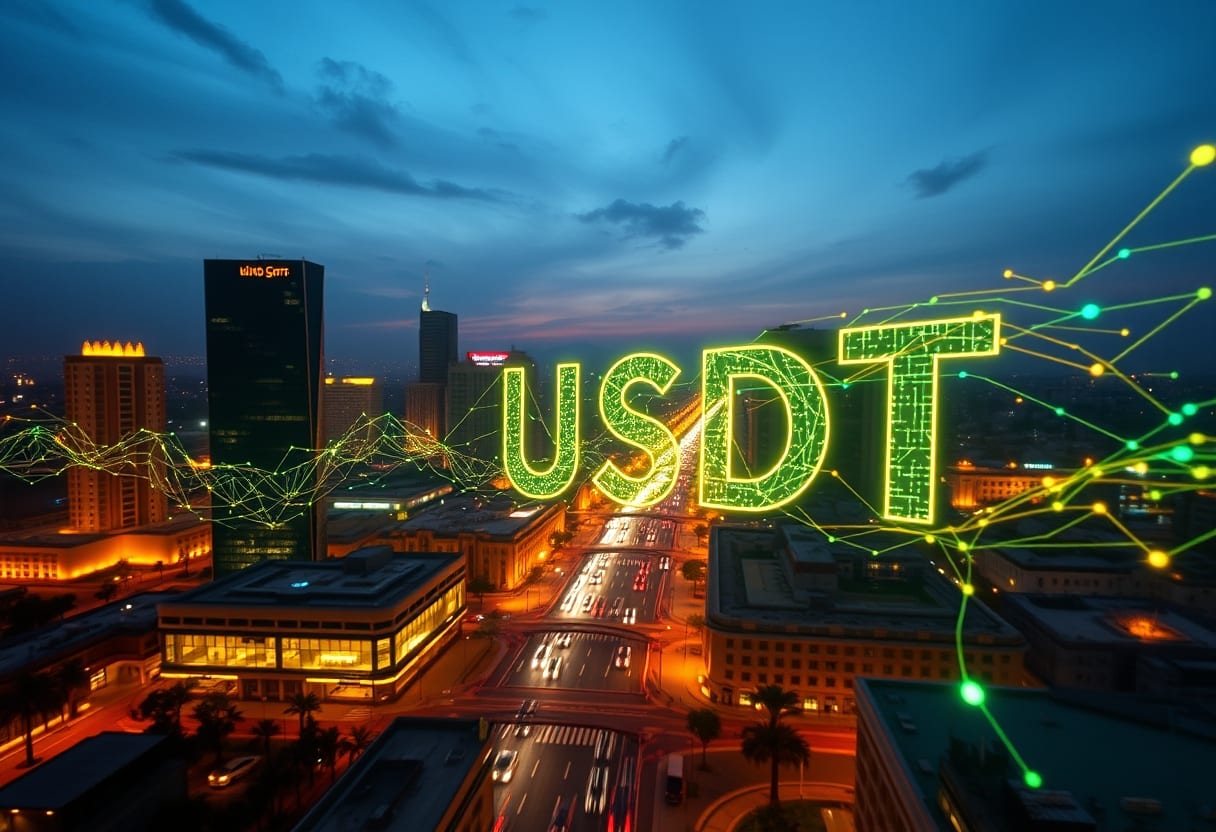
Iran regime officials are weaponizing USDT to bypass traditional Western financial infrastructure and trade barriers.
📌 Unmasking the Digital Trojan Horse: Iran's $507M USDT Play and the Looming Crypto Showdown
For decades, nations under global financial pressure have sought ingenious ways to bypass sanctions and maintain economic lifelines. From gold trading to oil-for-goods bartering, the playbook is long and varied. Now, in 2025, we're witnessing a new, perhaps more insidious, chapter: the quiet accumulation of stablecoins by state actors. The recent revelation concerning Iran's Central Bank and its half-billion-dollar USDT stash isn't just a headline; it's a stark reminder that the lines between traditional finance, geopolitics, and decentralized crypto are blurring, and the implications for every investor are profound.
This isn't merely about a struggling economy finding a workaround. This is about institutional players using the very tools retail investors cherish for their supposed borderlessness and censorship resistance, forcing a reckoning that will inevitably shape the future of digital assets and their regulatory landscape. As a seasoned observer of global financial maneuvers, I see this as a calculated gambit, exposing both the power and the Achilles' heel of the stablecoin ecosystem.
Tether serves as a critical bridge for central banks struggling with isolation from global banking networks.
The Rial's Decline and the Rise of Digital Dollars
The story begins with the relentless depreciation of the Iranian rial. Plagued by persistent inflation and crushing international sanctions, the nation's traditional banking channels have been effectively choked off, making it exceedingly difficult to conduct international trade or even stabilize domestic currency values. This economic backdrop created fertile ground for an unconventional solution, drawing the Central Bank of Iran into the nascent world of stablecoins.
🔗 According to meticulous blockchain analysis by Elliptic, the Central Bank of Iran discreetly amassed at least $507 million in USDT throughout 2025. This figure, as Elliptic itself notes, is a conservative minimum, reflecting only the wallets confidently tied to the state institution. Much of this activity reportedly surged during the spring months of 2025, with funds cleverly routed through various channels, including Emirati dirhams, before being converted into USDT on public blockchains. The primary objective? To inject dollar-linked liquidity into local crypto markets, thus attempting to slow the rial's accelerating decline and facilitate crucial international trade without relying on sanctioned fiat pathways.
⚖️ Initial flows of USDT were traced to Nobitex, Iran's largest crypto exchange, where these digital dollars could be swapped for rials, directly impacting the local market. However, as scrutiny intensified and a security breach occurred in mid-2025, the bank reportedly diversified its tactics, utilizing more advanced methods like cross-chain bridges and decentralized exchanges (DEXs) to obscure their movements and convert funds across various digital ecosystems. This adaptability showcases a growing sophistication in state-level crypto adoption.
The Central Bank of Iran leadership prioritizes digital liquidity to prevent the total collapse of the Rial.
Market Impact Analysis: A Double-Edged Sword for Stablecoins
📜 The immediate and long-term ramifications of this revelation are substantial for the crypto market, particularly for stablecoins like USDT. In the short term, this event injects a potent mix of fear and speculation. The fact that a sovereign entity is using a major stablecoin for sanctions evasion amplifies calls for tighter regulation and compliance frameworks globally. Expect increased scrutiny on USDT, potentially leading to brief periods of price volatility as market participants react to news of frozen funds or expanded regulatory pressure.
The most striking market impact arrived swiftly: on June 15, 2025, Tether blacklisted several wallets linked to the Iranian Central Bank, freezing approximately $37 million in USDT. This intervention, while demonstrating Tether's compliance capabilities, simultaneously revealed a critical vulnerability. For a state institution, stablecoin reserves are clearly not akin to sovereign cash held in hard foreign accounts; they are subject to centralized control by the issuer. This underscores the fundamental difference between truly decentralized digital assets and those, like USDT, that rely on a central entity for backing and operation. This could drive investors towards more decentralized alternatives or, conversely, push regulators to exert even greater control over all stablecoin types.
In the medium to long term, this incident could accelerate the "stablecoin wars" – a race among issuers to demonstrate compliance, transparency, and resilience, or, for truly decentralized projects, to prove true censorship resistance. For investors, this means a potential bifurcation of the stablecoin market: those that prioritize compliance and stability through oversight, and those that prioritize decentralization and censorship resistance, albeit with potentially higher risk profiles. Expect intensified discussions around CBDCs (Central Bank Digital Currencies) as governments see this as both a threat and an opportunity to regain control over digital money flows.
⚖️ Stakeholder Analysis & Historical Parallel: The Echoes of 2018
To truly grasp the gravity of Iran's USDT play, one must look back at similar maneuvers in the annals of financial history. The most pertinent parallel within the last decade, in my view, is the extensive series of OFAC sanctions imposed on Iranian financial institutions and individuals in 2018. That year, the U.S. Treasury's Office of Foreign Assets Control significantly ratcheted up pressure, effectively cutting off Iran from large swathes of the global financial system. The outcome was predictable: Iran’s economy suffered, and the regime began actively seeking alternative avenues for trade and revenue, including nascent attempts to leverage cryptocurrencies.
Tracing the flow of USDT reveals how state actors manipulate public blockchains for sovereign sanction evasion.
⚖️ The lesson learned from 2018 was two-fold. Firstly, traditional financial sanctions, while powerful, could create a strong incentive for nations to innovate in circumvention. Secondly, early crypto attempts at sanctions evasion were often clumsy and easily traceable, demonstrating that while the technology offered new pathways, it also presented a public ledger that could be analyzed. This appears to be a calculated move by Iran, building upon those earlier, less successful attempts, but with a more sophisticated understanding of the stablecoin landscape.
Today's event, however, carries a distinct difference: the scale and the asset choice. In 2018, the crypto market was far less mature, and options for large-scale, dollar-pegged value transfer were limited. The use of a widely adopted stablecoin like USDT in 2025 signifies a leap in both sophistication and the potential systemic risk. It shows a clear preference for a readily convertible, dollar-pegged asset over volatile cryptocurrencies. The centralization of USDT, ironically, makes it an attractive target for state actors seeking stability, even as that very centralization allows issuers like Tether to intervene. This cat-and-mouse game has merely evolved; the fundamental struggle between state control and financial autonomy remains.
Stakeholder
Position/Key Detail
Central Bank of Iran
Acquired $507M+ USDT to stabilize rial and facilitate trade amidst sanctions.
Tether (USDT Issuer)
Blacklisted and froze $37M USDT linked to the Iranian Central Bank.
Elliptic (Blockchain Analytics)
Uncovered the transactions, identifying wallets and tracing fund flows.
Global Regulators
Likely to intensify scrutiny on stablecoin compliance and sanctions enforcement.
📌 🔑 Key Takeaways
The Iran Central Bank's $507M USDT acquisition highlights a growing trend of state actors leveraging stablecoins for geopolitical purposes, particularly sanctions evasion.
Tether's freezing of $37M in USDT demonstrates the centralized vulnerability of even major stablecoins, undermining perceptions of absolute censorship resistance.
This event will undoubtedly accelerate global regulatory efforts to impose stricter KYC/AML and compliance measures on stablecoin issuers, potentially affecting their utility and adoption.
For investors, this signifies increased scrutiny on stablecoin issuers' policies and operational transparency, with implications for their long-term stability and market perception.
The incident underscores the tension between financial innovation for decentralization and national security concerns, setting the stage for future regulatory battles.
🔮 Thoughts & Predictions
The current market dynamics, amplified by Iran's audacious USDT accumulation, clearly signal an impending regulatory crackdown that will redefine the stablecoin landscape. Drawing parallels to the 2018 OFAC sanctions, it's evident that governments, once slow to adapt, are now leveraging sophisticated blockchain analytics to counter evasion. The long-term consequence will be a bifurcation of the stablecoin market, with heavily regulated, centralized stablecoins (like most fiat-backed ones) facing increased pressure to comply, while truly decentralized algorithmic stablecoins, though riskier, may gain appeal for their censorship resistance. This isn't just about Tether; it's about the entire class of assets.
My prediction for the medium-term is that we'll see a significant push for international cooperation on crypto regulations, potentially leading to new global standards akin to FATF recommendations, but specifically for digital assets. This means a tighter leash on all centralized crypto services, potentially impacting liquidity and ease of access for retail investors in certain jurisdictions. The lessons from 2018's cat-and-mouse game, where the state eventually tightened the noose, suggest that while crypto offers new tools for circumvention, the sheer scale of sovereign economic activity makes it a visible target.
The Iranian Rial faces unprecedented pressure as the regime pivots toward cryptoassets to maintain trade.
Ultimately, investors must recognize that the era of crypto operating in a regulatory grey zone is rapidly closing. The Iranian episode provides irrefutable evidence that traditional geopolitical conflicts are migrating to the blockchain. Expect a chilling effect on stablecoin innovation that clashes with national security interests, pushing capital towards either highly compliant, regulated assets or into genuinely decentralized, permissionless ecosystems at the fringes. The choice will increasingly define an investor's risk tolerance and philosophical alignment within the evolving digital financial order.
🎯 Investor Action Tips
Diversify Stablecoin Exposure: Do not rely solely on one centralized stablecoin. Consider holding a mix of compliant, audited options and potentially exploring truly decentralized alternatives if your risk profile allows.
Monitor Regulatory Updates Closely: Pay acute attention to announcements from major regulatory bodies (OFAC, FinCEN, EU regulators) regarding stablecoin classifications and compliance requirements, as these will directly impact market access and liquidity.
Evaluate Stablecoin Issuer Transparency: Prioritize stablecoins that offer frequent, independent audits of their reserves and clearly communicate their compliance policies. Understand the risks associated with issuers' ability to freeze assets.
Research Decentralized Alternatives: Deepen your understanding of truly decentralized stablecoin protocols (e.g., those backed by crypto collateral) as potential havens if centralized options face significant regulatory headwinds or censorship.
📘 Glossary for Serious Investors
⚖️ Cross-chain Bridge: A protocol that enables the transfer of tokens or data between different independent blockchain networks, often used to bypass specific network restrictions or reduce fees.
⚖️ Decentralized Exchange (DEX): A cryptocurrency exchange that operates without a central authority, allowing peer-to-peer transactions directly on the blockchain, typically offering greater censorship resistance.
⚖️ Sanctions Evasion: The act of circumventing economic or financial restrictions imposed by one or more entities (typically governments) on another, often involving complex financial maneuvers.
🧭 Context of the Day
Iran's substantial USDT acquisition underscores stablecoins' dual nature as both a financial lifeline and a flashpoint for intense geopolitical and regulatory battles.
💬 Investment Wisdom
"The decentralized ledger is a double-edged sword that both hides and exposes the desperate." — 20-Year Market Analyst
Digital asset forecast analyzing upcoming volatility: crypto market, next bull run, BTC price. Bitcoin's "Moonvember" Hopes Tempered by Market Realities: A Deep Dive for Investors 📌 Navigating Bitcoin's November Crossroads: Will History Repeat? The cryptocurrency market is at a fascinating juncture as we enter November 2025. Bitcoin, fresh off a somewhat disappointing "Uptober" where it retraced over 10% after briefly touching $126,000 , faces a pivotal month. Historically, November, often referred to as "Moonvember," has been a strong period for Bitcoin. But can historical trends overcome current market headwinds? To understand the present, it's essential to acknowledge the past. Bitcoin's price action has often followed predictable seasonal patterns. October and November, in particular, have been associated with bullish...
Tokenization boom accelerates: XRP ecosystem integrates $50T property. RWA crypto, digital assets, blockchain real estate. Epic Chain's XRP Integration: A Trillion-Dollar RWA Opportunity? 🔗 Epic Chain, a project supported by Ripple, is making significant strides in the tokenization of real-world assets (RWAs) by leveraging the XRP Ledger. This initiative aims to bring trillions of dollars worth of assets onto the blockchain, potentially revolutionizing how real estate, credit, commodities, and collectibles are managed and traded. But what does this mean for crypto investors? 📌 Ripple's Backing and Epic Chain's RWA Platform Epic Chain is positioning itself at the forefront of the RWA tokenization movement with its XRP-native platform. The platform is designed to facilitate the transfer of real estate, credit, commodities, and collectibles onto the XRP Ledg...
Introducing Solana's pivotal network upgrade, symbolizing growth and advancement. Solana's Alpenglow Upgrade: A Game-Changer for On-Chain Trading and Network Stability 🔗 Solana, a network long celebrated for its blistering speed and low transaction fees, has also navigated its share of stability challenges. As we move into 2025, a critical evolution is on the horizon: the Alpenglow consensus overhaul . This isn't just another incremental update; it's a fundamental reimagining of Solana's core architecture, poised to address longstanding concerns regarding validator performance, network stability, and long-term scalability. For investors, understanding this seismic shift is paramount, as it could significantly redefine SOL's competitive edge and its role within the broader blockchain ecosystem . 📌 🚀 The Alpenglow Evolution: Diving ...