Bitcoin Mining Aids Russian Ruble: Central Bank Governor Cites Unseen Factor Boosting Currency

The financial world is complex, constantly evolving, and at times, opaque. We often focus on the readily visible indicators: interest rates, trade balances, and GDP reports. But what happens when a significant economic factor operates largely unseen, only to be acknowledged by a central bank governor in passing? That's precisely the situation unfolding in Russia, where Bitcoin mining is now being cited as a potential, albeit unquantifiable, boost to the Russian Ruble.
💱 As experienced crypto investors, understanding these subtle shifts in rhetoric from major global economic players is paramount. It's not just about the direct impact on Bitcoin's price, but the deeper implications for national digital asset strategies, regulatory frameworks, and the very definition of "exports" in the digital age.

📌 The Invisible Export: Russia's Bitcoin Mining Conundrum
Event Background and Significance: A New Economic Frontier
For years, Russia's stance on cryptocurrencies has been characterized by a cautious, often contradictory, approach. Initially, the idea of decentralized digital assets clashed with the state's desire for financial control. However, Russia's vast energy resources, particularly cheap electricity, made it an attractive hub for energy-intensive Bitcoin mining operations. This created an unofficial but significant economic activity.
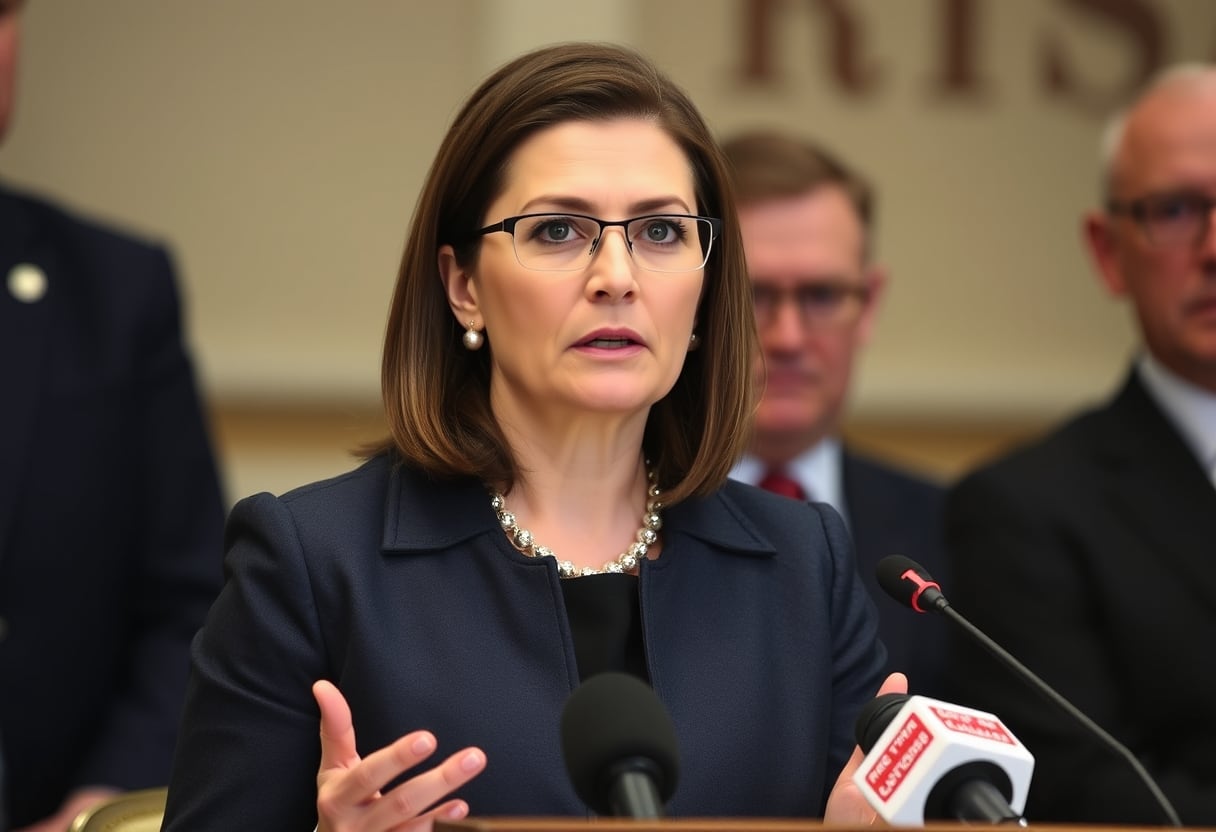
The current conversation, spearheaded by Central Bank Governor Elvira Nabiullina, represents a pivotal moment. At a recent press conference, Nabiullina acknowledged that Bitcoin mining may be providing incremental support to the Russian Ruble. This isn't a minor detail; it’s a high-level recognition of crypto's macroeconomic relevance by a central authority often perceived as skeptical.
Historically, central banks worldwide have either ignored or actively suppressed crypto's economic contributions. Russia's shifting dialogue, particularly in 2025, comes as global economic pressures intensify and nations seek new avenues for revenue and currency stability outside traditional channels. This isn't merely a tech story anymore; it's a macroeconomic factor gaining visibility, despite its "gray zone" status.
Market Impact Analysis: What This Means for Your Portfolio
The acknowledgment of Bitcoin mining as an economic factor in Russia carries significant implications for the broader crypto market, particularly for investors keenly watching global regulatory trends and energy markets. In the short term, this official nod could boost sentiment for Bitcoin mining operations, especially those with access to cheap energy. However, the caveat—the "gray zone" status and push for "whitening"—introduces uncertainty.
⚖️ We might see increased volatility in Bitcoin price as the market processes the potential for both state validation and state control over mining. If Russia successfully formalizes and integrates its mining sector, it could set a precedent for other nations to view crypto mining as a legitimate, even strategic, industry. This could lead to a global scramble for mining dominance, potentially driving up demand for mining hardware and infrastructure.
⚖️ Longer term, this signals a transformation in how nation-states perceive decentralized digital assets. If mining revenues are officially recognized as "exports," it fundamentally changes the economic calculus. For investors, this could mean:
- Increased institutional interest: More clarity, even if restrictive, often attracts traditional finance players.
- Impact on stablecoins and DeFi: While the immediate focus is on mining, the underlying regulatory push for monitoring could eventually extend to other crypto sectors.
- Geopolitical considerations: Nations under sanctions might look to 'invisible exports' like mining as a way to circumvent traditional financial systems, introducing both opportunities and risks related to regulatory compliance.
Key Stakeholders’ Positions: A Tug-of-War for Control
⚖️ The Russian government's approach to crypto is far from monolithic. Several key players are engaged in a complex debate:
- Central Bank (Elvira Nabiullina, Vladimir Chistyukhin): While acknowledging mining's impact on the Ruble, the central bank’s primary focus remains on bringing the sector into a "formal framework." First Deputy Chairman Vladimir Chistyukhin emphasized the need to "legalize" crypto transactions as soon as possible, with strict restrictions and prohibitions. Their goal is control and monitoring.
- Presidential Administration (Maxim Oreshkin): Deputy head Maxim Oreshkin explicitly views the crypto sector as a "new export item" that can influence the currency market, often outside standard channels, making it "statistically invisible." This perspective frames crypto as a national asset, albeit one that needs better accounting.
- State Duma (Anatoly Aksakov): Chairman of the Committee on Financial Markets, Anatoly Aksakov, maintains a hardline stance against crypto as a medium of exchange within Russia or for global trade, stating it "will never" function as money. This highlights the internal conflict between embracing crypto as an export and rejecting its monetary functions.
- Industry Leaders/Miners: While not directly quoted, the implied position of Russian miners is a desire for legal clarity and stability. Operating in a "gray zone" carries inherent risks, and formal recognition, even with restrictions, could provide much-needed legal footing and access to traditional financial services.
For investors, this internal debate is crucial. The push for "whitening" suggests that while Russia acknowledges crypto's economic power, it intends to harness and control it, not simply enable free-market adoption. This could lead to a highly regulated environment, potentially favoring large, state-backed entities or those compliant with strict governmental oversight, over smaller, independent miners.
📌 Stakeholder Summary: Russia's Crypto Balancing Act
| Stakeholder | Position/Key Detail |
|---|---|
| Central Bank (Nabiullina, Chistyukhin) | ⚖️ Mining supports Ruble; push to "legalize" and "whiten" crypto with strict controls; monitor transactions. |
| Presidential Admin (Oreshkin) | 💰 Crypto is an "invisible export" impacting currency market, currently underestimated. |
| State Duma (Aksakov) | Crypto "will never" function as money in Russia or for global trade. |
| Finance Ministry, Rosfinmonitoring | 💱 Collaborating with CB on rules for regulated crypto trading through licensed participants. |
Future Outlook: Controlled Integration on the Horizon?
The trajectory seems clear: Russia intends to move Bitcoin mining and related crypto flows from the "gray zone" into a more formal, regulated framework. Discussions with the Finance Ministry and Rosfinmonitoring signal a coordinated effort to bring this significant economic activity under state purview. The goal isn't necessarily to eliminate crypto, but to make it visible, quantifiable, and controllable.
For the crypto market, this could mean that while Russia might not become a bastion of crypto freedom, it could become a significant, state-controlled player in the global mining ecosystem. We could see:
- "Whitelisted" mining operations: Only state-approved or compliant entities might be able to operate legally, potentially consolidating power and creating barriers to entry.
- Data transparency (for the state): Improved monitoring will give Russian authorities unprecedented insight into crypto flows, which could be leveraged for economic planning or even enforcement.
- Model for other nations: Other countries grappling with balancing crypto innovation and national control might look to Russia's eventual framework as a blueprint.
The key risk for investors here is the increasing politicization of crypto activities. While adoption by a major economy is generally bullish, the form that adoption takes—highly centralized and controlled—could contradict the decentralized ethos of many crypto projects. Opportunities may arise for projects and companies that can navigate complex international regulatory landscapes and offer compliant solutions for large-scale operations.
Ultimately, the overarching trend is the gradual, often begrudging, acceptance of crypto's economic reality by nation-states, even as they attempt to impose traditional financial controls on it. This evolving landscape requires constant vigilance from investors, as governmental actions can significantly alter market dynamics.
📌 🔑 Key Takeaways
- The Russian Central Bank acknowledges Bitcoin mining as an "additional factor" supporting the Ruble exchange rate, a significant shift in official rhetoric despite its "gray zone" status.
- Senior policymakers view crypto flows as an "invisible export" affecting currency markets, indicating a move towards macroeconomic integration of digital assets.
- Russia is actively pushing to "legalize" and "whiten" its crypto market through strict regulations, meaning increased state control and monitoring are on the horizon.
- The internal conflict within Russia – between acknowledging crypto's economic benefit and rejecting its use as money – highlights the complex, evolving regulatory environment that investors must navigate.
- Bitcoin's price at the time of the announcement was $88,927, underscoring the asset's continued prominence amidst these policy discussions.
The acknowledgment from Russia's Central Bank that Bitcoin mining contributes to the Ruble's strength isn't just a fleeting news item; it’s a bellwether for the future of state-crypto relations. From my perspective, the key factor here isn't just that they're recognizing it, but how they intend to integrate it. This move suggests a strong likelihood of Russia evolving into a highly regulated, state-sanctioned crypto mining powerhouse, reminiscent of how China controlled its manufacturing exports for decades. We are likely to see a framework that prioritizes national economic benefit and surveillance over individual crypto freedoms.
The immediate market implication is a potential dual effect: short-term bullish sentiment for the legitimacy of mining as a national industry, contrasted with medium-term concerns over potential market fragmentation or increased compliance burdens for non-state actors. While Bitcoin's price might initially react positively to such "mainstream" recognition, the long-term impact on its decentralized nature from large, state-controlled mining pools needs careful consideration. Expect other nations, especially those facing capital controls or sanctions, to closely study Russia's attempts to formalize these "invisible exports," potentially accelerating the global trend of regulated crypto markets.

This isn't about the Ruble suddenly becoming a crypto-backed currency; it's about a major economy attempting to nationalize a decentralized resource. The fact that the Ruble's stability is being linked to these opaque flows, despite Bitcoin trading near $89,000, underscores the deep, often unquantified, economic power of crypto today. My long-term prediction is that this "whitening" effort will cement a new model: state-sanctioned crypto economies, creating both unique investment opportunities in compliant infrastructure and significant challenges for truly decentralized protocols.
- Monitor Geopolitical Shifts: Keep a close eye on further regulatory announcements from Russia and similar economies, as they could signal new opportunities or compliance risks for crypto-related investments.
- Evaluate Mining Sector Compliance: For investments in mining companies, assess their adaptability to evolving national regulations. Projects that proactively seek "white" status might outperform.
- Diversify Beyond Centralized Control: While state interest can legitimize crypto, consider diversifying into decentralized protocols or layer-2 solutions that offer greater resilience against state-level control.
- Research Energy Market Dynamics: As mining becomes a recognized economic export, global energy policies and prices could increasingly influence mining profitability and thereby Bitcoin's hash rate distribution.
🌫️ Gray Zone Mining: Refers to cryptocurrency mining operations that exist outside clear legal frameworks, lacking official registration, permits, or transparent reporting, often due to evolving or absent regulations.
⚖️ Rosfinmonitoring: Russia's Federal Financial Monitoring Service, responsible for combating money laundering and terrorist financing. Its involvement signifies a state focus on financial oversight and control over crypto activities.
📊 Whitening the Market: A term used to describe efforts by regulators and governments to bring informal or illicit economic activities (like "gray zone" crypto operations) into a formal, transparent, and legally compliant framework.
— Mark Zuckerberg
Crypto Market Pulse
December 22, 2025, 07:14 UTC
Data from CoinGecko
This post builds upon insights from the original news article. Original article.