Stay updated with the latest in cryptocurrency and blockchain news, delivered fast and reliably. Bookmark this page and check back often for valuable insights and timely information!
Institutional capital flows shift from volatile legacy markets into the MAXI digital ecosystem. Maxi Doge: A High-Beta Meme Coin Play or a Liquidity Siphon? 💧 The year 2026 has kicked off with a palpable "risk-on" sentiment sweeping across global markets. While traditional finance might point to the astonishing 44x surge in Venezuelan equities since 2024 as a prime example of a parabolic rise, the crypto arena operates on a fundamentally different timescale. Here, such astronomical gains aren't measured in years, but often in mere moments. For those with a penchant for the most aggressive, high-octane upside, a new contender, Maxi Doge (MAXI), is demanding attention. 📌 The "Risk-On" Tide: From Caracas to Crypto The broader market sentiment is undeniable. The Caracas Stock Exchange's remarkable performance, a staggering 172.3% ...
Get link
Facebook
X
Pinterest
Email
Other Apps
Crypto Hack Losses Plummet 60 Percent: December Scams and Exploits Shed $118M - Are Protections Improving?
Get link
Facebook
X
Pinterest
Email
Other Apps
-
Breaching digital vaults, shadowy figures infiltrate secure cryptocurrency storage.
Crypto Hack Losses Plunge 60%: A Deeper Look at December's Numbers and What It Means for Your Portfolio
📌 The Shifting Sands of Crypto Security: A December 2025 Retrospective
⚖️ As we step further into 2026, the crypto landscape continues to evolve at a breakneck pace. One of the most significant and often alarming trends has been the relentless wave of hacks and exploits plaguing the ecosystem. However, December 2025 brought a surprising, albeit nuanced, piece of news: losses from crypto hacks reportedly dropped by a substantial 60%, falling from approximately $194 million in November to around $76 million. This sharp decline, as tracked by security firm PeckShield, might seem like a cause for celebration, but a closer look reveals persistent threats and critical lessons for every investor.
⚖️ Historically, the crypto space has been a wild west of innovation and vulnerability. From the infamous Mt. Gox collapse in 2014 to the DAO hack in 2016, and more recently, multi-hundred-million-dollar exploits like the Ronin Bridge hack or the FTX implosion (a different type of "loss," but equally devastating), security breaches have been a recurring nightmare for investors. Each incident has reinforced the urgent need for robust protections and highlighted the industry's growing pains. The reduction in December's figures, therefore, provides a critical checkpoint in our ongoing fight against digital asset theft.
Fortifying digital defenses, a secure fortress stands against chaotic data streams.
📌 Understanding December's Drop: Fewer Large-Scale Heists, Not Vanishing Threats
Major Exploits and the Anatomy of December's Losses
PeckShield's analysis identified roughly 26 major exploits during December. While the total dollar figure was significantly lower, the individual incidents were still stark reminders of ongoing risks. The largest single loss was a staggering $50 million from an address poisoning scam. This highly deceptive method relies on human error, where victims are tricked into sending funds to a malicious address that looks nearly identical to a legitimate one they've previously interacted with.
Other notable incidents included a $27 million drain from a multi-signature wallet due to a private key leak, approximately $7 million lost to a Trust Wallet exploit (linked to a browser extension weakness), and around $3.9 million tied to issues within the Flow protocol. These figures, consistent across various reports, underscore that while the overall sum decreased, the methods of attack remained diverse and potent.
#PeckShieldAlert December 2025 witnessed ~26 major crypto exploits, resulting in total losses of ~$76M.
This figure represents a decrease of over 60% from November’s total of $194.27M, marking a significant reduction in monthly losses.
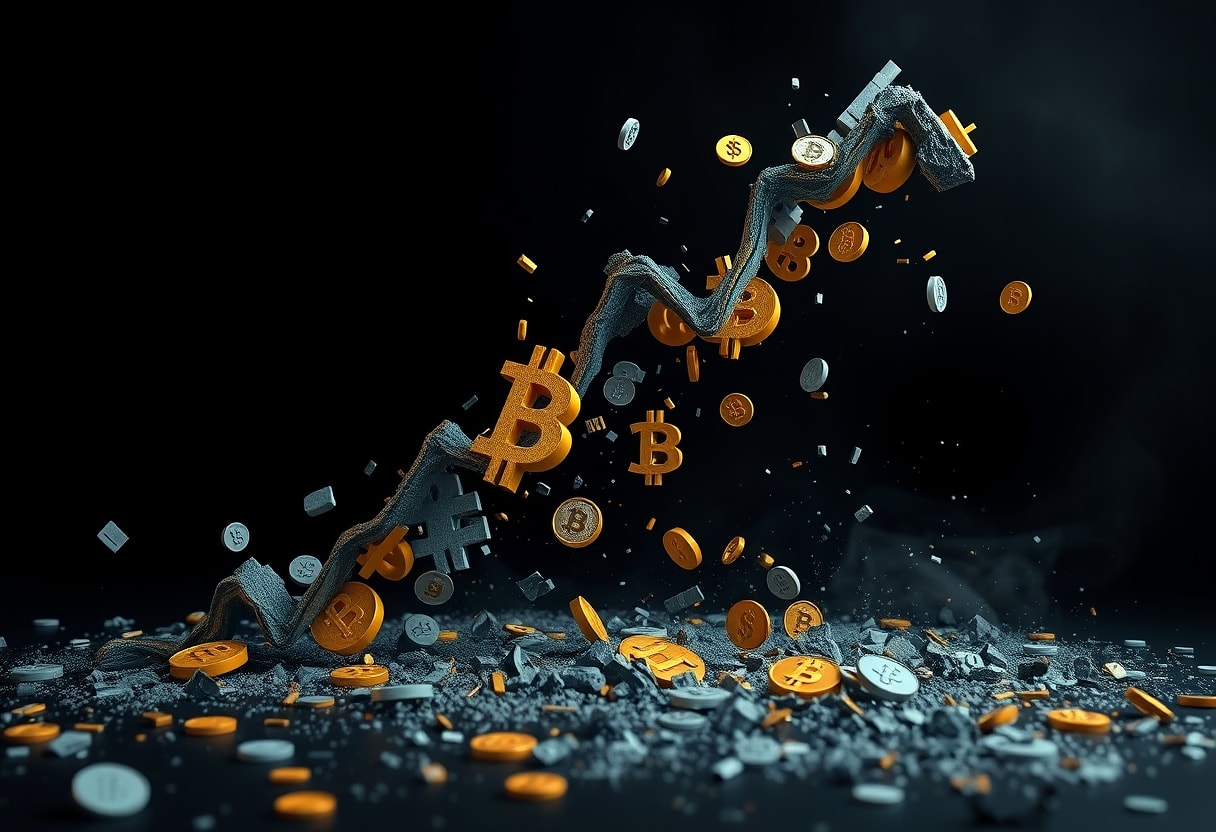
Visualizing the sharp decline in cryptocurrency hack losses, depicting a falling trend.
Market Impact Analysis: Volatility, Sentiment, and Sector Transformation
📉 While the reduced total losses are positive, the market impact is complex. Short-term, fewer large hacks contribute to a sense of stability, potentially reducing abrupt price drops triggered by major security incidents. This can foster healthier investor sentiment, especially in a market where trust is a fragile commodity. Long-term, consistent efforts to reduce exploits could attract more institutional capital and traditional finance players, who often view security as a primary barrier to entry.
⚖️ However, the nature of the remaining hacks is telling. The prominence of address poisoning highlights that technical protocol security alone isn't enough; user education and robust wallet interfaces are equally crucial. This suggests a subtle but significant transformation in the security landscape: attackers are increasingly targeting the human element or the weakest link in the chain, rather than solely complex smart contract vulnerabilities. Sectors like DeFi (Decentralized Finance) and NFTs, which rely heavily on direct user interaction with smart contracts and wallets, remain particularly susceptible if user-side security isn't paramount.
Examining intricate networks, identifying a single broken connection responsible for exploits.
📌 Key Stakeholders' Positions: The Ongoing Battle for Protection
⚖️ The reduction in losses isn't merely a stroke of luck; it reflects increased vigilance. Security teams across the industry have become more active, and some wallet providers have tightened their checks and implemented stricter security measures. However, as some experts point out, the fall in dollar losses largely reflects fewer "massive breaches" rather than a vanishing of threats altogether. The methods of attackers have adapted, not disappeared.
⚖️ Regulators, a critical stakeholder group, continue to exert pressure. There's a growing consensus for better protections for exchanges and wallets, alongside calls for more timely actions once a compromise has been identified. For investors, this means a dual-edged sword: increased regulatory oversight could bring more security and standardization, but it also risks stifling innovation or imposing burdensome compliance costs on smaller projects. Industry leaders are caught between the need for decentralized innovation and the demands for centralized accountability when funds are lost.
📌 Summary of December 2025 Crypto Security Incidents
Stakeholder
Position/Key Detail
⚖️ PeckShield (Security Firm)
📉 Reported 60% drop in hack losses to ~$76M in December 2025, from $194M in November, across 26 major exploits.
🔑 Experienced exploits; some considering reimbursements; ongoing vulnerability to private key exposure and browser extension weaknesses.
⚖️ Security Teams/Wallet Providers
📈 Increased activity and tightened checks contributed to fewer massive breaches, but threats persist.
Regulators/Stakeholders
📈 Growing pressure for better protections, more timely actions after breaches, and increased accountability for platforms.
Attackers/Scammers
🔑 Utilized sophisticated methods like address poisoning (human error) and technical exploits (private key leaks, browser vulnerabilities).
📌 Future Outlook: Navigating an Evolving Threat Landscape
⚖️ Looking ahead, the crypto market's security posture will likely continue to be a cat-and-mouse game. We can anticipate an evolution in both attack vectors and defensive strategies. Regulatory bodies are expected to intensify their focus on investor protection, potentially leading to clearer guidelines for security audits, insurance mechanisms, and liability for platforms. This could gradually foster a more mature and secure environment, albeit with increased compliance burdens.
⚖️ For investors, this means a continued emphasis on due diligence. The shift towards attacks exploiting human error or third-party vulnerabilities (like browser extensions) suggests that personal operational security will become as crucial as analyzing a protocol's code. Opportunities may arise in projects that prioritize not only robust smart contract security but also comprehensive user education and advanced wallet security features, including multi-party computation (MPC) solutions and hardware wallet integrations. The overarching trend points towards a future where multi-layered security — technological, human, and regulatory — becomes the norm.
📌 🔑 Key Takeaways
Reduced total hack losses in December 2025 primarily reflect fewer large-scale breaches, not a complete eradication of threats, emphasizing ongoing vigilance.
Address poisoning scams, which exploit human error, accounted for the largest single loss, highlighting the critical importance of user-side security and diligence.
Persistent vulnerabilities like private key leaks and wallet exploits continue to pose significant risks, even for seemingly secure systems.
Regulators and industry stakeholders are increasing pressure for better protections and timely responses, signaling a potential shift towards more regulated and accountable crypto ecosystems.
The trend suggests an evolving threat landscape where both technical and human-centric security measures are equally vital for investor protection.
🔮 Thoughts & Predictions
December's sharp decline in reported crypto hack losses is undeniably a positive signal, but it would be a critical misjudgment to interpret this as a sign that the "Wild West" era of crypto security is behind us. Instead, the data points to a crucial evolution in attacker methodology, moving beyond sheer smart contract vulnerabilities to increasingly sophisticated hybrid attacks that blend technical prowess with social engineering. The $50 million address poisoning scam is a stark reminder: even if protocols become ironclad, the human element remains the most exploitable vulnerability, turning our own vigilance into the ultimate firewall.
Deflecting incoming threats, a digital shield protects against aggressive cyberattacks.
From my vantage point, this trend suggests a medium-term shift where the market will place a premium on projects that not only pass rigorous technical audits but also embed robust user education, intuitive security UI/UX, and advanced anti-phishing measures directly into their platforms. We're likely to see a surge in demand for decentralized identity solutions and secure multi-party computation (MPC) wallets that abstract away the complexities of private key management for the average user, without sacrificing self-custody. The market capitalization of projects offering these holistic security solutions could see significant growth, potentially outperforming those solely focused on protocol-level innovations.
Ultimately, while regulators will continue to push for centralized accountability, the real long-term winner will be the decentralized solutions that empower individual investors with unprecedented control and security, making them less susceptible to both external attacks and internal operational failures. Expect a bifurcated market: highly regulated, secure institutional platforms, and incredibly resilient, user-empowered decentralized ecosystems that redefine self-custody.
🎯 Investor Action Tips
Double-Check All Addresses: Before sending any crypto, especially large amounts, always perform a small test transaction first or meticulously verify the recipient address on a secondary channel. Be extra cautious with addresses that appear similar to previous ones.
Enhance Wallet Security: Prioritize hardware wallets for significant holdings. For software wallets, enable all available security features like multi-factor authentication (MFA) and consider multi-signature setups for shared funds.
Stay Informed on Scam Tactics: Actively monitor news and security alerts for emerging scam techniques (e.g., address poisoning, phishing variants). Knowledge is your first line of defense.
Diversify & De-Risk: While diversification is always prudent, also consider de-risking by limiting exposure to newer, unaudited protocols, and ensure your portfolio doesn't rely solely on browser-extension-dependent operations.
📘 Glossary for Serious Investors
☠️ Address Poisoning: A sophisticated scam where attackers send small transactions to a victim's wallet from an address that closely mimics a legitimate one (often changing just one or two characters), hoping the victim will inadvertently copy and use the malicious address for a future transaction.
🔐 Multi-signature (Multi-sig) Wallet: A type of crypto wallet that requires multiple private keys to authorize a transaction, rather than just one. This enhances security by distributing control and preventing a single point of failure if one key is compromised.
🔑 Private Key Leak: The unauthorized exposure or compromise of a cryptographic private key, which grants direct access and control over the associated cryptocurrency funds. This can occur through malware, phishing, unsecure storage, or social engineering.
🧭 Context of the Day
While overall crypto hack losses declined, December's data underscores that user vigilance against evolving scams like address poisoning is now as crucial as protocol security.
💬 Investment Wisdom
"The biggest risk is not taking any risk. In a world that is changing really quickly, the only strategy that is guaranteed to fail is not taking risks." — Mark Zuckerberg
Digital asset forecast analyzing upcoming volatility: crypto market, next bull run, BTC price. Bitcoin's "Moonvember" Hopes Tempered by Market Realities: A Deep Dive for Investors 📌 Navigating Bitcoin's November Crossroads: Will History Repeat? The cryptocurrency market is at a fascinating juncture as we enter November 2025. Bitcoin, fresh off a somewhat disappointing "Uptober" where it retraced over 10% after briefly touching $126,000 , faces a pivotal month. Historically, November, often referred to as "Moonvember," has been a strong period for Bitcoin. But can historical trends overcome current market headwinds? To understand the present, it's essential to acknowledge the past. Bitcoin's price action has often followed predictable seasonal patterns. October and November, in particular, have been associated with bullish...
Tokenization boom accelerates: XRP ecosystem integrates $50T property. RWA crypto, digital assets, blockchain real estate. Epic Chain's XRP Integration: A Trillion-Dollar RWA Opportunity? 🔗 Epic Chain, a project supported by Ripple, is making significant strides in the tokenization of real-world assets (RWAs) by leveraging the XRP Ledger. This initiative aims to bring trillions of dollars worth of assets onto the blockchain, potentially revolutionizing how real estate, credit, commodities, and collectibles are managed and traded. But what does this mean for crypto investors? 📌 Ripple's Backing and Epic Chain's RWA Platform Epic Chain is positioning itself at the forefront of the RWA tokenization movement with its XRP-native platform. The platform is designed to facilitate the transfer of real estate, credit, commodities, and collectibles onto the XRP Ledg...
Introducing Solana's pivotal network upgrade, symbolizing growth and advancement. Solana's Alpenglow Upgrade: A Game-Changer for On-Chain Trading and Network Stability 🔗 Solana, a network long celebrated for its blistering speed and low transaction fees, has also navigated its share of stability challenges. As we move into 2025, a critical evolution is on the horizon: the Alpenglow consensus overhaul . This isn't just another incremental update; it's a fundamental reimagining of Solana's core architecture, poised to address longstanding concerns regarding validator performance, network stability, and long-term scalability. For investors, understanding this seismic shift is paramount, as it could significantly redefine SOL's competitive edge and its role within the broader blockchain ecosystem . 📌 🚀 The Alpenglow Evolution: Diving ...