Stay updated with the latest in cryptocurrency and blockchain news, delivered fast and reliably. Bookmark this page and check back often for valuable insights and timely information!
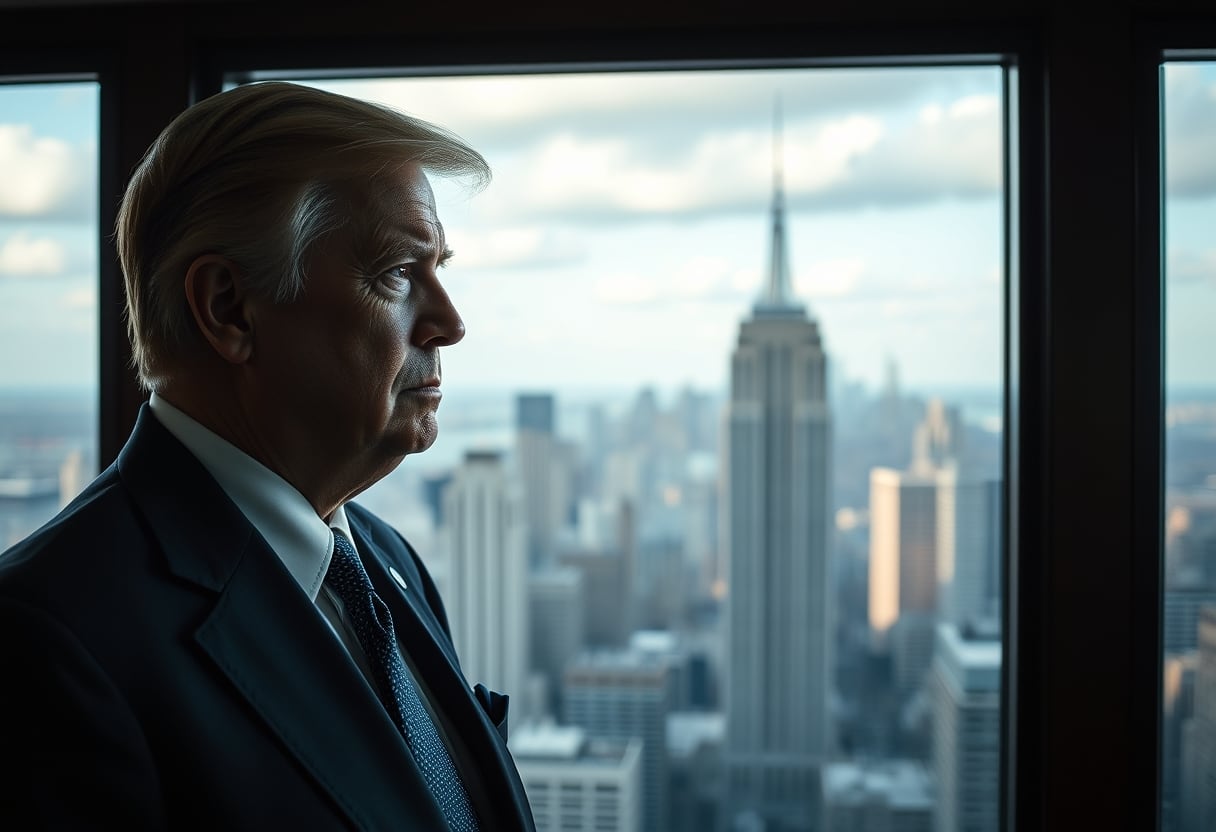
Washington scrutiny of WLFI signalizes a permanent shift in how lawmakers perceive Bitcoin assets. DC's Latest Crypto Crackdown: Is Your Portfolio Vulnerable to Political Windfall? High politics and decentralized finance just collided in Washington, and lawmakers aren’t happy. This isn't just about technical audits or tokenomics; it’s a full-frontal assault on perceived foreign influence in the crypto space, setting a dangerous precedent for personality-driven projects. 👮 A formal inquiry into World Liberty Financial (WLFI) has sent alarm bells ringing across the sector. At the heart of it all is a letter from Representatives Jamie Raskin (D-MD) and Robert Garcia (D-CA), scrutinizing whether foreign entities, particularly those tied to recent UAE dealings and figures like Justin Sun, are leveraging crypto projects as vehicles for political influenc...
Get link
Facebook
X
Pinterest
Email
Other Apps
UAE Investors Buy Trump Crypto Stake: The $500M Geopolitical Pivot
Get link
Facebook
X
Pinterest
Email
Other Apps
-
The $500M UAE infusion into WLF signals a strategic merger of Gulf capital and US political power.
Geopolitical Tokens: Why a $500M UAE Bet on a Trump-Linked Crypto Firm Changes Everything for Investors
⚖️ Another week, another headline proving that in crypto, the only constant is political intrigue masked as innovation. A significant foreign cash injection into a US-linked crypto startup is sending tremors through Washington, raising uncomfortable questions about money, access, and the opaque intersection of politics and digital assets.
Reports hitting the wires this week confirm that a UAE-backed investor just shelled out roughly $500 million for nearly half of a company, World Liberty Financial, a deal that managed to stay mostly under the radar until now.
This $500M structural shift marks the transition of crypto from technology to a core geopolitical tool.
📌 The UAE's Deep Dive into Politically-Connected Crypto
Let's cut through the noise. Aryam Investment 1, a UAE-backed entity, has reportedly acquired a 49% stake in World Liberty Financial for a hefty half-billion dollars. A substantial chunk of that — around $187 million — was paid upfront to entities directly connected to US President Donald Trump and other company founders.
⚖️ This isn't just passive investment. Executives from a major Abu Dhabi tech group have already secured seats on the company's board, giving this new foreign backer direct influence over governance and strategic direction. Here's the catch: the deal was inked in January 2025, just days before a major political transition in the US. The timing alone should raise a few eyebrows for any seasoned market observer.
Unpacking the Trump-Crypto Nexus and Emirati Influence
⚖️ The money trail leads to figures close to Sheikh Tahnoon bin Zayed Al Nahyan, a powerful Abu Dhabi official with significant interests spanning technology and national security. This isn't small-time speculation; it's a strategic move by a sovereign-backed entity into a highly sensitive sector.
Aryam Investment 1 secures board seats to exert direct influence over the WLF project governance and strategy.
⚖️ Lawmakers and watchdogs are already sharpening their pencils. They argue that such a substantial foreign stake in a crypto firm linked to a sitting US President creates a minefield of questions concerning foreign influence, national security, and potential conflicts of interest. The lack of timely disclosure for some previous transactions and token purchases connected to this project only fuels the fire, intensifying calls for stricter filings and faster public notice. This opacity isn't accidental; it's part of the game.
📌 Market Impact: A Shifting Regulatory Tsunami?
💱 This news isn't just political theater; it's a seismic event for the crypto market, especially for stablecoins and the broader DeFi ecosystem. The deal ties into earlier moves by UAE-linked funds to buy the project’s tokens and promote a stablecoin within the company's ecosystem.
🏢 These prior investments reportedly helped build momentum, and whispers suggest a separate, massive stablecoin-related investment involved powerhouses like Binance. Now, with a direct foreign government-linked investment into a politically tied US crypto firm, expect the regulatory spotlight to become a laser beam.
⚖️ Short-term, this could spark significant volatility across politically sensitive tokens and potentially pressure the valuations of projects perceived to have opaque ownership or governance structures. Long-term, this accelerates the debate around tighter stablecoin regulations and foreign investment rules, potentially forcing greater transparency across the board. This isn't just about one company; it's about the entire industry's relationship with national security and political power.
The upfront $187M payment to founders highlights the immediate liquidity premium paid for World Liberty Financial access.
In my view, this appears to be a calculated, if brazen, move by a major geopolitical player to plant a flag deep within the US financial and political landscape via crypto. The timing, the secrecy, the prominent political ties – it all screams "power play."
⚖️ The most similar historical event within the last decade that comes to mind isn't a foreign investment, but rather the spectacular collapse of FTX in 2022. The outcome of the FTX saga was an unprecedented crisis of confidence, massive retail investor losses, and a brutal spotlight on the intersection of crypto, political donations, and opaque dealings. The lesson learned? Political connections, even at the highest levels, offer no shield when transparency and governance fail. In fact, they often amplify the scrutiny when the house of cards tumbles.
⚖️ Today's event is different in its explicit foreign governmental backing and direct investment into a politically-linked firm. Yet, it shares an unsettling similarity with FTX: the potential for political entanglements to backfire spectacularly, drawing intense regulatory and public scrutiny onto the entire crypto sector. The lack of immediate disclosure and questions about the buyer's full ownership structure echo the very transparency failures that led to FTX's downfall. We are once again seeing how 'big players' maneuver, often at the expense of retail investors, by leveraging access and influence.
📌 🔑 Key Takeaways
Geopolitical Risk Amplified: Direct foreign government-linked investment into a US crypto firm with strong political ties introduces new, complex geopolitical risks.
Regulatory Scrutiny Intensified: Expect an immediate and aggressive push from Congress and regulators for tighter rules on stablecoins, foreign investments in crypto, and disclosure requirements.
Transparency as a Premium: Projects with opaque ownership structures or political connections will face increased investor skepticism and potential devaluations.
Stablecoin Outlook: The stablecoin sector is now firmly in the crosshairs, with calls for regulation likely accelerating, potentially impacting liquidity and adoption for non-compliant assets.
🔮 Thoughts & Predictions
The current market dynamics suggest that the specter of the 2022 FTX collapse looms large over this situation. Just as FTX's political donations ultimately invited more, not less, scrutiny, this half-billion-dollar foreign investment in a politically tied crypto firm will inevitably draw a level of regulatory and public attention that could stifle, rather than foster, growth in the short to medium term. Expect a chilling effect on projects that cannot demonstrate impeccable transparency and clear governance, especially those with any whiff of political influence.Washington watchdogs fear the WLF deal establishes a precedent for foreign control over domestic crypto infrastructure.
From my perspective, the key factor here is the explicit mention of a "stablecoin tied to the company's ecosystem." The push for stablecoin regulation has been simmering for years, but this incident acts as a potent accelerant. I predict a rapid legislative drive for comprehensive stablecoin frameworks within the next 6-12 months, favoring fully-reserved, audited, and US-domiciled options, potentially marginalizing less transparent offshore alternatives. This isn't just about consumer protection; it's about national security and financial sovereignty.
The bottom line for investors is clear: strategic positioning will be crucial, with a strong bias towards audited, regulatory-compliant assets and protocols. The era of "move fast and break things" with political impunity is definitively over, replaced by a hyper-vigilant environment where geopolitical connections are more liability than asset. This shift could see a rotation of capital into more robust DeFi infrastructure and away from politically sensitive or opaque ventures.
🎯 Investor Action Tips
Scrutinize Political Ties: Deepen your due diligence on any project with known political connections, assessing governance and disclosure standards critically.
Monitor Stablecoin Developments: Pay close attention to legislative progress on stablecoin regulation, potentially favoring fully-backed, regulated options over those lacking clear oversight.
Prioritize Transparency: Favor projects with publicly audited smart contracts, transparent tokenomics, and clear ownership structures to mitigate unforeseen risks.
Diversify Geographically: Consider diversifying your crypto portfolio across projects and regions less directly exposed to US political and regulatory whims, while still adhering to local compliance.
📘 Glossary for Serious Investors
Stablecoin: A cryptocurrency designed to maintain a stable value relative to a fiat currency (like the USD) or other assets, aiming to reduce volatility inherent in other cryptocurrencies. Often backed by reserves.
⚖️ OTC (Over-the-Counter): Refers to trades that are not conducted on a formal exchange but directly between two parties. In crypto, it often involves large block trades of tokens, common for institutional players.
🧭 Context of the Day
Today's news signals that political influence and foreign capital are converging in crypto, demanding heightened investor vigilance on transparency and regulatory exposure.
📌 Summary of Key Stakeholders & Positions
Stakeholder
Position/Key Detail
👥 Aryam Investment 1 / UAE-backed investors
Acquired 49% stake in World Liberty Financial for $500M; gained board influence.
World Liberty Financial
US-linked crypto startup with significant ties to former President Trump; received $500M foreign investment.
Donald Trump (and connected entities)
Received ~$187M upfront from the deal; strong ties to World Liberty Financial.
Sheikh Tahnoon bin Zayed Al Nahyan (Abu Dhabi official)
🔑 ⚖️ Key figure behind the UAE investment; interests include tech & national security, increasing scrutiny.
US Congress/Regulators
Raising concerns about foreign influence, transparency, potential sidestepping of disclosure rules; debating stablecoin rules.
👥 Retail Investors (General)
Mixed reactions – some welcome funding, others worry about ownership/governance risks & token confidence.
💬 Investment Wisdom
"Sovereign wealth does not seek yield; it seeks proximity to the levers of global power." — A. Rothschild
Digital asset forecast analyzing upcoming volatility: crypto market, next bull run, BTC price. Bitcoin's "Moonvember" Hopes Tempered by Market Realities: A Deep Dive for Investors 📌 Navigating Bitcoin's November Crossroads: Will History Repeat? The cryptocurrency market is at a fascinating juncture as we enter November 2025. Bitcoin, fresh off a somewhat disappointing "Uptober" where it retraced over 10% after briefly touching $126,000 , faces a pivotal month. Historically, November, often referred to as "Moonvember," has been a strong period for Bitcoin. But can historical trends overcome current market headwinds? To understand the present, it's essential to acknowledge the past. Bitcoin's price action has often followed predictable seasonal patterns. October and November, in particular, have been associated with bullish...
Introducing Solana's pivotal network upgrade, symbolizing growth and advancement. Solana's Alpenglow Upgrade: A Game-Changer for On-Chain Trading and Network Stability 🔗 Solana, a network long celebrated for its blistering speed and low transaction fees, has also navigated its share of stability challenges. As we move into 2025, a critical evolution is on the horizon: the Alpenglow consensus overhaul . This isn't just another incremental update; it's a fundamental reimagining of Solana's core architecture, poised to address longstanding concerns regarding validator performance, network stability, and long-term scalability. For investors, understanding this seismic shift is paramount, as it could significantly redefine SOL's competitive edge and its role within the broader blockchain ecosystem . 📌 🚀 The Alpenglow Evolution: Diving ...
Solana market cap sees massive growth, institutional buying accelerates. SOL investment, crypto portfolio. Solana ETFs Surge: SOL Emerges as Crypto's Third Major Player 📌 Event Background and Significance 🎨 Solana (SOL) has long been touted as a potential "Ethereum killer," offering faster transaction speeds and lower costs. While it has enjoyed periods of popularity, particularly during the NFT boom, it has also faced challenges, including network outages and questions about its decentralization. The approval and subsequent success of Solana Spot Exchange-Traded Funds (ETFs) mark a significant milestone for the cryptocurrency, potentially solidifying its position among institutional investors . Previously, only Bitcoin and Ethereum had achieved this level of mainstream financial product integration. The arrival of Solana ETFs represents a broadening ac...