Stay updated with the latest in cryptocurrency and blockchain news, delivered fast and reliably. Bookmark this page and check back often for valuable insights and timely information!
Washington scrutiny of WLFI signalizes a permanent shift in how lawmakers perceive Bitcoin assets. DC's Latest Crypto Crackdown: Is Your Portfolio Vulnerable to Political Windfall? High politics and decentralized finance just collided in Washington, and lawmakers aren’t happy. This isn't just about technical audits or tokenomics; it’s a full-frontal assault on perceived foreign influence in the crypto space, setting a dangerous precedent for personality-driven projects. 👮 A formal inquiry into World Liberty Financial (WLFI) has sent alarm bells ringing across the sector. At the heart of it all is a letter from Representatives Jamie Raskin (D-MD) and Robert Garcia (D-CA), scrutinizing whether foreign entities, particularly those tied to recent UAE dealings and figures like Justin Sun, are leveraging crypto projects as vehicles for political influenc...
Get link
Facebook
X
Pinterest
Email
Other Apps
Pundit Urges Bitcoin Sell-Off For XRP: Exposing the narrative's fragile facade
Get link
Facebook
X
Pinterest
Email
Other Apps
-
A lone market voice challenges traditional thinking, urging a bold rotation from Bitcoin to XRP.
The XRP Gambit: Unpacking the Latest Attack on Bitcoin’s Dominance
The perpetual clash between Bitcoin and alternative digital assets just got a fresh, rather unsavory chapter. A new, highly vocal narrative is pushing for a dramatic shift: dump your Bitcoin, embrace XRP. This isn't just a friendly suggestion; it's a bold, almost urgent declaration, fueled by what can only be described as a dubious revelation.
⚖️ As a seasoned observer of this wild west market, I’ve seen this playbook before. Every cycle brings its own "Bitcoin killer" and its own set of questionable claims designed to stir the pot and, frankly, move capital. Let’s dissect the latest installment and what it really means for your portfolio.
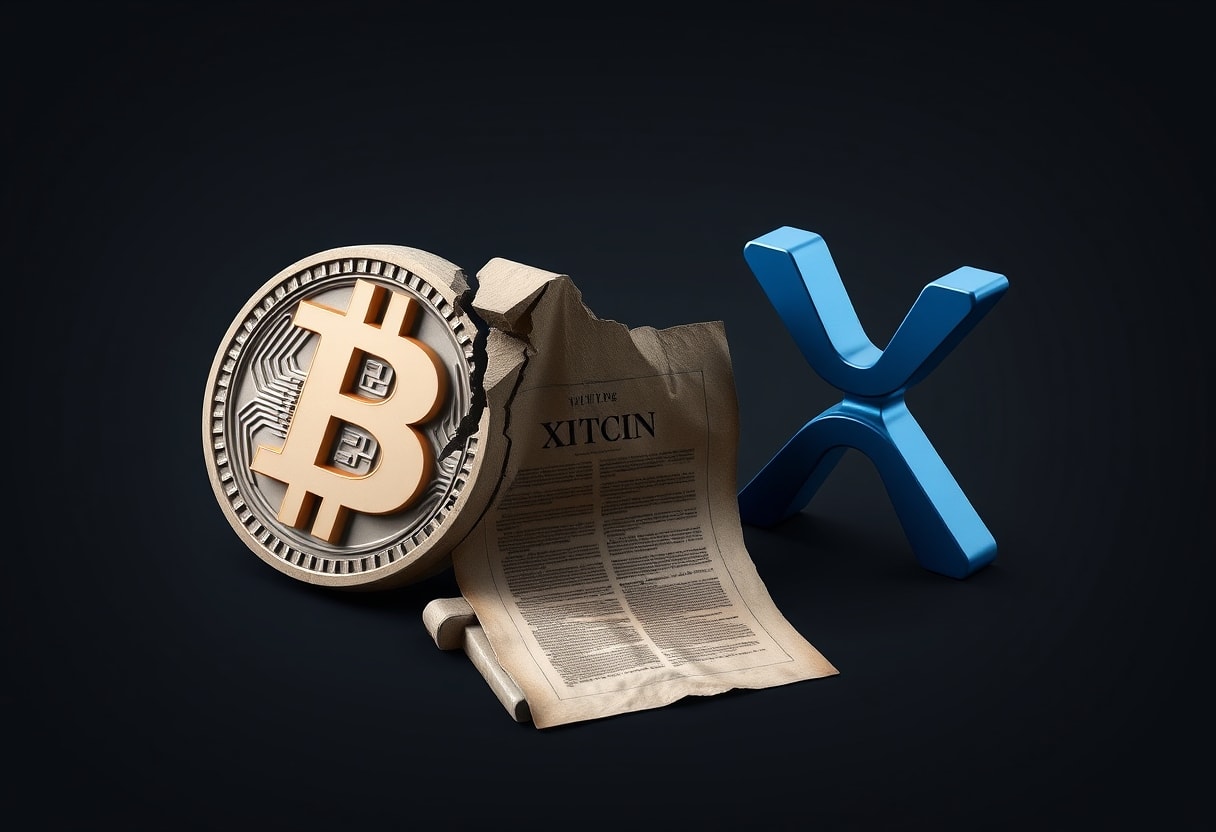
The pundit frames this as a 'last chance' to reposition from Bitcoin before a major shift.
📌 The Latest Salvo: A Call for a Bitcoin to XRP Rotation
A specific pundit is making waves across the crypto community. They assert that XRP is not just a rival, but a fundamental threat to Bitcoin's long-held market leadership. This aggressive stance stems from what are described as newly surfaced, highly dubious documents: alleged emails from none other than Jeffrey Epstein, who is bizarrely positioned by the pundit as an "early founder" of Bitcoin.
These purported emails claim Epstein felt threatened by the competition from Ripple (XRP) and Stellar (XLM). According to the pundit, the emails suggest these assets are "fundamentally superior" to BTC. The pundit now frames this as the "last chance" for investors to liquidate their Bitcoin holdings and rotate into XRP, before Bitcoin "never truly recovers."
Such bold declarations are rarely unanimous. They frequently ignite fierce debate, especially during periods of market transition when uncertainty runs high and competing narratives vie for supremacy. The timing, as always, is key.
📌 Context: Debunking the Epstein Narrative
Let's be clear: the claim of Jeffrey Epstein as an "early founder of Bitcoin" lacks any credible historical backing within the crypto community or public record. Bitcoin’s pseudonymous creator, Satoshi Nakamoto, is widely acknowledged, and Epstein's name has never been associated with its genesis.
This raises immediate red flags about the entire premise of the pundit’s argument. In markets, especially crypto, it's crucial to question the source and intent behind sensational claims. Such narratives often emerge to create FUD (Fear, Uncertainty, and Doubt) around established assets and FOMO (Fear of Missing Out) into others.
The pundit further escalated their attack by disparaging Michael Saylor, a prominent Bitcoin proponent, as "a zombie on drugs with no personality." This sort of ad hominem attack, while attention-grabbing, does little to bolster a sound investment thesis. It serves primarily to polarize and demonize, a classic tactic in narrative warfare.
📌 Market Impact Analysis: Beyond the Headlines
Despite the grand claims, the immediate market reaction was nuanced. XRP did see a brief bounce, recording a modest 3.49% gain over 24 hours. Bitcoin, meanwhile, showed a slight 0.33% uptick in the same period.
Alleged revelations fuel the intensifying rivalry between established Bitcoin and rising challenger XRP.
💰 To declare this a "wake-up call" or evidence of Bitcoin's impending demise based on a single 24-hour snapshot is premature, at best. Altcoins, especially those with lower market capitalization relative to Bitcoin, often exhibit higher volatility and can show significant percentage gains on relatively small capital inflows.
💧 Bitcoin's market depth and liquidity are orders of magnitude greater than XRP's. A 3.49% move in XRP does not equate to a fundamental shift in market power, nor does it signal the end of Bitcoin's dominance. This is a common misinterpretation, often used to push specific agendas.
📌 ⚖️ Stakeholder Analysis & Historical Parallel
The current narrative pushing an altcoin as fundamentally superior to Bitcoin, driven by controversial claims and aggressive rhetoric, is a familiar tune in the crypto space. It strongly echoes the 2017: Bitcoin Cash (BCH) 'Flippening' Debate.
💰 In 2017, following Bitcoin's hard fork, proponents of Bitcoin Cash argued vehemently that BCH, with its larger block sizes, was the "true Bitcoin" and technically superior. They claimed it would soon "flip" BTC's market capitalization, becoming the dominant digital asset. The narrative was aggressive, highly tribal, and deeply divisive.
The outcome of that past event was clear: BCH saw several significant pumps, creating temporary excitement and substantial gains for early movers. However, the anticipated "flippening" never materialized. Bitcoin's network effect, brand recognition, and decentralized ethos proved far more resilient than its detractors (and BCH proponents) predicted. BCH ultimately settled into a much smaller niche, and BTC maintained its market leadership.
In my view, this appears to be a calculated maneuver, leveraging a sensational but unsubstantiated claim to generate momentum for a specific asset. It's a classic example of creating a dramatic narrative to induce a short-term capital rotation. The playbook is identical: identify perceived weaknesses in Bitcoin, amplify them, and then position an alternative as the savior, often through aggressive, personalized attacks on Bitcoin's advocates.
The difference today is the sheer audacity of connecting it to figures like Jeffrey Epstein, which speaks volumes about the lengths some will go to manipulate public perception. The market has matured somewhat since 2017, but the underlying psychological triggers of FOMO and FUD remain potent. Investors would do well to remember that fundamentals and network effects consistently trump sensationalist narratives in the long run.
📌 🔑 Key Takeaways
The claim of Bitcoin's demise and XRP's superiority is based on highly dubious, unverified documents and claims about Jeffrey Epstein's involvement with Bitcoin's genesis.
High uncertainty and competing narratives define this critical period of market transition for capital flows.
Such narratives, often accompanied by personal attacks on prominent figures, are typical of market manipulation tactics designed to trigger FUD and FOMO.
💧 A brief 24-hour percentage gain in an altcoin does not signify a long-term shift in market dominance, especially when compared to Bitcoin's vastly superior liquidity and network effect.
Investors should exercise extreme caution and critical thinking when faced with sensational "last chance" calls, especially when they lack verifiable facts and historical context.
📌 Future Outlook: Navigating Narrative Warfare
Expect these kinds of narrative-driven attacks on Bitcoin to intensify, especially as the market cycles through periods of consolidation or uncertainty. As Bitcoin continues to gain institutional adoption and faces increasing regulatory scrutiny, competitors will always seek to carve out their niche by attempting to discredit the market leader.
⚖️ For investors, this means the landscape will remain noisy. You'll continue to hear arguments about which altcoin offers the "most real-world utility" or is "fundamentally superior." While evaluating utility is valid, it's crucial to differentiate between genuine innovation and engineered hype. Bitcoin’s value proposition isn't primarily about transactions per second; it's about decentralized, censorship-resistant store of value. XRP, on the other hand, is optimized for cross-border payments, serving a different, albeit important, purpose.
The immediate future will likely see continued volatility as these narratives play out. Long-term, assets with strong fundamentals, clear value propositions, and robust network effects will continue to thrive, regardless of short-term FUD campaigns. Regulatory clarity, particularly for assets like XRP that operate closer to traditional financial rails, will also heavily influence their trajectory.
Stakeholder
Position/Key Detail
🆕 Crypto Dyl News (Pundit)
Urges BTC sell-off for XRP; claims alleged Epstein emails prove XRP's superiority & BTC is a "fraud."
Jeffrey Epstein (Alleged Source)
Purportedly authored emails admitting XRP/XLM are "fundamentally superior" to BTC and a threat to Bitcoin.
Michael Saylor
🏛️ Dismissed by pundit as "a zombie on drugs"; represents strong institutional Bitcoin advocacy.
🔮 Thoughts & Predictions
The constant barrage of "Bitcoin killer" narratives, especially those based on flimsy evidence, is a recurring pattern. My analysis of the 2017 BCH 'flippening' attempt highlights how such aggressive campaigns, while creating short-term noise and pumps, ultimately fail to dislodge Bitcoin's entrenched network effect and dominance. This current XRP narrative, fueled by sensationalist claims, is following a depressingly familiar trajectory. Expect a short-term speculative bump for XRP, but a sustained "flippening" of BTC remains highly improbable in the medium-term.
💧
The underlying agenda here isn't just about XRP's merits; it's about shaking confidence in the market's bedrock. Historically, these attacks intensify as retail interest grows, serving to confuse new entrants and extract liquidity. The aggressive personal attacks further underscore a desperation to dominate the narrative rather than present a compelling, fact-based investment case.
Investors face a pivotal decision point as future capital flows between Bitcoin and XRP are debated.
Therefore, I predict Bitcoin's dominance will likely consolidate further after this latest FUD wave dissipates, potentially reaching over 55% market share by Q3 2025, as institutional flows prioritize established, liquid assets. This recent XRP surge is a speculative blip, not a fundamental shift. Smart money will see right through the noise, leveraging any temporary dips in BTC as accumulation opportunities.
🎯 Investor Action Tips
Verify Sources: Always scrutinize the credibility of claims, especially those involving historical figures or sensational revelations. Fact-checking is paramount.
Understand Market Depth: Distinguish between percentage gains on low-cap assets versus fundamental shifts in high-cap assets like Bitcoin. Volume matters.
Focus on Fundamentals: Evaluate assets based on their long-term value proposition, network effects, and clear utility, rather than short-term narratives or hype.
Beware of Tribalism: Aggressive, personalized attacks on other assets or individuals are usually signs of a weak argument, not a strong investment case. Maintain a balanced portfolio perspective.
📘 Glossary for Serious Investors
⚖️ Market Dominance: The percentage of the total cryptocurrency market capitalization held by a specific cryptocurrency, often Bitcoin.
⚖️ Network Effect: The phenomenon where the value or utility of a product or service increases with the number of users or participants.
🧭 Context of the Day
Today's sensational XRP claims serve as a potent reminder that market narratives often aim to manipulate, underscoring the enduring value of critical analysis over hype.
📈 BITCOIN Market TrendLast 7 Days
Date
Price (USD)
7D Change
1/27/2026
$88,307.86
+0.00%
1/28/2026
$89,204.22
+1.02%
1/29/2026
$89,162.10
+0.97%
1/30/2026
$84,570.41
-4.23%
1/31/2026
$84,141.78
-4.72%
2/1/2026
$78,725.86
-10.85%
2/2/2026
$76,937.06
-12.88%
2/3/2026
$78,245.35
-11.39%
Data provided by CoinGecko Integration.
💬 Investment Wisdom
"The four most dangerous words in investing are: 'This time is different.'" — Sir John Templeton
Digital asset forecast analyzing upcoming volatility: crypto market, next bull run, BTC price. Bitcoin's "Moonvember" Hopes Tempered by Market Realities: A Deep Dive for Investors 📌 Navigating Bitcoin's November Crossroads: Will History Repeat? The cryptocurrency market is at a fascinating juncture as we enter November 2025. Bitcoin, fresh off a somewhat disappointing "Uptober" where it retraced over 10% after briefly touching $126,000 , faces a pivotal month. Historically, November, often referred to as "Moonvember," has been a strong period for Bitcoin. But can historical trends overcome current market headwinds? To understand the present, it's essential to acknowledge the past. Bitcoin's price action has often followed predictable seasonal patterns. October and November, in particular, have been associated with bullish...
Introducing Solana's pivotal network upgrade, symbolizing growth and advancement. Solana's Alpenglow Upgrade: A Game-Changer for On-Chain Trading and Network Stability 🔗 Solana, a network long celebrated for its blistering speed and low transaction fees, has also navigated its share of stability challenges. As we move into 2025, a critical evolution is on the horizon: the Alpenglow consensus overhaul . This isn't just another incremental update; it's a fundamental reimagining of Solana's core architecture, poised to address longstanding concerns regarding validator performance, network stability, and long-term scalability. For investors, understanding this seismic shift is paramount, as it could significantly redefine SOL's competitive edge and its role within the broader blockchain ecosystem . 📌 🚀 The Alpenglow Evolution: Diving ...
Solana market cap sees massive growth, institutional buying accelerates. SOL investment, crypto portfolio. Solana ETFs Surge: SOL Emerges as Crypto's Third Major Player 📌 Event Background and Significance 🎨 Solana (SOL) has long been touted as a potential "Ethereum killer," offering faster transaction speeds and lower costs. While it has enjoyed periods of popularity, particularly during the NFT boom, it has also faced challenges, including network outages and questions about its decentralization. The approval and subsequent success of Solana Spot Exchange-Traded Funds (ETFs) mark a significant milestone for the cryptocurrency, potentially solidifying its position among institutional investors . Previously, only Bitcoin and Ethereum had achieved this level of mainstream financial product integration. The arrival of Solana ETFs represents a broadening ac...