Stay updated with the latest in cryptocurrency and blockchain news, delivered fast and reliably. Bookmark this page and check back often for valuable insights and timely information!
Solana ETFs attract capital, signaling institutional conviction despite persistent market turbulence surrounding SOL. Solana ETFs Defy Logic: The Uncomfortable Truth About Institutional Crypto Demand Solana's underlying asset, SOL, has shed 57% of its value since July. Simultaneously, spot Solana ETFs have attracted an astonishing $1.45 billion in net inflows. This isn't just "unlucky timing," as one analyst put it; it's a profound structural tension demanding a closer look. SOL Price Trend Last 7 Days Powered by CryptoCompare Here is what everyone is ignoring: these numbers force us to reconsider the widely held belief that institutional capital only chases performance. The ...
XRP's Supply Shock: Why Its Price is Still Stuck Below $2 Amidst 8-Year Lows (2025 Analysis)
📌 The Great Disconnect: XRP's Shrinking Supply vs. Stagnant Price
In the world of crypto, basic economics often dictates that when supply shrinks and demand holds steady or rises, prices tend to follow suit. However, for XRP, the digital asset designed for global payments, this fundamental principle appears to be hitting a wall. We're witnessing a peculiar phenomenon: XRP's supply on exchanges has plummeted to an eight-year low, yet its price remains stubbornly anchored below the $2 mark. This disconnect presents a complex puzzle for investors and analysts alike in late 2025.
XRP Price TrendLast 7 Days
Powered by CryptoCompare
The latest data from Glassnode reveals a dramatic reduction in XRP held on exchanges, with balances crashing to just 1.6 million tokens. This figure represents a staggering 57% decline from the 3.76 billion XRP recorded on October 8, 2025, marking the lowest level seen since 2018. Historically, such significant movements of assets off exchanges are perceived as a bullish signal, indicating that holders are moving their tokens into private wallets, presumably for long-term holding rather than immediate sale. This can often precede a "supply shock," where limited availability meets potential demand, driving up prices.
Representing XRP tokens being secured in private wallets.
📈 For context, consider past market cycles where large withdrawals from exchanges fueled significant rallies. Analysts, including figures like X Finance Bull, have frequently pointed to decreasing exchange balances as a precursor to potential supply shocks and subsequent price surges. The logic is sound: less XRP available for immediate trade means less selling pressure and a higher threshold for buyers to acquire tokens. Yet, for XRP, this has not translated into the expected upward momentum, leaving many to wonder about the underlying dynamics.
📌 Market Impact Analysis: The Forces Holding XRP Back
Despite the compelling narrative of an impending supply shock, XRP's price action has been a story of frustration for many. Earlier in 2025, the token did experience a sharp rally, briefly pushing its price above $3. However, this surge proved ephemeral, quickly giving way to renewed selling pressure and erasing much of those gains. Currently, XRP continues to hover around $1.8, struggling to escape a prolonged period of weakness.
Several factors are contributing to this persistent underperformance. One significant element is the constant distributions of XRP, often associated with Ripple's release schedule, which can add consistent selling pressure to the market. Coupled with this, negative investor sentiment has weighed heavily on the token, exacerbated by general market volatility that has seen even major cryptocurrencies like Bitcoin, Ethereum, Dogecoin, and Solana trending lower.
On-chain metrics further illuminate XRP's struggles. Data indicates that the portion of XRP's supply currently in profit has declined substantially. With over half of the circulating supply now "underwater," meaning holders purchased their tokens at a higher price than current market value, the risk of panic selling looms large. This psychological burden on holders can reinforce downtrends, as any minor price recovery might trigger selling from those looking to break even, preventing sustained upward movement.
Visualizing the rapid decrease in XRP's available supply.
The repeated rejections at key resistance levels, indicating weak demand and lower buyer participation, highlight a critical imbalance. While supply has tightened, buyer conviction and volume have not materialized sufficiently to absorb the selling pressure and drive prices higher. This blend of internal and external market forces has locked XRP into a downward spiral, with the token closing 2025 lower and extending its downtrend into early 2026 without a clear rebound in sight.
📌 Key Stakeholders’ Positions & Their Influence
Understanding the various players involved is crucial for any investor looking at XRP's current situation:
🤝 Ripple (the company behind XRP): As the primary developer and holder of a significant portion of XRP, Ripple's distribution strategy (e.g., selling XRP to fund operations or support partnerships) inherently affects supply. While intended to foster ecosystem growth, these distributions can contribute to selling pressure, especially in a market with weak demand.
XRP Holders: A large segment of the community remains loyal, often holding through downturns. However, the declining "supply in profit" indicates many are underwater, leading to increased pressure to sell on minor rallies. This collective sentiment dictates much of the short-to-medium term price action.
Market Analysts & Influencers: Opinions are divided. Some, like X Finance Bull, remain optimistic, citing the historical significance of supply shocks. Others are more cautious, pointing to the structural issues like persistent selling pressure and weak demand that are currently overriding supply-side dynamics. Their commentary shapes investor perception and can influence trading behavior.
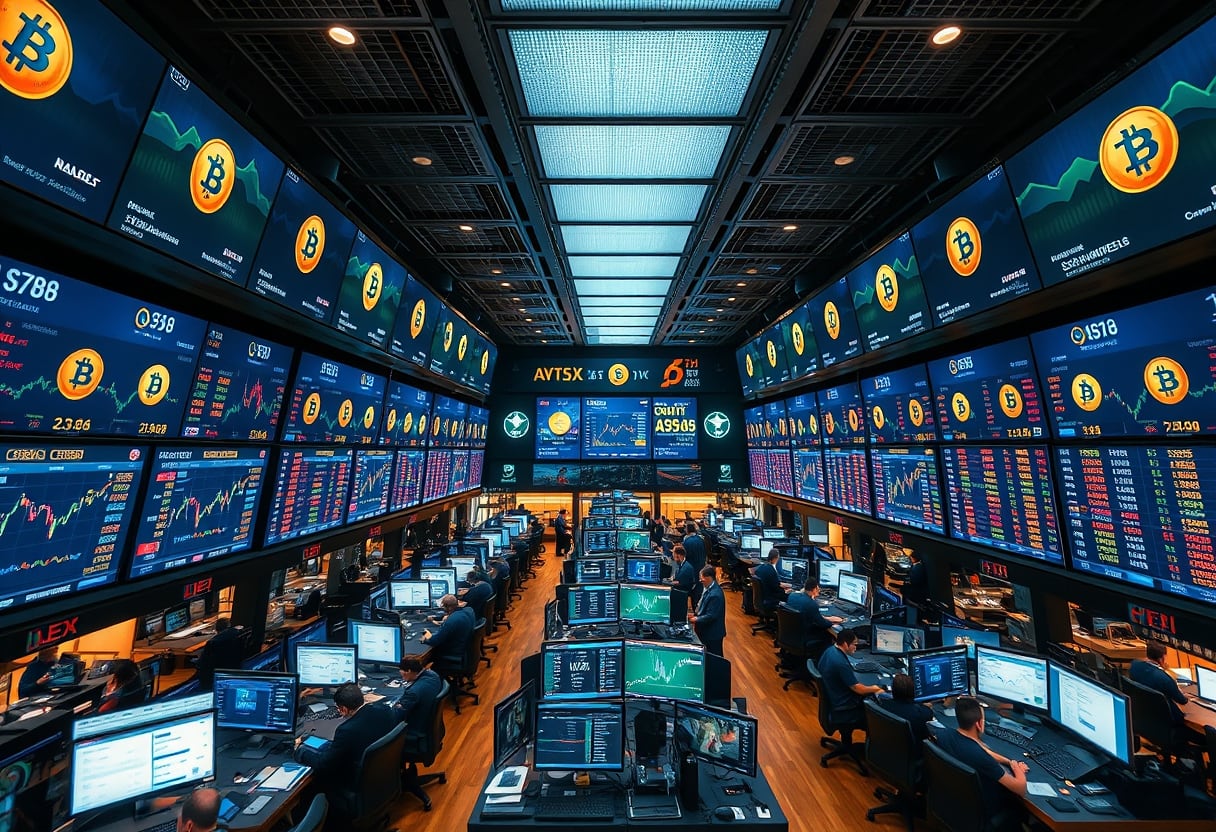
Capturing the dynamic environment of cryptocurrency exchanges.
Broader Crypto Market: The prevailing sentiment in the wider crypto market, heavily influenced by Bitcoin's performance, acts as a significant external factor. When major cryptocurrencies trend downwards, "altcoins" like XRP often experience amplified negative effects, regardless of their individual on-chain metrics.
Stakeholder Summary
Stakeholder
Position/Key Detail
Ripple
💰 Engages in XRP distributions, impacting market supply and potential selling pressure.
XRP Holders
Over 50% are "underwater," creating incentive for panic selling on price bounces.
💰 Market Analysts
📈 Mixed views; some bullish on supply shock, others cautious due to demand weakness.
💰 Broader Crypto Market
📊 Downtrend in major cryptos amplifies XRP's price struggles and negative sentiment.
📌 Future Outlook: Navigating the Uncertainty
Looking ahead, XRP's trajectory remains highly dependent on a shift in market dynamics. The current scenario suggests that reduced supply alone is insufficient to trigger a significant rally without a corresponding surge in demand or a broader market upturn. The crucial question for investors is whether the supply shock will eventually manifest its theoretical impact, or if other factors will continue to dominate.
If broader market conditions improve and investor sentiment turns positive, the drastically reduced exchange supply could indeed become a powerful catalyst for a price recovery. A sustained bullish trend across the market, perhaps led by Bitcoin, could reignite buyer interest in XRP, allowing the supply-side dynamics to finally exert their influence. However, until such a shift occurs, XRP is likely to remain susceptible to volatility and selling pressure, especially from underwater holders looking to exit their positions.
From a regulatory perspective, while not explicitly mentioned in the original news, XRP's history with regulatory scrutiny (particularly in the US) is always a background factor influencing institutional adoption and investor confidence. Any further clarity or favorable outcomes in this area could significantly alter the demand side of the equation. For now, investors must brace for continued choppiness and focus on key indicators beyond just exchange balances.
📌 🔑 Key Takeaways
XRP's supply on exchanges has reached an eight-year low, typically a bullish signal indicating a potential supply shock.
Despite tightening supply, XRP's price remains stuck below $2 due to weak demand, persistent selling pressure, and negative investor sentiment.
Over half of XRP's circulating supply is currently "underwater," increasing the risk of panic selling and hindering price recovery.
The broader crypto market's downtrend is amplifying XRP's struggles, making an independent rally challenging in the short term.
While long-term potential for recovery exists, a significant shift in market demand or broader sentiment is crucial for XRP to capitalize on its reduced supply.
🔮 Thoughts & Predictions
The narrative around XRP's supply shock is compelling, but the market's current reality paints a starker picture. Until sustained demand returns, potentially driven by a broader market recovery or significant regulatory clarity, the theoretical benefits of reduced exchange supply will remain largely unrealized. We've seen similar disconnects in other assets where macro factors or sustained distribution overshadowed bullish on-chain metrics.
Illustrating the ongoing challenge of XRP surpassing key price levels.
My medium-term prediction is for XRP to remain highly sensitive to Bitcoin's price action and broader market sentiment throughout late 2025 and into early 2026. A decisive break above the $2.20-$2.50 resistance zone, which would require substantial volume and renewed investor confidence, could signal a turning point. Without it, the risk of further consolidation or even a dip towards the $1.50 level remains elevated, as underwater holders continue to create selling pressure on any significant bounce.
For investors, this situation underscores a critical lesson: on-chain supply metrics, while important, are only one piece of the puzzle. Demand and macro market conditions are currently the dominant forces shaping XRP's valuation. A genuine recovery will necessitate a fundamental shift in buyer enthusiasm, not just a scarcity of tokens on exchanges.
🎯 Investor Action Tips
Monitor Demand Indicators: Pay less attention solely to exchange supply and more to volume, buyer accumulation metrics, and overall market sentiment shifts.
Identify Key Resistance Levels: Watch for a decisive break above $2.20-$2.50 as a potential signal for a sustained recovery.
Diversify and Manage Risk: Given XRP's current volatility, ensure it represents an appropriate portion of your portfolio and consider setting clear stop-loss levels.
Track Broader Market Trends: XRP's recovery is likely tied to a general upturn in the crypto market, especially Bitcoin. Follow these broader trends closely.
📘 Glossary for Serious Investors
📉 Supply Shock: An economic term referring to a sudden, unexpected increase or decrease in the supply of a commodity or service. In crypto, a significant reduction in exchange supply can theoretically lead to higher prices if demand remains constant or increases.
🔗 On-chain Metrics: Data derived directly from a blockchain's public ledger, such as transaction volumes, active addresses, exchange balances, and the amount of supply in profit or loss, providing insights into network health and market sentiment.
🧭 Context of the Day
Despite historic low exchange supply, XRP's price struggles highlight that demand and broader market sentiment currently outweigh scarcity dynamics for recovery.
📈 RIPPLE Market TrendLast 7 Days
Date
Price (USD)
7D Change
12/26/2025
$1.83
+0.00%
12/27/2025
$1.84
+0.62%
12/28/2025
$1.87
+2.28%
12/29/2025
$1.86
+1.80%
12/30/2025
$1.85
+0.87%
12/31/2025
$1.88
+2.37%
1/1/2026
$1.84
+0.42%
1/2/2026
$1.87
+2.15%
Data provided by CoinGecko Integration.
💬 Investment Wisdom
"The best time to buy is when there's blood in the streets." — Baron Rothschild
Digital asset forecast analyzing upcoming volatility: crypto market, next bull run, BTC price. Bitcoin's "Moonvember" Hopes Tempered by Market Realities: A Deep Dive for Investors 📌 Navigating Bitcoin's November Crossroads: Will History Repeat? The cryptocurrency market is at a fascinating juncture as we enter November 2025. Bitcoin, fresh off a somewhat disappointing "Uptober" where it retraced over 10% after briefly touching $126,000 , faces a pivotal month. Historically, November, often referred to as "Moonvember," has been a strong period for Bitcoin. But can historical trends overcome current market headwinds? To understand the present, it's essential to acknowledge the past. Bitcoin's price action has often followed predictable seasonal patterns. October and November, in particular, have been associated with bullish...
Introducing Solana's pivotal network upgrade, symbolizing growth and advancement. Solana's Alpenglow Upgrade: A Game-Changer for On-Chain Trading and Network Stability 🔗 Solana, a network long celebrated for its blistering speed and low transaction fees, has also navigated its share of stability challenges. As we move into 2025, a critical evolution is on the horizon: the Alpenglow consensus overhaul . This isn't just another incremental update; it's a fundamental reimagining of Solana's core architecture, poised to address longstanding concerns regarding validator performance, network stability, and long-term scalability. For investors, understanding this seismic shift is paramount, as it could significantly redefine SOL's competitive edge and its role within the broader blockchain ecosystem . 📌 🚀 The Alpenglow Evolution: Diving ...
Tokenization boom accelerates: XRP ecosystem integrates $50T property. RWA crypto, digital assets, blockchain real estate. Epic Chain's XRP Integration: A Trillion-Dollar RWA Opportunity? 🔗 Epic Chain, a project supported by Ripple, is making significant strides in the tokenization of real-world assets (RWAs) by leveraging the XRP Ledger. This initiative aims to bring trillions of dollars worth of assets onto the blockchain, potentially revolutionizing how real estate, credit, commodities, and collectibles are managed and traded. But what does this mean for crypto investors? 📌 Ripple's Backing and Epic Chain's RWA Platform Epic Chain is positioning itself at the forefront of the RWA tokenization movement with its XRP-native platform. The platform is designed to facilitate the transfer of real estate, credit, commodities, and collectibles onto the XRP Ledg...