Stay updated with the latest in cryptocurrency and blockchain news, delivered fast and reliably. Bookmark this page and check back often for valuable insights and timely information!
The BIS identifies a growing enforcement gap as capital flows move toward decentralized BTC infrastructure. BIS Fires Warning Shot: Is Self-Custody the Next Regulatory Battleground? With the total crypto market cap hovering at $2.37 trillion today, the Bank of International Settlements (BIS) just issued a paper arguing that the very backbone of crypto – self-custody – is becoming the new Achilles' heel for global anti-money laundering (AML) efforts. This isn't merely a technical observation; it's a structural challenge to the core ethos of decentralized finance. The BIS’s concern is stark: as traditional financial rails and even hosted crypto services are squeezed tighter by regulation, illicit funds won't disappear. They will flow directly into the least monitored channel: user-controlled wallets. This dynamic, which the BIS calls the ...
Get link
Facebook
X
Pinterest
Email
Other Apps
Bitcoin Hashrate Hits Nine Month Lows: The 1 ZH/s Siphon to AI Profits
Get link
Facebook
X
Pinterest
Email
Other Apps
-
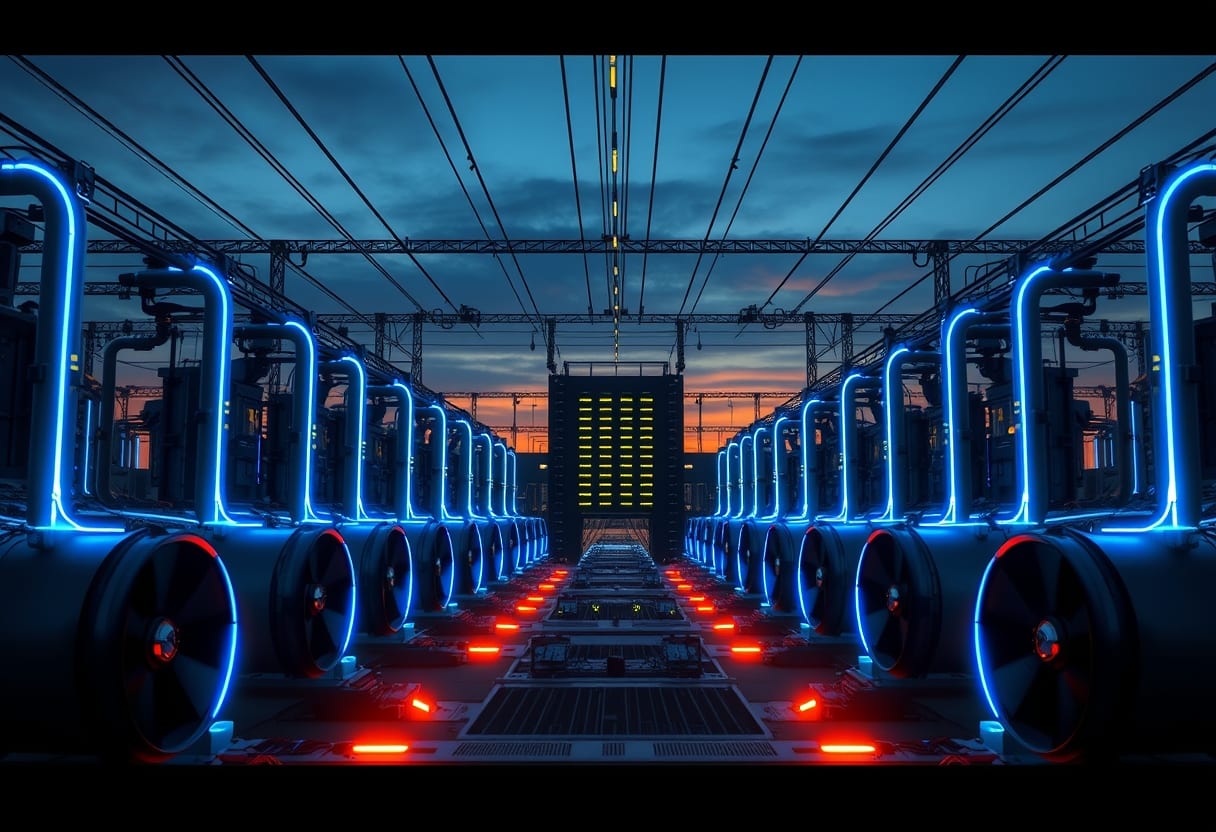
Infrastructure pivots as BTC energy demands compete with the rising hunger of AI computations.
The crypto market, much like a well-played chess match, often sees its most significant moves happen quietly, away from the headlines screaming about daily price swings. This week, a critical, underlying shift in the Bitcoin network's foundation caught my eye, and frankly, it screams of the kind of institutional maneuvering we’ve come to expect in rapidly evolving markets.
📌 Bitcoin Hashrate Dips: The Silent Siphon to AI's Power Hunger
For months, the Bitcoin network hummed along, its computational power consistently above the crucial one-zettahash mark. It was a testament to the industry's growth and the sheer scale of global mining operations. But make no mistake, that era of seemingly unchallenged expansion is facing a harsh reality check. This week, we saw the seven-day average hashrate dip back under that threshold, settling near 993 EH/s—a clear pullback from last year's bullish highs.
Breaking the 1 ZH/s barrier marks a historical redirection of BTC network dominance toward AI.
This isn't some arbitrary dip. This is a direct consequence of a colossal shift in the digital economy: the insatiable hunger of Artificial Intelligence. AI data centers, with their voracious appetite for processing power, are now outbidding Bitcoin miners for long-term power contracts, willing to pay a premium for steady, round-the-clock electricity. This isn't merely a competition; it's a reordering of the energy pecking order, determining who gets the cheapest, most reliable power on the grid.
Event Background and Significance: A New Energy Frontier
To truly grasp the significance, we need to look back. Bitcoin mining, for years, has chased cheap, abundant energy, often revitalizing dormant power plants or utilizing curtailed energy sources. This decentralized global quest for low-cost electricity was a cornerstone of its economic model. However, the rise of AI has introduced a new, formidable predator in the energy market.
The underlying dynamic is simple: electricity is, by far, the single biggest operational cost for any mining operation. When tech giants building AI data centers enter the fray, they're not just bidding for megawatts; they're bidding for the very lifeblood of the mining industry. This new reality forces miners into an unenviable choice: either pay significantly more for power, accept dramatically narrower profit margins, or, as we are now seeing, repurpose their existing infrastructure for other, more lucrative compute opportunities.
⚖️ This isn't just about a fluctuating hashrate; it signals a fundamental re-evaluation of capital allocation in the digital compute sector. What was once a pure-play Bitcoin mining operation is evolving into a broader compute infrastructure business, driven by the cold calculus of profit margins and the shifting tides of institutional demand.
The battle for cheap megawatts reconfigures the fundamental security layers of the BTC network.
Market Impact Analysis: Navigating the Compute Arms Race
The immediate impact for Bitcoin itself is a slight easing of network difficulty, which mechanically keeps block times stable. However, this superficial fix doesn't address the underlying economic shift. For investors, the implications are far more profound, especially for those holding shares in publicly traded mining companies.
In the short term, expect increased volatility in the share prices of mining stocks. Those who can pivot swiftly to AI-hosting revenue streams will likely outperform pure-play miners struggling with escalating energy costs. We're already seeing this: some large, publicly traded miners are striking multi-year lease agreements with major chip companies, transforming parts of their facilities into AI data centers. This isn't just diversification; it's a strategic hedge against the notoriously volatile profits of Bitcoin mining.
⚖️ Longer term, this trend could lead to a significant sector transformation. While the Bitcoin network's security (currently robust due to its sheer scale) isn't immediately threatened, a sustained low hashrate could invite concerns about centralization, particularly if mining power consolidates in regions with remaining cheap energy or where miners have successfully adapted to the AI compute model. Investor sentiment might shift to favor companies with diversified revenue streams in the broader compute infrastructure, rather than those solely reliant on block rewards. The narrative around "digital gold" remains, but the infrastructure supporting it is undergoing a profound commercial metamorphosis.
⚖️ The pressure is also mounting from policymakers. Grid operators like PJM, serving the mid-Atlantic, are already proposing rules to manage surging AI demand, asking large new power users to secure their own supply or face curtailment. Meanwhile, political figures like US President Donald Trump and several state leaders are advocating for tech firms to shoulder more of the cost for securing power, potentially through emergency auctions for new plant funding. This reflects a broader societal concern about rising energy bills and the risk of data centers crowding out essential services.
Stakeholder
Position/Key Detail
AI Data Centers
Aggressively acquiring long-term power contracts, willing to pay premium.
Bitcoin Miners (Pivoting)
Leasing site space to AI firms, retrofitting for GPUs/AI hardware to chase higher margins.
🆕 Proposing new rules for large power consumers to manage grid strain and demand.
US President & State Leaders
🆕 Urging tech firms to pay more for power, fund new plants, reflecting public concern.
StandardHash CEO Leon Lyu
Confirms miners are shifting electricity towards AI computing for better profits.
⚖️ Stakeholder Analysis & Historical Parallel: Echoes of the East
🚀 The situation we're witnessing today, while economically driven, has a distant, yet instructive, historical parallel in the crypto mining space: the 2021 China Crypto Mining Ban. In that tumultuous year, Beijing launched a sweeping crackdown that effectively halted nearly all Bitcoin mining operations within its borders. The outcome was a dramatic plunge in the global hashrate, sparking fear and uncertainty about the network's security and future.
Publicly traded BTC firms trade mining volatility for the steady yields of AI contracts.
The immediate lesson learned from 2021 was Bitcoin's remarkable resilience. The network didn't just survive; it thrived. Miners swiftly relocated to friendlier jurisdictions like the U.S. and Kazakhstan, leading to a rapid geographical redistribution of hashpower and a complete recovery, even surpassing previous highs. This demonstrated that while centralized political action could cause immense short-term disruption, the decentralized nature of Bitcoin allowed for adaptation.
In my view, this current pivot toward AI compute by miners isn't merely a coincidence; it's a calculated move by institutional capital, recognizing the burgeoning demand curve of AI. The big players, those with the capital to build and retrofit vast data centers, are simply optimizing their assets. They're not fleeing a ban, they're chasing a bigger, more stable profit margin. This appears to be a calculated move to capture a slice of the exponentially growing AI infrastructure market, using existing assets that were initially deployed for mining. It’s a smart business decision for them, but it shifts the landscape for everyone else.
📜 The key difference from 2021 is profound: back then, miners were forced out by regulation. Today, they are choosing to reallocate resources due to economic incentives. The 2021 event was a sudden, external shock that tested the network's robustness. The current scenario is a slower, internal economic arbitrage that reveals the market's preference for AI's stable, high-margin revenue over Bitcoin's volatile block rewards. The outcome could be similar resilience for Bitcoin, but a very different set of winners and losers within the compute infrastructure industry.
📌 🔑 Key Takeaways
The Bitcoin hashrate dip below 1 ZH/s is driven by AI data centers outbidding miners for critical electricity contracts, not a network vulnerability.
Mining companies are strategically pivoting, with some leasing infrastructure to AI firms, transforming into broader compute service providers to secure more stable revenue.
This shift highlights a growing competition for energy resources between Bitcoin mining and AI, potentially leading to increased centralization of hashpower in economically optimized locations.
Investors in mining stocks should differentiate between pure-play miners facing tighter margins and those successfully diversifying into AI compute infrastructure.
Policymakers are reacting with new rules for large power users, suggesting a future where energy costs for digital infrastructure become a significant regulatory focus.
🔮 Thoughts & Predictions
Drawing from the lessons of the 2021 China mining ban, where Bitcoin's network proved its incredible resilience through redistribution, the current situation presents a different, yet equally significant, challenge. This isn't a regulatory hammer blow, but rather a more insidious economic squeeze driven by the insatiable demand from AI. I predict a divergence in the mining sector where well-capitalized firms successfully pivot into hybrid Bitcoin mining and AI compute operations, essentially becoming digital infrastructure landlords. Smaller, less adaptable miners, however, will face a brutal margin compression, potentially leading to consolidation or outright failure.
The competition for energy isn't just a temporary trend; it’s a structural shift. The demand for compute power, both for blockchain validation and AI processing, is only going to accelerate. This means that electricity will become the new "oil" of the digital age, and control over cheap, reliable energy sources will be a paramount competitive advantage. We can expect to see further integration of energy generation and digital compute, with more vertical integration by big players securing their own power grids or striking massive, long-term deals.
Silicon prioritizes the highest margin task as BTC difficulty adjustments react to shifting capacity.
Long-term, this could lead to a maturation of the entire compute industry, where Bitcoin mining is just one application among many for specialized hardware. For investors, this redefines the investment thesis for mining stocks: no longer just a proxy for Bitcoin price exposure, but increasingly a play on diversified digital infrastructure. The smart money will be scrutinizing balance sheets for AI contracts and energy hedging strategies, not just hashrate capacity. Expect to see a continued push for regulatory frameworks that attempt to manage this energy demand, further cementing the advantage for those who can navigate both market and political currents.
🎯 Investor Action Tips
Evaluate Miner Diversification: Prioritize mining companies actively pursuing or securing AI compute contracts; assess their revenue mix beyond pure Bitcoin mining.
Monitor Energy Contracts: Deepen your research into how mining operations are securing long-term, cost-effective electricity; analyze their energy hedging strategies.
Track Regulatory Moves: Keep a close eye on grid operator proposals (like PJM's) and political rhetoric concerning energy consumption by data centers, as this impacts operational costs.
Consider Broader Compute Plays: Explore investments in infrastructure providers that facilitate high-performance computing, as these may benefit from the AI boom regardless of Bitcoin's immediate hashrate.
📘 Glossary for Serious Investors
Hashrate: The total combined computational power used to mine and process transactions on a proof-of-work blockchain like Bitcoin. Measured in hashes per second (H/s).
Zettahash (ZH/s): A unit of hashrate, equivalent to one sextillion (1,000,000,000,000,000,000,000) hashes per second. A common measure for the immense power of the Bitcoin network.
Difficulty Adjustment: A protocol mechanism that automatically adjusts the computational difficulty of finding a new block on the Bitcoin network, typically every 2016 blocks (approx. two weeks), to maintain an average block time of roughly 10 minutes.
🧭 Context of the Day
The Bitcoin hashrate dip signifies a strategic pivot by miners towards AI compute, highlighting electricity as the new battleground for digital infrastructure profit.
📈 BITCOIN Market TrendLast 7 Days
Date
Price (USD)
7D Change
1/14/2026
$95,260.44
+0.00%
1/15/2026
$97,007.78
+1.83%
1/16/2026
$95,584.83
+0.34%
1/17/2026
$95,516.08
+0.27%
1/18/2026
$95,099.53
-0.17%
1/19/2026
$93,752.71
-1.58%
1/20/2026
$92,622.94
-2.77%
Data provided by CoinGecko Integration.
💬 Investment Wisdom
"Capital follows the path of least resistance and highest returns; loyalty has no place on the power grid." — Veteran Market Analyst
Digital asset forecast analyzing upcoming volatility: crypto market, next bull run, BTC price. Bitcoin's "Moonvember" Hopes Tempered by Market Realities: A Deep Dive for Investors 📌 Navigating Bitcoin's November Crossroads: Will History Repeat? The cryptocurrency market is at a fascinating juncture as we enter November 2025. Bitcoin, fresh off a somewhat disappointing "Uptober" where it retraced over 10% after briefly touching $126,000 , faces a pivotal month. Historically, November, often referred to as "Moonvember," has been a strong period for Bitcoin. But can historical trends overcome current market headwinds? To understand the present, it's essential to acknowledge the past. Bitcoin's price action has often followed predictable seasonal patterns. October and November, in particular, have been associated with bullish...
Introducing Solana's pivotal network upgrade, symbolizing growth and advancement. Solana's Alpenglow Upgrade: A Game-Changer for On-Chain Trading and Network Stability 🔗 Solana, a network long celebrated for its blistering speed and low transaction fees, has also navigated its share of stability challenges. As we move into 2025, a critical evolution is on the horizon: the Alpenglow consensus overhaul . This isn't just another incremental update; it's a fundamental reimagining of Solana's core architecture, poised to address longstanding concerns regarding validator performance, network stability, and long-term scalability. For investors, understanding this seismic shift is paramount, as it could significantly redefine SOL's competitive edge and its role within the broader blockchain ecosystem . 📌 🚀 The Alpenglow Evolution: Diving ...
Tokenization boom accelerates: XRP ecosystem integrates $50T property. RWA crypto, digital assets, blockchain real estate. Epic Chain's XRP Integration: A Trillion-Dollar RWA Opportunity? 🔗 Epic Chain, a project supported by Ripple, is making significant strides in the tokenization of real-world assets (RWAs) by leveraging the XRP Ledger. This initiative aims to bring trillions of dollars worth of assets onto the blockchain, potentially revolutionizing how real estate, credit, commodities, and collectibles are managed and traded. But what does this mean for crypto investors? 📌 Ripple's Backing and Epic Chain's RWA Platform Epic Chain is positioning itself at the forefront of the RWA tokenization movement with its XRP-native platform. The platform is designed to facilitate the transfer of real estate, credit, commodities, and collectibles onto the XRP Ledg...