Stay updated with the latest in cryptocurrency and blockchain news, delivered fast and reliably. Bookmark this page and check back often for valuable insights and timely information!
Digital safeguards frequently provide a false sense of security that obscures fundamental vulnerabilities. Apple’s Walled Garden Breach: Why Self-Custody Infrastructure is Failing the 2025 Bull Cycle The world’s most secure vault is useless if the front door is a hologram. When a seasoned investor loses roughly $420,000 in a single afternoon through a "verified" marketplace, the failure isn't personal—it's architectural. The disappearance of 5.92 BTC from a veteran holder who had been accumulating since 2017 exposes the fatal friction between decentralized assets and the centralized platforms that deliver their interfaces. With FBI data indicating that losses to crypto fraud surged to around $11 billion in 2025, the "walled garden" security model is proving to be a psychological comfort rather than a technical barrier. ...
Get link
Facebook
X
Pinterest
Email
Other Apps
Bitcoin Futures Policymaker Returns to CFTC: Amir Zaidi's comeback signals renewed focus on crypto regulation.
Get link
Facebook
X
Pinterest
Email
Other Apps
-
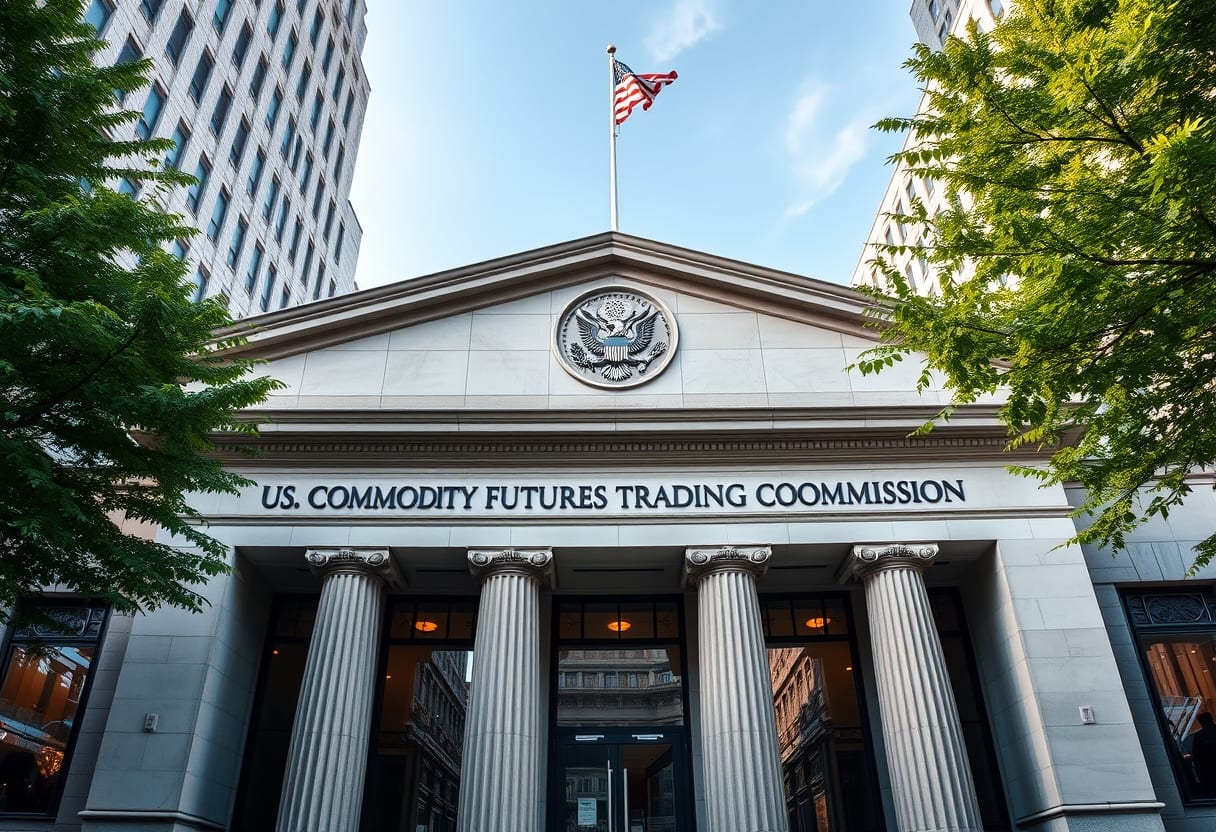
Observing the CFTC headquarters, a key regulatory body.
Amir Zaidi's CFTC Return: A New Chapter for Crypto Regulation and Investor Clarity?
📜 The United States Commodity Futures Trading Commission (CFTC) recently announced a significant leadership change that has the crypto world buzzing. Amir Zaidi, a figure instrumental in the launch of regulated Bitcoin futures, is returning to the agency as Chief of Staff, effective December 31, 2025. This move, confirmed by a CFTC press release and Chairman Michael S. Selig, signals a renewed and experienced focus on digital asset regulation at a pivotal moment for the industry.
For crypto investors navigating an increasingly complex regulatory landscape, Zaidi’s comeback isn't just bureaucratic reshuffling; it's a potential bellwether for market structure, institutional involvement, and future compliance requirements. His track record suggests a pragmatic approach to integrating novel asset classes within existing regulatory frameworks, which could bring both opportunities and challenges.
Envisioning enhanced oversight for digital assets.
📌 The Architect of Bitcoin Futures Returns: Context and Significance
A Deep Dive into Zaidi's Past with the CFTC
🔥 Amir Zaidi is no stranger to the CFTC. He first joined the commission in 2010, serving in various capacities until 2019. Crucially, his final two years were spent as the Director of the Division of Market Oversight (DMO), a role he assumed in 2017. It was during this period that Zaidi played a central role in shaping the policy framework that led to the groundbreaking launch of regulated Bitcoin futures in the US.
🚀 This was a landmark event for crypto, offering institutional investors a regulated avenue to gain exposure to Bitcoin. Chairman Michael S. Selig himself highlighted this, stating, "Amir was instrumental in the historic launch of CFTC-regulated bitcoin futures contracts during President Trump’s first term." This historical context underscores the depth of his experience with digital assets, particularly in establishing regulatory guardrails for an emerging asset class.
Why His Return Matters Now
Zaidi’s return comes at a critical juncture for the crypto industry in 2025. Congress and federal agencies are intensely focused on establishing clearer regulatory frameworks for digital assets. Reports suggest a significant market structure bill is anticipated in early January 2026, which aims to clarify the roles of various agencies, including the CFTC, over crypto trading and derivatives.
⚖️ His appointment as Chief of Staff, reporting directly to the Chairman, positions him at the heart of the CFTC's strategic response to this incoming legislation. It signals a strong intent from the CFTC to leverage internal expertise and experience in digital asset markets. His background provides a unique blend of policy-making and practical market oversight, having led a team of about 90 staff during his previous DMO tenure and gained direct exposure to broker-dealer operations during his time in the private sector.
Strategizing the future of Bitcoin futures markets.
📌 Market Impact Analysis: What This Means for Crypto Investors
⚖️ Zaidi's return could be a significant catalyst, reshaping expectations and strategies for investors across various crypto sectors.
Short-Term Effects: Volatility and Sentiment
⚖️ In the immediate term, the news could contribute to a cautious optimism within the institutional crypto space. The appointment of a known and experienced regulator might be perceived as a step towards greater regulatory clarity, potentially attracting more traditional finance players. However, increased scrutiny on unregulated sectors, particularly DeFi and certain stablecoins, could also lead to short-term volatility as projects anticipate potential regulatory shifts. Investor sentiment might trend towards projects demonstrating strong compliance frameworks and a willingness to engage with regulators.
Long-Term Implications: Market Structure and Innovation
Looking further ahead, Zaidi's influence could accelerate the formalization of crypto derivatives markets and potentially broaden the scope of CFTC oversight. This could pave the way for a more robust and liquid market for crypto futures, options, and swaps beyond just Bitcoin and Ethereum. Increased regulatory clarity, while potentially imposing compliance costs, often leads to greater institutional adoption, bringing significant capital inflows into the market.
⚖️ Sectors that thrive on regulatory ambiguity might face headwinds, while those that can adapt to or benefit from clearer rules—such as compliant stablecoin issuers or regulated DeFi platforms—could see substantial growth. The potential market structure bill, coupled with Zaidi's experience, suggests a future where the line between traditional finance and crypto derivatives becomes increasingly blurred, leading to new investment products and market participants.
📌 Key Stakeholders’ Positions: Navigating the Regulatory Currents
The appointment of Amir Zaidi will undoubtedly influence the dynamics between various players in the crypto ecosystem.
Navigating intricate financial data streams.
Lawmakers and Regulatory Agencies
⚖️ Congress's push for a digital asset market structure bill underscores a desire for unified and clear regulatory oversight. Zaidi’s background in launching Bitcoin futures aligns with the CFTC's established role in overseeing commodity derivatives. His expertise will be crucial in helping the CFTC coordinate with other agencies like the SEC and Treasury, ensuring a coherent approach to incoming legislation and preventing regulatory arbitrage.
Industry Leaders and Crypto Projects
⚖️ For crypto exchanges, custodians, and derivative platforms, Zaidi’s return could mean a more predictable but potentially more stringent regulatory environment. Projects that prioritize compliance and engage proactively with regulators are likely to be favored. There will be intense lobbying from various segments of the industry to shape the definitions and classifications within the new market structure, particularly concerning which assets fall under the CFTC’s commodities jurisdiction versus the SEC’s securities purview.
💱 DeFi and stablecoin projects, in particular, will be watching closely. Depending on how the upcoming market structure bill defines digital assets, parts of the DeFi ecosystem might find themselves under the CFTC’s regulatory umbrella, requiring significant adjustments to operations and compliance frameworks. This could drive innovation towards 'regulated DeFi' or 'permissioned DeFi' models.
📌 Summary of Key Positions
Stakeholder
Position/Key Detail
Amir Zaidi
🆕 💰 New CFTC Chief of Staff; instrumental in Bitcoin futures launch; brings deep regulatory and market oversight experience.
CFTC (Chairman Selig)
🆕 💰 Emphasizing experienced leadership for digital asset oversight; preparing for new market structure legislation.
Congress
💰 Pushing for digital asset market structure bill to clarify agency roles and enhance regulatory clarity.
Crypto Industry
🏛️ ⚖️ Anticipates clearer, potentially stricter, regulations; seeks certainty for innovation and institutional adoption.
DeFi/Stablecoin Projects
📈 Potential for increased regulatory scrutiny; may drive innovation towards compliant models under CFTC purview.
📌 🔑 Key Takeaways
Amir Zaidi's return to the CFTC, known for his role in Bitcoin futures, signals a heightened and experienced focus on digital asset regulation.
The timing coincides with impending Congressional legislation aiming to clarify crypto market structure, making the CFTC's leadership pivotal.
Investors should anticipate potential increased volatility in the short-term due to regulatory uncertainty, followed by opportunities from greater institutional adoption and clarity.
The move could accelerate the formalization of crypto derivatives and potentially bring parts of DeFi and stablecoins under more direct regulatory oversight.
🔮 Thoughts & Predictions
The reappointment of Amir Zaidi isn't just a political chess move; it’s a clear strategic signal from the U.S. regulatory apparatus. With a 'Bitcoin futures architect' at the helm of the CFTC's staff, we can expect a robust and perhaps even aggressive push towards formalizing the derivatives market for digital assets. This isn't just about Bitcoin; it sets a precedent for how a broader array of crypto commodities, from altcoin futures to novel DeFi derivatives, might be brought into a regulated fold, potentially opening doors to trillions in institutional capital that currently sits on the sidelines.
💰
I foresee a medium-term scenario (over the next 12-24 months) where regulatory clarity, while initially perceived as a burden, ultimately fuels an explosion in structured crypto products. Imagine a landscape where more sophisticated hedging and speculative tools become widely available on regulated exchanges. This could significantly de-risk institutional participation, pushing Bitcoin's market cap towards the $2-3 trillion range and broadening the overall crypto market to well over $5-7 trillion as more traditional funds gain compliant access.
Sealing new agreements in the financial sector.
However, this clarity won't come without a price. Unregulated DeFi protocols and certain opaque stablecoin operations will likely face intense scrutiny and pressure to adapt or risk being sidelined. This dynamic could lead to a bifurcation of the market: a highly regulated, institution-friendly segment and a more permissionless, but potentially marginalized, niche. Investors should prepare for this shift by scrutinizing projects' compliance roadmaps and embrace the understanding that the "wild west" era is rapidly giving way to a structured, yet still innovative, financial frontier.
🎯 Investor Action Tips
Monitor Regulatory Filings: Keep a close eye on CFTC announcements and Congressional progress on the digital asset market structure bill in early 2026 for specific guidance.
Evaluate Project Compliance: Prioritize projects (especially in DeFi and stablecoins) that demonstrate clear pathways to regulatory compliance and robust legal teams.
Consider Regulated Products: Explore exposure to crypto through regulated derivatives (futures, options) on established exchanges, as these markets are likely to grow and gain liquidity.
Diversify and Rebalance: Balance your portfolio between established, potentially regulated assets (like Bitcoin, Ethereum) and higher-risk, innovative projects, being prepared to adjust based on regulatory clarity.
📘 Glossary for Serious Investors
🏛️ CFTC (Commodity Futures Trading Commission): The U.S. government agency that regulates the U.S. derivatives markets, including futures, options, and swaps, which can include certain digital assets classified as commodities.
📜 Market Structure Bill: Proposed legislation designed to create a comprehensive regulatory framework for digital assets, defining their classification (commodity vs. security) and assigning oversight responsibilities to relevant federal agencies.
📈 Bitcoin Futures: Financial derivative contracts that allow investors to bet on the future price of Bitcoin without owning the underlying cryptocurrency, regulated by agencies like the CFTC.
🧭 Context of the Day
Amir Zaidi's return to the CFTC underscores a firm regulatory push towards integrating digital assets into traditional finance, demanding proactive investor adaptation.
📈 BITCOIN Market TrendLast 7 Days
Date
Price (USD)
7D Change
12/26/2025
$87,229.78
+0.00%
12/27/2025
$87,305.96
+0.09%
12/28/2025
$87,807.00
+0.66%
12/29/2025
$87,822.91
+0.68%
12/30/2025
$87,156.56
-0.08%
12/31/2025
$88,414.63
+1.36%
1/1/2026
$87,520.18
+0.33%
1/2/2026
$87,842.88
+0.70%
Data provided by CoinGecko Integration.
💬 Investment Wisdom
"The ability to see the future, and prepare for it, separates the winners from the losers." — Donald Trump
Tokenization boom accelerates: XRP ecosystem integrates $50T property. RWA crypto, digital assets, blockchain real estate. Epic Chain's XRP Integration: A Trillion-Dollar RWA Opportunity? 🔗 Epic Chain, a project supported by Ripple, is making significant strides in the tokenization of real-world assets (RWAs) by leveraging the XRP Ledger. This initiative aims to bring trillions of dollars worth of assets onto the blockchain, potentially revolutionizing how real estate, credit, commodities, and collectibles are managed and traded. But what does this mean for crypto investors? 📌 Ripple's Backing and Epic Chain's RWA Platform Epic Chain is positioning itself at the forefront of the RWA tokenization movement with its XRP-native platform. The platform is designed to facilitate the transfer of real estate, credit, commodities, and collectibles onto the XRP Ledg...
Digital asset forecast analyzing upcoming volatility: crypto market, next bull run, BTC price. Bitcoin's "Moonvember" Hopes Tempered by Market Realities: A Deep Dive for Investors 📌 Navigating Bitcoin's November Crossroads: Will History Repeat? The cryptocurrency market is at a fascinating juncture as we enter November 2025. Bitcoin, fresh off a somewhat disappointing "Uptober" where it retraced over 10% after briefly touching $126,000 , faces a pivotal month. Historically, November, often referred to as "Moonvember," has been a strong period for Bitcoin. But can historical trends overcome current market headwinds? To understand the present, it's essential to acknowledge the past. Bitcoin's price action has often followed predictable seasonal patterns. October and November, in particular, have been associated with bullish...
Introducing Solana's pivotal network upgrade, symbolizing growth and advancement. Solana's Alpenglow Upgrade: A Game-Changer for On-Chain Trading and Network Stability 🔗 Solana, a network long celebrated for its blistering speed and low transaction fees, has also navigated its share of stability challenges. As we move into 2025, a critical evolution is on the horizon: the Alpenglow consensus overhaul . This isn't just another incremental update; it's a fundamental reimagining of Solana's core architecture, poised to address longstanding concerns regarding validator performance, network stability, and long-term scalability. For investors, understanding this seismic shift is paramount, as it could significantly redefine SOL's competitive edge and its role within the broader blockchain ecosystem . 📌 🚀 The Alpenglow Evolution: Diving ...