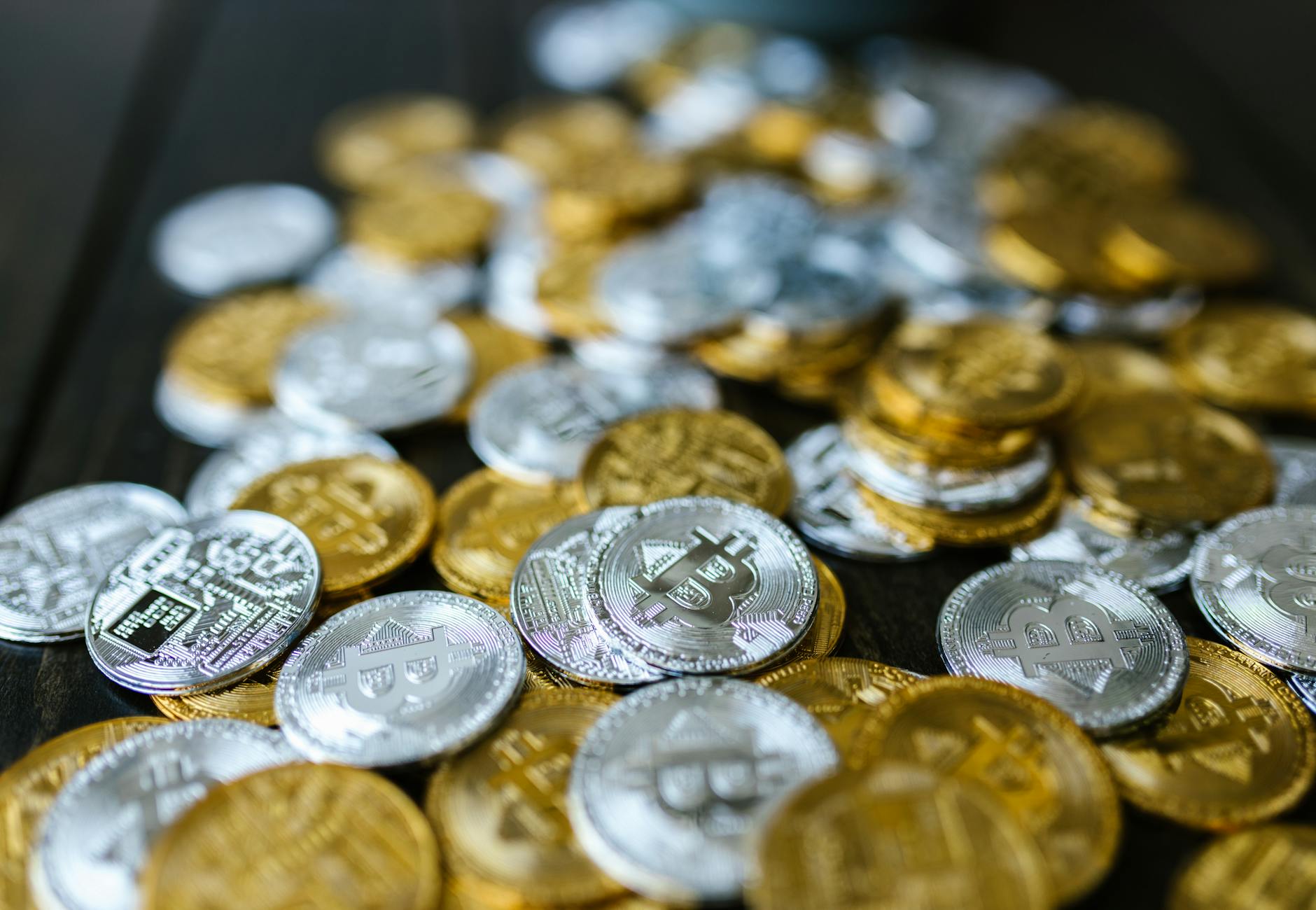
Kyrgyzstan Launches State Bitcoin Mining: A Leap Towards Financial Stability?
📌 Kyrgyzstan Aims for a Bitcoin Reserve and State-Sponsored Mining
🚀 Kyrgyzstan has taken a significant step towards establishing a state-backed cryptocurrency reserve, primarily focused on Bitcoin, alongside government-supported mining operations. This move was revealed during a hearing on September 9th by the Minister of Economy and Commerce, Bakyt Sydykov, before the Budget, Economic, and Fiscal Policy Committee of the Zhogorku Kenesh (parliament). He stated that draft amendments to the law "On Virtual Assets" will introduce the concepts of "state mining" and a "state cryptocurrency reserve."
According to Sydykov, this reserve will be built through various means, including "mining, tokenization of real assets, and issuance of stablecoins backed by the national currency." The primary goal of this mechanism is to "strengthen the financial stability of the country and provide new instruments for accumulation."
⚖️ From January to July 2025, companies operating within Kyrgyzstan's crypto economy generated over 1 trillion som in turnover, contributing between 900 million and 1 billion som in tax revenue. Official records now list 169 crypto exchanges and 11 mining companies, according to Sydykov. This data underscores the burgeoning crypto sector's increasing economic significance for the nation.
📌 Energy Security Concerns and Government Assurances
⚖️ The parliamentary committee hearing sparked considerable debate over energy security. Deputy Dastan Bekeshev raised concerns about the energy-intensive nature of Bitcoin mining, stating, "It takes about 800,000 kilowatts to mine one bitcoin. That's enough energy to power about 1,200 apartments for a month. Winter is coming – is it worth it?" This concern highlights a critical challenge for countries considering embracing crypto mining at scale.
Minister Sydykov responded by clarifying that Kyrgyzstan applies separate electricity tariffs to mining operations and that the state will adhere to these rates. He further emphasized that no mining farms would be located at thermal power plants or the under-construction Kambar-Ata-1 hydroelectric plant. "The primary purpose of thermal and hydroelectric power plants, including the Kambar-Ata-1 under construction, is not related to mining. The capacity of small hydroelectric power plants is used in this area: 17 are currently operational, and another 15 projects are underway," the minister stated, aiming to allay fears of straining the national grid.
📜 The proposed reform also includes stricter market regulations. From January 1, 2026, any cryptocurrency exchange seeking to operate nationally must possess at least 10 billion som in authorized capital. The government considers this a necessary prudential threshold to "strengthen confidence in the market and develop the crypto industry in the country."
💱 Local media outlets covering the legislative process highlight that "state mining" is defined as the extraction of digital assets using state-owned energy, infrastructure, and technological resources. The resulting reserve will be formed not only from mining proceeds but also from token issuance and the acquisition of state-owned virtual assets.
While the legislation consistently refers to a "cryptocurrency reserve," the committee discussions and the outlined risks primarily focus on Bitcoin. Bekeshev's energy consumption comparison explicitly references "one bitcoin," and the government's preferred method – mining – clearly indicates BTC as the primary asset.
📌 Kyrgyzstan Races Against Kazakhstan in Central Asia's Crypto Push
🔗 This pragmatic approach aligns with earlier policy signals. In mid-April, the National Investment Agency of Kyrgyzstan signed a strategic memorandum with Changpeng Zhao, co-founder of Binance, formally appointing him as an advisor on national blockchain policy and Web3 strategy. During a visit to Bishkek in early May, Zhao publicly suggested that the country use Bitcoin – along with BNB – as initial assets for a national cryptocurrency reserve.
⚖️ This push coincides with Kyrgyzstan's crypto sector gaining economic and geopolitical importance. Increased activity on domestic platforms has occurred alongside Western sanctions scrutiny, including measures by the UK and US in August against entities linked to a ruble-pegged stablecoin network and Kyrgyz companies accused of facilitating Russian sanctions evasion. These pressures have prompted President Sadyr Japarov to publicly address Washington and London, with the government denying the accusations and emphasizing state supervision of crypto-related banking operations.
The regional context is also evolving. Neighboring Kazakhstan recently proposed creating a national "crypto reserve fund" as part of its "State of the Nation" plan, encompassing a broader digital asset agenda that includes a "CryptoCity" pilot project and new legislation by 2026.
⚖️ Analyst Daniel Batten noted a key distinction compared to other states interested in Bitcoin, observing on X that, "Unlike El Salvador, Pakistan, Argentina, and CAR, Kazakhstan does not have an IMF loan – so this initiative will likely proceed without headwinds." If Astana proceeds, it will be the second Central Asian state to formally build a digital asset buffer, intensifying regulatory and competitive dynamics in the region. The interplay between these two nations will likely shape the region's crypto landscape in the coming years.
Here's a quick summary of the key stakeholders' positions:
| Stakeholder |
Position |
Impact on Investors |
| Kyrgyzstan Government |
Pro-Bitcoin reserve, state mining |
🆕 Potential boost for BTC demand, new investment avenues |
| Kazakhstan Government |
Exploring crypto reserve fund |
Regional crypto competition, regulatory development |
| Changpeng Zhao (Binance) |
Advising Kyrgyzstan on crypto strategy |
💰 Potential for Binance influence, market growth |
📌 🔑 Key Takeaways
- Kyrgyzstan is actively pursuing a state-backed Bitcoin reserve and state-sponsored mining, signaling a strong commitment to integrating cryptocurrency into its financial system. This could potentially drive up demand for Bitcoin.
- Energy security concerns surrounding Bitcoin mining are a key challenge, with the government needing to assure the public that the initiative won't strain the national grid. Investors should monitor energy policies in Kyrgyzstan.
- Stricter regulations, such as the 10 billion som authorized capital requirement for crypto exchanges, aim to increase market confidence and stability, potentially attracting more institutional investors.
- The increasing crypto activity in Kyrgyzstan is happening amidst Western sanctions scrutiny, highlighting the complex geopolitical landscape and the need for investors to be aware of regulatory risks.
- The regional competition between Kyrgyzstan and Kazakhstan in developing crypto infrastructure could lead to innovation and growth in the Central Asian crypto market.
🔮 Thoughts & Predictions
Kyrgyzstan's bold move towards establishing a state Bitcoin reserve is more than just a technological upgrade; it's a geopolitical chess move aimed at bolstering financial stability amidst sanctions and fostering economic independence. The success hinges heavily on sustainable energy solutions and navigating the delicate balance of international relations, especially considering the existing scrutiny over sanctions evasion. I predict that if Kyrgyzstan can successfully address energy concerns and maintain regulatory transparency, it will emerge as a key player in Central Asia's digital economy, potentially attracting significant foreign investment and influencing neighboring countries to adopt similar strategies. This could also lead to a measurable increase in Bitcoin adoption and potentially impact its price positively in the medium term. However, a failure to maintain energy security or comply with international regulations could trigger significant setbacks and undermine investor confidence.
🎯 Investor Action Tips
- Monitor the development of energy infrastructure projects in Kyrgyzstan and how they align with crypto mining plans.
- Keep an eye on regulatory updates and any potential impact on crypto exchanges and mining operations in the region.
- Research crypto projects and companies operating in Kyrgyzstan, evaluating their long-term potential and regulatory compliance.
- Track the relationship between Kyrgyzstan and international bodies like the IMF, to assess any potential economic or political impacts on the crypto initiative.
🧭 Context of the Day
Kyrgyzstan's bold embrace of state-backed Bitcoin mining and reserves signifies a strategic pivot towards leveraging digital assets for economic resilience amidst geopolitical challenges.