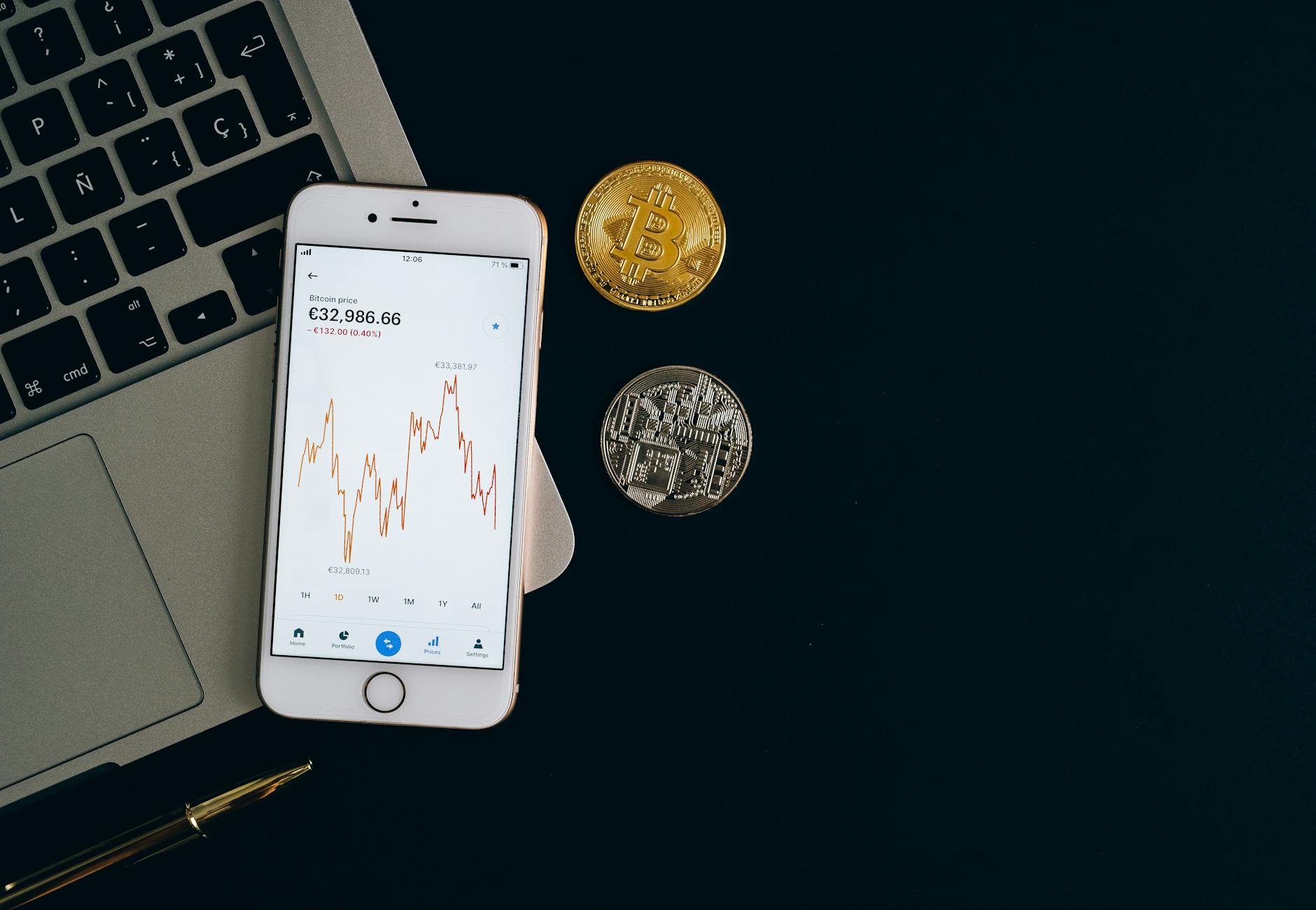
Bitcoin Price Dip Amidst US-China Trade Tensions: A 2025 Crypto Investor's Perspective
By , Crypto News Analyst
BTC Price Analysis: 7-Day Price Analysis with Daily Data. Includes market indicators, USD price, dominance, and technical analysis.
📌 Event Background and Significance
The crypto market, even in 2025, remains highly sensitive to macroeconomic factors. A recent example is the renewed escalation of US-China trade tensions, which sent ripples throughout global markets, including a significant impact on Bitcoin and the broader crypto landscape. This event underscores the interconnectedness of traditional finance and the burgeoning crypto ecosystem.
💧 Historically, geopolitical events have profoundly influenced Bitcoin's price. The 2020-2021 bull run, for instance, saw Bitcoin rise amid a backdrop of global uncertainty and quantitative easing. However, 2025 presents a different scenario. Unlike previous instances, the current trade war isn't merely impacting investor sentiment; it's creating a liquidity squeeze in the US Treasury market, a crucial component of the global financial system. This is a key difference and a significant escalation from past events.
The US increased tariffs on Chinese imports to 104%, triggering a sharp decline in the Australian dollar (a China-sensitive currency) to a five-year low of 0.5913 against the US dollar. This highlighted the interconnectedness of global markets and the potential for cascading effects.
Context: Past regulatory failures in managing the financial crisis and subsequent government interventions have fostered a climate where investors seek alternative assets, further emphasizing the relevance of Bitcoin in times of uncertainty. This current situation reinforces the need for diversification within investment strategies.
📊 Market Impact Analysis
The initial reaction to the heightened trade tensions saw Bitcoin fall below $75,000. However, a white paper released by China's State Council Information Office, suggesting a willingness to communicate, led to a partial recovery, pushing Bitcoin back to $77,000. This volatility highlights the market's fragility and susceptibility to external shocks.
Market Analysis: The short-term impact was characterized by high volatility and significant price swings, affecting investor sentiment. The long-term implications remain uncertain but could potentially lead to increased institutional adoption of Bitcoin as a safe-haven asset, similar to gold.
The impact extended beyond Bitcoin. Ether (ETH) also experienced a downturn, dropping 5.66% in 24 hours. The broader cryptocurrency market, represented by the CoinDesk 20 index, saw a 3.04% drop, indicating a systemic effect beyond individual cryptocurrencies.
💧 The US Treasury market's liquidity concerns were a significant driver of the downturn, and this has wider implications for the entire financial system, including stablecoins that are pegged to the dollar.
⚖️ Market Analysis: The DeFi sector, heavily reliant on stablecoins and connected to the global financial system, felt the indirect impact of this trade war. NFTs, while less directly affected, experienced a correlated downturn alongside the overall market sentiment.
📌 Key Stakeholders’ Positions
| Stakeholder |
Position |
Impact on Investors |
| US Government (President Trump) |
Imposition of high tariffs on Chinese imports |
💰 📈 Increased market volatility, potential for short-term losses. |
| Chinese Government |
📈 Willingness to communicate but firm stance on not being bullied |
💰 Uncertainty regarding the long-term trajectory of trade relations and market stability. |
| Economist Nouriel Roubini |
💰 Markets are too optimistic about Fed easing, expecting support only after Trump's rhetoric cools down |
👥 💰 Cautionary note for investors anticipating quick market recovery, highlighting potential for further volatility. |
| Bank of Japan Governor Kazuo Ueda |
Interest rate hikes will continue if the economy improves as expected |
📈 Further potential for increased volatility due to monetary policy tightening. |
The differing viewpoints among key stakeholders create uncertainty, making it difficult to predict the market's future direction with confidence.
🔮 Future Outlook
🐻 The situation remains fluid. The resolution of US-China trade tensions will significantly influence the crypto market. If tensions de-escalate, we may see a rebound in prices. However, a prolonged trade war could lead to a prolonged period of volatility, and possibly a bear market.
📜 Market Analysis: Regulatory clarity regarding stablecoins and cryptocurrencies in general is also crucial. Increased regulation could dampen short-term volatility but could also stifle innovation. Conversely, lack of clear regulation could increase uncertainty and risk. Investors need to carefully monitor global macroeconomic indicators and regulatory developments.
📌 Key Takeaways
- US-China trade tensions significantly impacted Bitcoin and the broader crypto market.
- Market volatility is expected to continue in the short term, dependent on the resolution of trade disputes.
- The US Treasury market liquidity concerns are a key factor affecting crypto and traditional markets alike.
- Investor sentiment is heavily influenced by macroeconomic conditions and regulatory developments.
- Diversification within an investment portfolio remains crucial to mitigating risk.
📌 Thoughts & Predictions
🐻 In the near term, expect increased volatility as the market reacts to the evolving trade situation and monetary policy decisions. A sustained resolution of the trade war, coupled with clearer regulatory frameworks, could trigger a bullish market sentiment, potentially pushing Bitcoin back above $80,000 by the end of Q2 2025. However, a protracted conflict could lead to a more prolonged bear market, with Bitcoin potentially testing lower support levels. The overall landscape depends significantly on macroeconomic factors and policy decisions by central banks globally.
The TRUMP token's sharp decline (90% from its high) warrants close attention, showcasing the risks associated with tokens linked to political figures. The upcoming unlock of $360 million adds to the potential for further downward pressure.
📈 BITCOIN Price Analysis
| Date |
Price (USD) |
Change |
| 4/3/2025 |
$82526.42 |
+0.00%
|
| 4/4/2025 |
$83163.99 |
+0.77%
|
| 4/5/2025 |
$83852.01 |
+1.61%
|
| 4/6/2025 |
$83595.89 |
+1.30%
|
| 4/7/2025 |
$78211.48 |
-5.23%
|
| 4/8/2025 |
$79179.29 |
-4.06%
|
| 4/9/2025 |
$76417.97 |
-7.40%
|
▲ This analysis shows BITCOIN's price performance over time.
This post builds upon insights from the original news article, offering additional context and analysis. For more details, you can access the original article here.